Stocks● Neutral
Why AI chatbots are becoming the third passenger in human relationships
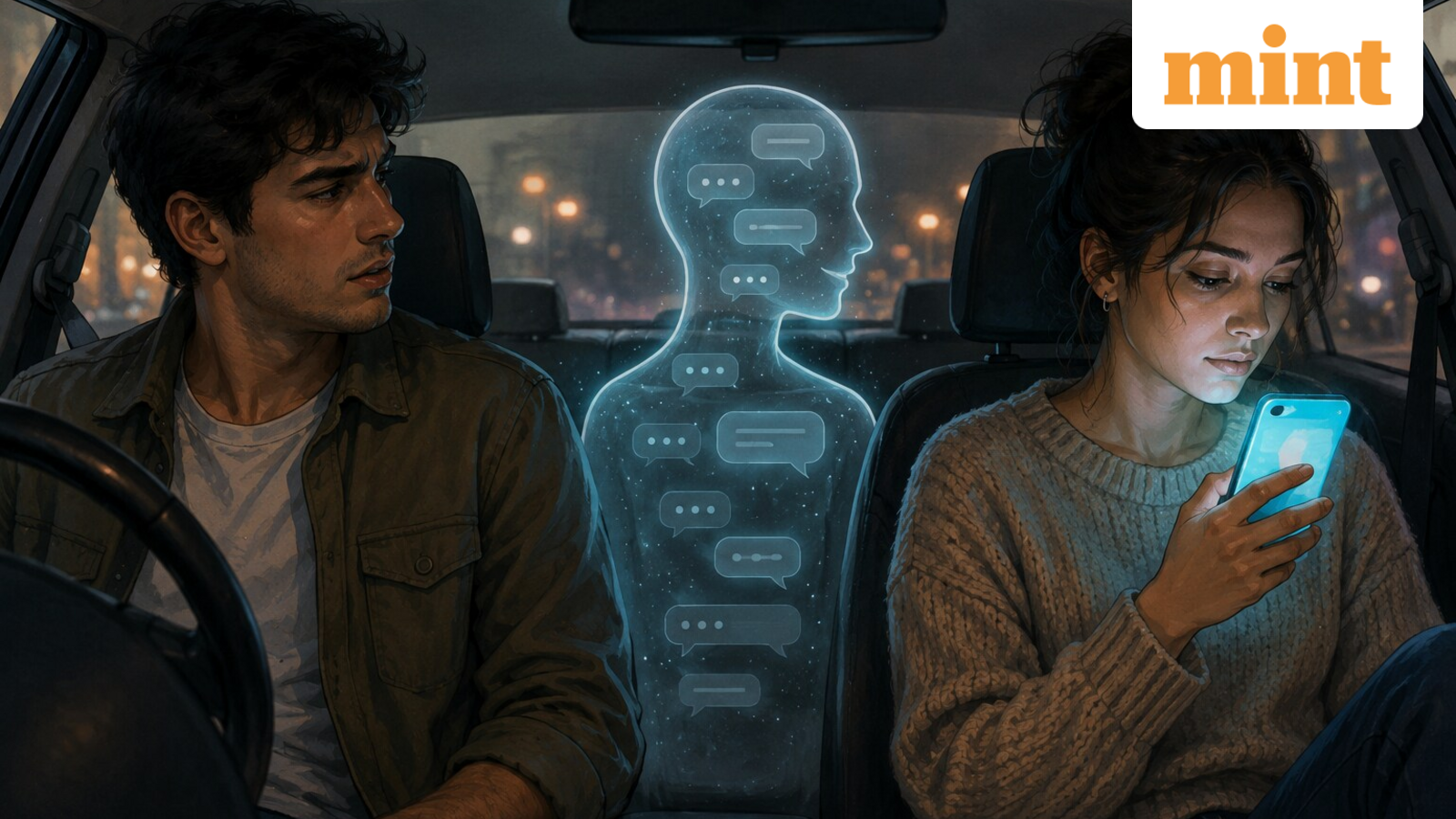
A viral reel shows a girl dumping her boyfriend for a chatbot's sympathy. Trust shifts: 57% of users now prefer AI for advice over friends. The real cost is human compromise.
Continue with
A viral Instagram reel sums up something quietly unsettling. A girl tells her boyfriend she is feeling sad. He reassures her, glancing up from his phone. She is not satisfied. She picks up her own phone and tells the same thing to her AI chatbot. The chatbot responds with elaborate sympathy and starts asking questions to help her talk it through. She gets out of the car, phone and chatbot in hand, leaving her boyfriend staring after her.
The joke lands because it is no longer fiction. That car had a third occupant. The chatbot has become an always-available friend, counsellor, sounding board, and advice-giver rolled into one. It is infinitely patient, never tired, and ready with unconditional validation.
The risks may be greater than any short-term comfort.
Trust shifts from human to machine
Wingmate, a dating platform, found that 57% of users trust AI more than their friends for advice. Men reported higher trust than women. Twenty-two percent admitted hiding their use of AI for relationship issues.
Longitudinal studies have not yet had time to produce data, and the findings are based on US culture. But in India, young people have long been comfortable with online counsellors and therapists. Now ChatGPT is filling the same role for relationships.
Users lean on chatbots for conversation starters to come across as impressive or knowledgeable. They use them as confidants when they are upset but want to avoid direct discussion with a partner, friends, or family. They ask for help with relationship decisions, tips on how to convince a partner, and even help in framing breakup messages.
When the chatbot becomes a weapon in an argument
A deeper issue emerges when one partner quotes the chatbot to prove a point. "My ChatGPT says you are wrong here, so you must fix it." The other partner cannot argue against an algorithm. The chatbot has no stake in who is right or wrong. It is focused on keeping its user happy and appearing useful. It does not know the full context of any personal situation.