“Power corrupts, absolute power corrupts absolutely,” Lord Acton said.
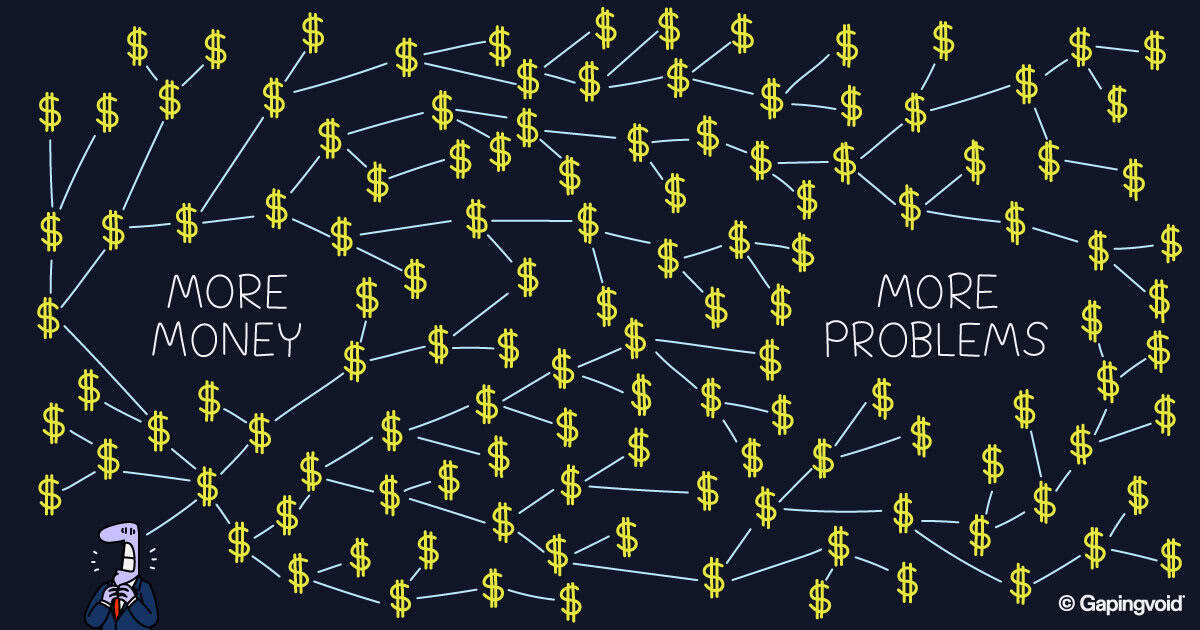
When leaders become "corrupted," it is easy to blame greed. More often, the mechanism is what entrepreneur Eric Ries calls gravity – the pull of obligations that accumulate with every rational decision.
Ries tells the story of John Mackey, founder of Whole Foods. By most accounts, Mackey genuinely wanted to build a company that treated employees, customers and investors well. He took outside investment to grow. He took the company public to reward those investors and create wealth for employees.
Suddenly the stock price was not just a number. It became the retirement plans of thousands of people. Every decision had another constituency.
When Amazon came calling, saying "no" was not about preserving independence. It meant risking shareholder value, employee retirement accounts and potentially his own position as CEO. Selling to Amazon was not one greedy decision. It was a thousand rational ones.
Complexity creates obligations. Obligations create constraints. Constraints narrow choices until the decision you never wanted to make looks like the only one left.
Corruption is often imagined as a moral failure – someone wakes up and decides to sell out. The more common path, Ries argues, looks different. Corruption arrives wearing a sensible suit.
Grow the company. Raise capital. Protect employees. Increase stock price. None of those decisions is unethical on its own. Each is perfectly reasonable. Together they create a kind of gravity that can pull principled leaders somewhere they never intended to go.
Mackey may have been a leader of real integrity. Even that was not enough to save him from the unintended consequences of growth.
The way to deal with this, Ries states, is to do so in advance. That means governance: setting up ironclad rules ahead of time that align with your mission.
Maybe it is a commitment that the company can never be sold without a supermajority vote. Maybe it is a legally binding mission future leaders must uphold. Or a charter requiring employee representation on the board. Governance is simply deciding today what future you will not compromise tomorrow.
One would think that is the obvious move. Far too many CEOs pay no attention, or are cocky enough to think the law of gravity does not apply to them. As a result, many companies do not become corrupted over time. Their corruption is baked in from the start.