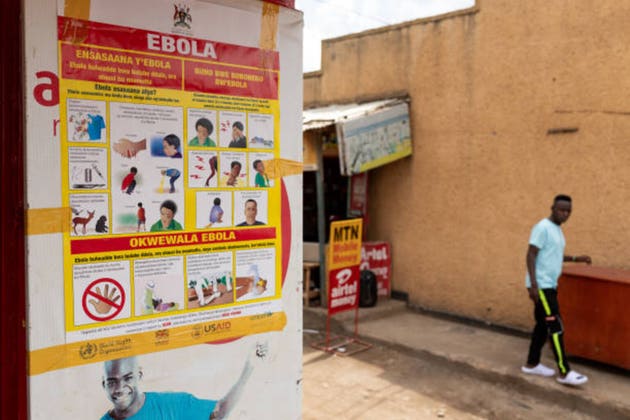
The World Health Organization declared the Ebola outbreak in the Democratic Republic of the Congo and Uganda a public health emergency of international concern late Tuesday. The Centers for Disease Control and Prevention immediately activated its emergency operations center, deploying personnel and diagnostic equipment to the affected region. US health officials stressed that the risk to the American public remains low.
Vaccine Developers Face a Short Window
Past Ebola emergencies have triggered sharp, short-lived moves in pharmaceutical companies holding approved or pipeline vaccines. The Merck-developed Ervebo vaccine and Johnson & Johnson's two-dose regimen are the primary tools for ring vaccination in Africa. Investors typically rotate into these names on outbreak headlines, then sell once the risk posture stabilizes.
The naive read is a broad buy signal for vaccine developers. The better market read distinguishes between companies with commercial products and those with early-stage candidates. Approved vaccines benefit from stockpile replenishment orders from governments and global health agencies. Pre-commercial stage stocks lack a surge purely on news flow and tend to retrace quickly. The WHO declaration makes the emergency official. The US low-risk assessment caps the duration of any sector-wide rally.
Travel Stocks Are a Secondary Concern
Airlines and cruise operators rarely see sustained selling on Ebola headlines unless the outbreak reaches a major international hub or a confirmed case appears in a Western airport. The current epicenters in eastern DRC and western Uganda lack direct long-haul connections to US gateways. That limits the downside pressure on carriers. Travel-related stocks are a secondary concern unless the case count diverges from the typical containment trajectory.
Government Procurement as the Real Catalyst
The CDC's mobilization includes support for Uganda's Ministry of Health and cross-border surveillance. The US maintains its own Ebola vaccine stockpile via BARDA (Biomedical Advanced Research and Development Authority). Any decision to release reserve doses or escalate the response level would create a concrete procurement catalyst for vaccine manufacturers.
Three points matter for watchlist construction. Vaccination logistics in the DRC benefit from the experience gained during the 2018–2020 outbreak, which killed over 2,200 people. The current outbreak has multiple viral lineages, complicating the single-vaccine approach. The WHO emergency declaration unlocks additional funding and coordination from global agencies – a macro positive for biotech. It is not a catalyst for any single name until contract updates appear.
Next Decision Point
New case counts, the WHO's weekly situation reports, and the CDC's travel recommendations will drive the narrative over the next 14 days. The low risk assessment in the US makes a broad market shock unlikely. For stock traders, the actionable window is the few days following the emergency declaration. After that, the trade fades into background positioning. Follow the procurement orders, not the headlines.
For more on how public health emergencies affect portfolio construction, see AlphaScala's stock market analysis.