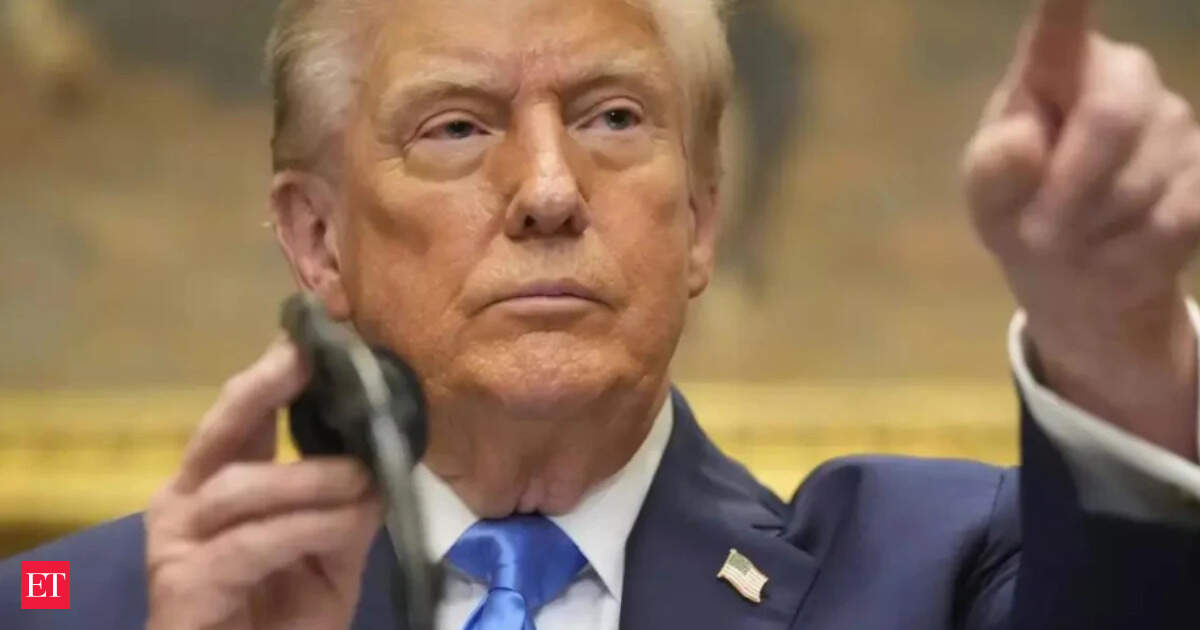
The catalyst: a second security scare in one month
On Saturday evening, a man approached a security checkpoint near 17th Street and Pennsylvania Avenue, pulled a gun and fired at Secret Service officers. Personnel returned fire, striking the suspect. He was taken to hospital and later died. A bystander was also hit; officials have not determined whether the injury came from the gunman or from return fire.
Law enforcement sources told Reuters the suspect had been identified as an emotionally disturbed person and had been served with a “stay-away order”. Trump was inside the White House during the incident. No Secret Service personnel were injured.
This shooting follows another security scare weeks earlier. Shots were fired near a hotel hosting the White House Correspondents’ Association dinner, prompting evacuations of senior officials including the president. Two breaches in a short window change the perception of risk around the executive complex.
Why the security budget angle matters now
The practical market question is not whether the government will increase security spending – that outcome is probable – but how quickly and through which channel. Two incidents in one month create a political imperative for a visible response.
Mechanism for federal spending
The White House perimeter is secured by the Secret Service’s Uniformed Division, supported by the Department of Homeland Security. Physical upgrades such as ballistic barriers, vehicle-impeding bollards, and advanced surveillance systems require congressional appropriations or executive reallocation.
A pattern of breaches raises the probability that a supplemental security bill is introduced during this budget cycle. Even without legislation, the Secret Service can accelerate procurement of equipment under existing contracts, which benefits the defense and security contractors that supply those systems.
Historical precedent
After the September 2014 White House fence-jumper incident, the Secret Service requested an additional $67 million for security upgrades. The January 2017 vetting-system breach led to a $200 million request for new protective infrastructure.
In both cases, defense contractor stocks traded flat to modestly higher in the weeks following the announcement. Gains faded without a sustained procurement pipeline. This time, the hotel security scare plus the checkpoint shooting may sustain attention long enough for Congress to act within a single budget cycle. If a supplemental appropriation is introduced, the market will start pricing a tangible revenue stream.
Three contractors with direct exposure
Three publicly traded companies have direct exposure to White House and federal facility security spending. Each supplies systems that could see accelerated orders.
Lockheed Martin (LMT)
Lockheed Martin provides integrated security systems, command-and-control platforms, and surveillance technology used by the Secret Service and other federal agencies.
Northrop Grumman (NOC)
Northrop Grumman supplies cybersecurity solutions, secure communications, and electronic warfare systems that protect perimeters beyond physical barriers.
General Dynamics (GD)
General Dynamics manufactures C4ISR (command, control, communications, computers, intelligence, surveillance, and reconnaissance) systems with direct application to checkpoint and facility security.
The decision framework for traders
Traders watching this story need a framework for when to act and when to wait. The gap between the event and the policy response is where most traders lose money on headline trades.
Confirm signals for defense contractor exposure
- The White House announces a formal security review. A review typically leads to a classified list of required upgrades within 90 days.
- Congressional leaders from both parties call for increased funding. Vocal bipartisan support raises the probability of a bill passing.
- Trump or the Secret Service issues a new procurement order. An emergency declaration allows expedited purchases without a full budget cycle.
- The stock prices of LMT, NOC, and GD show volume-linked breakouts. Without volume confirmation, any price move is noise trading on headlines.
Weakening signals
- No legislative action within 30 days. The incident fades from the news cycle, and the status quo resumes.
- A follow-up report attributes the shootings to mental health gaps rather than perimeter weakness. That redirects spending to health programs, not physical security.
- The Secret Service says existing defenses worked as designed. A statement that the system stopped the threat weakens the case for fundamental upgrades.
Practical rule: Do not buy the headline. Wait for the committee markup. The asymmetric play is to buy out-of-the-money call options on LMT or GD with three- to six-month expirations, sizing the bet so that a full loss is acceptable. The better risk-adjusted approach avoids a directional bet and instead monitors the confirm signals for a later, more confident entry.
The broader risk calculus
The Third White House shooting in a month sharpens risk calculus article captures the sequential nature of these events. That piece frames the environment in which security stocks trade. Neither the Saturday shooting nor the prior hotel scare triggered a market-wide selloff or a spike in volatility. For traders focused on defense contractors, the incident opens a new decision node: the catalyst is real, the follow-through is uncertain. A structured watchlist with clear confirm and weaken signals separates prepared traders from those who react to headlines.