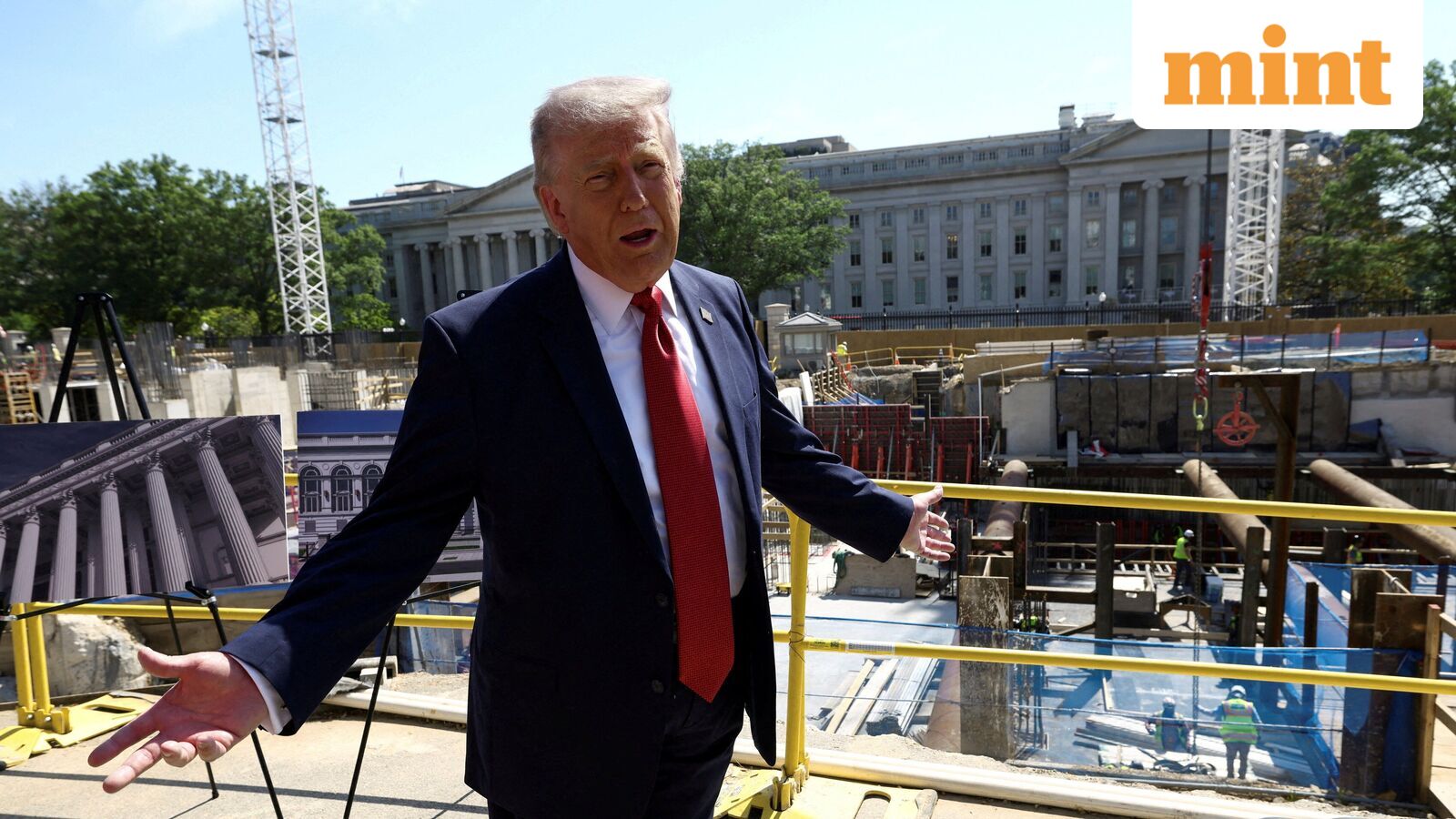
President Donald Trump’s Truth Social response to the third shooting near the White House in a single month – a suspect killed by Secret Service after opening fire near the gates – introduces a compounding political risk event. The practical question for a watchlist: does this sequence accelerate a concrete policy change, such as a new secure presidential facility, or does it remain a headline that fades without market impact?
The Third Shooting and Trump’s Facility Pivot
Trump posted Saturday evening to thank the Secret Service and describe suspect Nasire Best, 21, as having “a violent history and possible obsession with our Country’s most cherished structure.” Best died after an exchange of gunfire at the White House gates. The Secret Service confirmed the suspect pulled a weapon from his bag near 17th Street and Pennsylvania Avenue shortly after 6 p.m. EDT and began firing. Officers returned fire and struck Best; he was later pronounced dead at a hospital.
District of Columbia court records show Best was arrested in July 2025 for attempting to enter a different White House checkpoint, ignoring commands, and “claimed he was Jesus Christ.” A pretrial stay-away order was issued, followed by a bench warrant in August for noncompliance. Saturday’s incident is the third time gunfire has occurred near Trump in one month. The prior incident at the White House Correspondents’ Dinner involved suspect Cole Tomas Allen sprinting through a checkpoint with a shotgun; Allen has pleaded not guilty to attempted assassination.
Trump used the moment to renew his call for a new presidential facility:
“This event is one month removed from the White House Correspondent’s Dinner shooting, and goes to show how important it is, for all future Presidents, to get, what will be, the most safe and secure space of its kind ever built in Washington, D.C. The National Security of our Country demands it!”
Simple Read vs. Market Read
The simple read: another security scare with no lasting market effect. The better read: three exposures to gunfire in one month is abnormal and may approach a threshold where government procurement priorities shift. A dedicated secure facility represents a multi-year, multi-billion-dollar project. The probability of Congress fast-tracking such a project rises with each event.
Practical rule: A single incident generates headlines but no budget shift. Three incidents in a month generate hearings. Hearings generate earmarks.
Exposure: Defense Contractors and the Policy Trigger
If a new White House facility or expanded perimeter security is approved, the most direct beneficiaries are large-scale defense infrastructure contractors. Companies with federal security contracts – Lockheed Martin (LMT), Northrop Grumman (NOC), Raytheon Technologies (RTX) – typically bid on secure compounds and electronic surveillance systems. Smaller specialized firms like Allied Universal or Constellis compete for perimeter and access control work.
No contract has been announced. The risk event is a policy catalyst, not an order.
The Catalyst Path
The sequence works like this: repeated security lapses → public and political pressure → directed funding from Congress → request for proposals → contract award. The Trump call for a new facility provides rhetorical cover, actual legislation is required. Traders should watch for a presidential directive or a Senate Appropriations Committee mark-up adding line items for a secure annex.
Sector Read-Through
- Defense infrastructure: direct bid pipeline from a new compound.
- Cybersecurity: expanded surveillance and access-control systems.
- Event security: private security firms near the White House may see increased demand.
- Insurance: premiums for large Washington gatherings could rise.
Timeline: The 90-Day Watch for Security Legislation
The concentration of incidents within one month points to a pattern. The July 2025 arrest of Best and the August bench warrant show the suspect was already in the system yet still reached the White House perimeter armed. The Secret Service faces operational capacity constraints – many officers are stretched across multiple protective details and presidential movements.
What Would Confirm the Shift
- A formal White House security review announcement beyond standard after-action.
- A supplemental funding request from the Department of Homeland Security for Secret Service resources.
- A Congressional hearing where witnesses recommend a new facility.
What Would Weaken the Thesis
- No legislative action within the next 90 days.
- A period of six months without a nearby incident.
- The suspect’s mental health profile being deemed an isolated outlier (the “Jesus Christ” claim suggests delusion, not organized threat).
Affected Assets: Safe Havens and Political Risk Premiums
Political risk from direct threats to a sitting president is typically absorbed by Treasury bonds (safe-haven bid), gold, and the U.S. dollar as a flight-to-quality trade. Three incidents may shift the risk perception from “zero probability” to “low but non-zero probability of security failure.” That shift could incrementally increase demand for long-duration Treasuries and gold.
Second-Order Effects
- Event planners for large Washington gatherings may face higher insurance premiums.
- Tourism and hospitality near the White House could see short-term dips as perimeter access changes.
- Cybersecurity and surveillance technology providers may receive increased inquiries from federal agencies.
What Would Make the Risk Worse
- A fourth incident involving casualties beyond the suspect.
- A breach that reaches the White House interior.
- Evidence of coordination or ideological motive suggesting a wider conspiracy.
- Intelligence indicating that the “possible obsession with our Country’s most cherished structure” is a known psychological profile shared by others.
What Would Reduce the Risk
- A restructured Secret Service footprint with reinforced perimeter defenses.
- A successful prosecution and sentencing that deters copycats.
- A decline in public events near the White House.
- A shift in presidential travel patterns away from the exposed venue.
Bottom Line for Traders
The third shooting near Trump in one month is a tail risk that becomes harder to ignore. It does not yet justify a tactical position in defense stocks, it warrants putting LMT, NOC, and RTX on a catalyst watchlist. The trigger is not the incident itself – it is the policy response that follows. The next 30 days of Congressional hearings and executive orders will separate signal from noise.