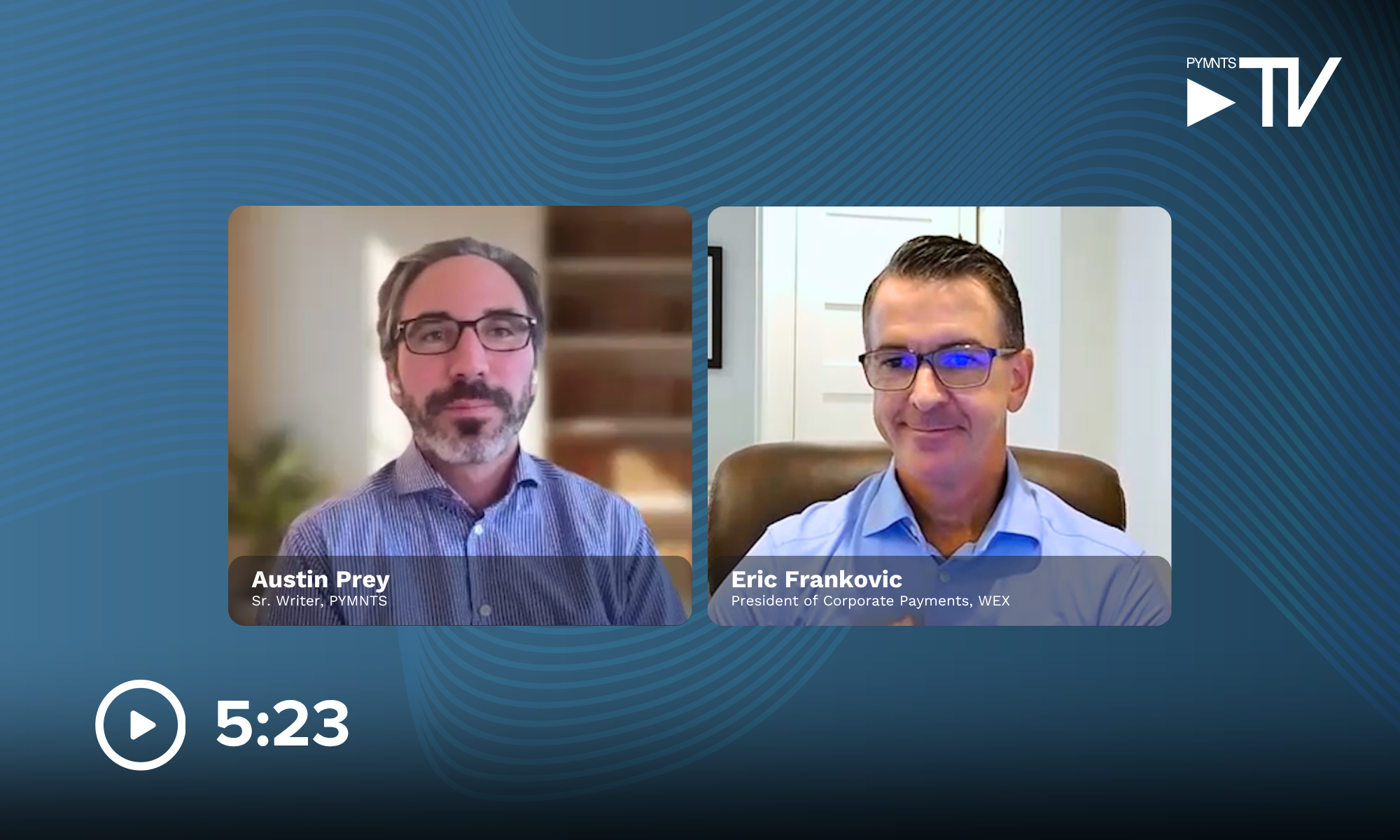
Embedded payments can look simple at launch. A company identifies a customer pain point, integrates a payment capability and begins moving transactions through an experience it already controls. Then the challenges come when the embedded finance program starts working.
“The first thing you really need to do is be clear on what role you want payments to play in your broader business strategy,” Eric Frankovic, president of Corporate Payments at WEX, told PYMNTS.
For businesses large and small, the question surrounding the scalability of embedded payments is not whether the infrastructure can process more transactions. It is whether the business can absorb the additional complexity those transactions create. Frankovic stressed that the best time to solve that problem is before the volume arrives. The provider selection decision becomes less about securing transaction processing and more about determining who will help manage the growing ecosystem around it.
Embedded payments can serve markedly different purposes. A software platform might use payments to increase customer retention. Another business may view transaction economics as a new revenue stream. Still another may be trying to simplify a fragmented payment experience.
“The goals don’t have to be huge in year one,” Frankovic said, explaining that companies should determine upfront which customers the program serves, which problems it solves and how success will be measured. “You can step into it slowly.”
Starting narrowly should not mean designing narrowly. As programs grow, Frankovic added, “you’re introducing more payment methods, different currencies, different rails, banking relationships.”
Each embedded finance addition creates another layer of technology, compliance, risk and operational responsibility. Companies need to decide early how much of that infrastructure they want to own and where they want their payment provider to assume responsibility.
“The key is to avoid one-off integrations,” Frankovic said, noting that architecture is one area where seemingly small early decisions can become expensive later. Early decisions can “enable your scale and avoid having a bunch of tech debt or having to start over,” he said.
Companies seeking a durable path forward can build around modular infrastructure and standardized APIs that make it possible to introduce new payment types, markets or partners without rebuilding the underlying platform. A focused customer segment or straightforward use case can provide a way to prove demand before expanding.
“Companies don’t need to choose between speed or doing it the right way,” Frankovic said. “You can test and learn as you go.”
The distinction is an important one: start with a small implementation, not an architecture capable only of remaining small.
The growth of API-first payments infrastructure has made it possible for developers to integrate sophisticated capabilities with little human interaction. Scaling exposes the limits of treating payments entirely as a technology purchase. It is also where WEX’s own model offers a useful illustration of how payment partnerships can evolve beyond processing. Dedicated relationship managers work alongside customers from integration through expansion, combining implementation support with practical guidance and experience accumulated across other payment programs.
Frankovic described ongoing relationship management as “one of the most overlooked or undervalued pieces of a great payments program.”
“The best payments companies have great relationship managers, and they just don’t manage the relationship and take people to lunch,” he said. “They’re actively helping to grow the payments business.”
That industry experience becomes more consequential as a company’s payments operation encounters circumstances its internal team may be seeing for the first time. A relationship manager who has worked through similar market expansions, technology changes or operational problems elsewhere can bring those lessons into the next decision.
It is difficult to encode that type of institutional knowledge into an API. Embedded payment programs can involve banks, processors, BIN sponsors, risk providers and other intermediaries. When fraud spikes or an operational issue occurs, businesses rarely want to spend time determining which participant owns which part of the problem.
“A true payments partner, they’re invested in your business,” Frankovic said, adding that the true test is whether the provider remains accountable as the program becomes more complicated.
For WEX, that means pairing transaction infrastructure with relationship managers who stay engaged as customers move from implementation into growth, helping optimize programs, manage new requirements and bring industry experience to decisions that emerge along the way.
Reliable technology remains table stakes. Companies scaling payments are discovering that they also need something harder to automate: a partner that understands where the program has been, where it is going and what tends to go wrong in between.
As Frankovic put it, businesses ultimately want someone “that’s there and on the hook with you growing this business year in and year out.”