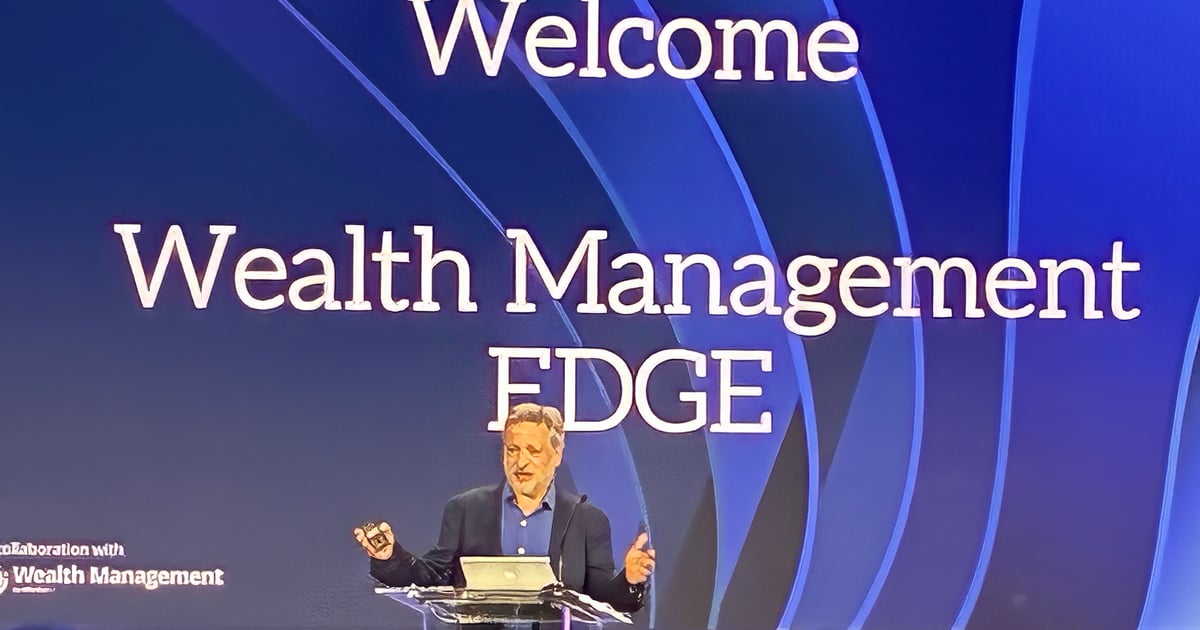
Wealth Management EDGE opened in Boca Raton on Monday with 2,000 attendees, including 1,000 advisors. The first day stacked summits on AI and private markets alongside keynotes from foreign affairs expert Robert Kaplan and humanitarian Michael Crossland. Advisors packed sessions on commodities, cryptocurrencies, and the coming wealth transfer.
Kaplan’s Taiwan Risk: The Supply Chain Choke Point
Kaplan traced geopolitical risks from Napoleon through the Weimar Republic. His argument: markets absorb conventional war. A conflict with China over Taiwan would break that pattern. The island holds the concentration of advanced chip fabrication. For advisors with clients holding NVIDIA or TSM positions, the exposure is direct. Kaplan did not offer a hedge. The implication was clear: diversification beyond semiconductor-heavy equity exposure matters more now than during any post-Cold War period.
The speech explicitly warned that markets underestimate the Taiwan risk. The choke point for global tech is real. Advisors need to think about tail risk that no recent history covers. The hedge – semiconductor industry short-dated puts, not a broad gold allocation – is different from a generic defensive rebalance.
AI Integration: The Compliance Bottleneck
A separate summit focused on how AI will disrupt the business of financial advice. The discussion centered on regulatory compliance costs, not client-facing chatbots. Advisors want automation for know-your-customer checks, reporting, and portfolio rebalancing. The hurdle is that state and SEC rules still treat algorithmic decisions as discretionary advice, creating liability.
One panelist noted that a firm running an AI rebalancing tool still needs a human supervisor on every trade. That doubles the compliance headcount instead of cutting it. The gap between what the tech can do and what regulators allow is the real friction. Expect FINRA guidance in 2026 to clarify the boundary. Until then, the safe move is to treat AI as a research assistant rather than an execution engine.
Crossland’s Perspective on Advisor Resilience
Crossland earned a standing ovation with a direct quote: “Adversity doesn’t define you. How you deal with it does.” His speech focused on perspective, not market mechanics. The room responded to the emotional anchor. Speeches that reframe risk tolerance and client communication are a staple of advisor conferences. This one landed harder than most.
Crossland’s message translated directly to portfolio stress. Advisors who panicked during the 2022 drawdown and locked in losses are the ones who hurt client outcomes. His speech reinforced a lesson the conference’s tech and geopolitics sessions underscored: preparation beats reaction. Firms that pre-position their practice for wealth transfer, AI compliance, and geopolitical diversification will hold client trust through the next dislocation.
The day closed with an outdoor reception – shrimp cocktail, oysters, lobster medallions. The informal conversations likely carried as much insight as the sessions. Next up: sessions on UHNW wealth transfer and private market allocation on day two. For advisors tracking these themes, the NVIDIA profile offers a starting point for semiconductor exposure analysis.