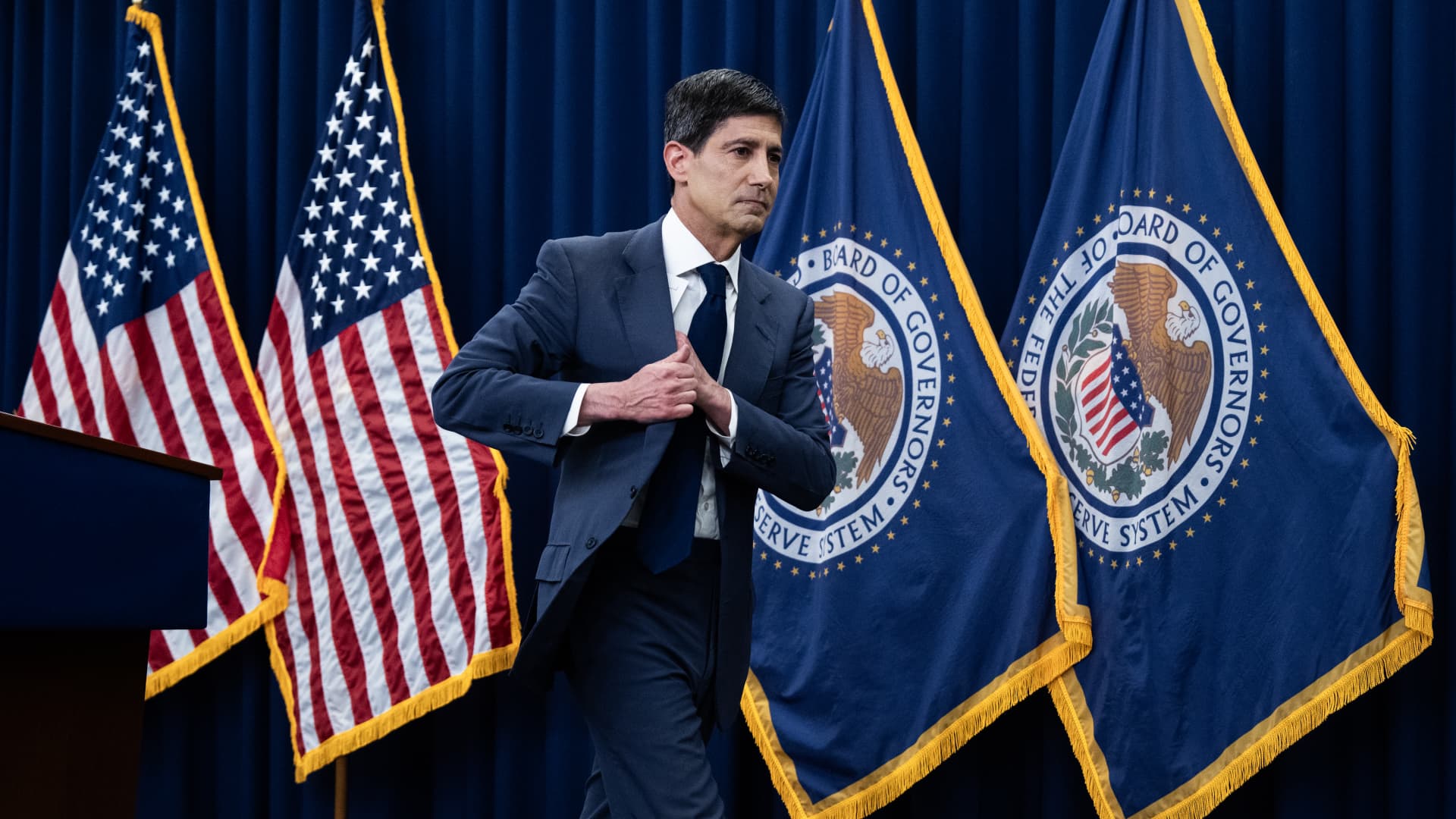
Kevin Warsh chaired his first Federal Reserve meeting Wednesday, announcing a series of task forces and a revamped policy statement that left traders parsing the new chair's communication style. The S&P 500 fell 0.7% on the session, while the two-year Treasury yield climbed 8 basis points to 4.32%, as several Fed officials signaled a rate hike remains on the table for this year.
Warsh said the new policy statement is "a bit shorter, a bit simpler, and it dispenses with some older language." He declined to contribute to the dot plot that shows policymakers' rate expectations, a break from the approach of his predecessor Jerome Powell. The five task forces he announced include groups focused on the Fed's communications and its balance sheet.
On the geopolitical front, President Donald Trump said he signed a memorandum of understanding with Iranian President Masoud Pezeshkian aimed at ending the war. The deal stipulates restoration of energy shipments via the Strait of Hormuz, a development that pushed crude oil prices lower. Brent crude fell 2.1% to $78.40 a barrel on the news.
Trump said he liked the idea of blaming Vice President JD Vance if the deal does not work out, a comment that raised questions about the durability of the agreement. The International Energy Agency said Wednesday that a resolution to the Middle East conflict could result in significantly higher supply volumes and spark a major oil overhang next year.
In the tech sector, Anthropic CEO Dario Amodei and Google DeepMind CEO Demis Hassabis urged a U.S.-led coalition to craft AI rules and standards during a closed-door meeting at the G7 summit attended by Trump and other leaders. SpaceX, which went public last week in a record IPO, added longtime Musk ally Roelof Botha to its board as an independent director and audit committee member.
Amazon AI executive Peter DeSantis told CNBC the first "commercially useful" quantum computers will arrive in five to seven years. "They're going to get bigger and bigger every year, and they're going to be able to tackle more and more interesting problems," DeSantis said.