Warsh at Sintra, Data Stack Set Q3 Tone as Rate-Hike Bets Rise
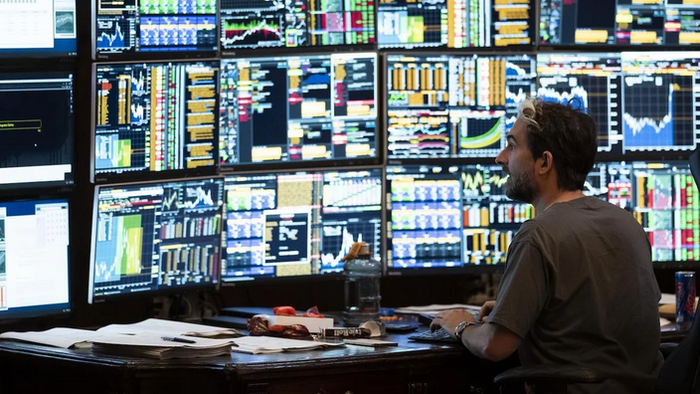
Fed Chair Warsh joins Lagarde and Bailey at Sintra as rate-hike bets rise. July hike pricing hit 34% after Hammack's hawkish comments. S&P futures down 0.2%, Nasdaq down 0.6%. Microsoft up 1.7% on job-cut news.
US equity futures pointed lower Wednesday as traders braced for Fed Chair Kevin Warsh's first major overseas appearance and a data calendar that could reinforce the case for a July rate hike. S&P 500 futures fell 0.2% by 8:20 a.m. New York time, recovering from earlier lows. Nasdaq futures dropped 0.6%, lagging after the NDX jumped 3.9% over two sessions. Chipmakers, which led the recent AI rally, weighed on tech in premarket trading.
Warsh joins ECB President Christine Lagarde and Bank of England Governor Andrew Bailey on a policy panel at the ECB's Sintra forum at 9 a.m. ET. His June FOMC meeting remarks lifted the dollar and short-dated yields. Bloomberg Economics expects him to strike a careful balance after signaling different messages to hawks and doves. "Given the absence of forward guidance from the Fed now, there is going to be intense focus on any comments," said Chris Turner, a foreign-exchange strategist at ING Bank NV. "A focus on price stability can keep the dollar bid."
Cleveland Fed President Beth Hammack fueled rate-hike speculation late Tuesday. She told CNBC the US may need higher interest rates to bring inflation back to target. Asked about a July hike, she said she kept an open mind at every meeting. Market pricing for a July hike ticked to 34% from 32%, data from overnight trading showed.
The economic calendar adds to the event risk. June ADP employment change lands at 8:15 a.m., followed by the final S&P Global manufacturing PMI at 9:45 a.m. and the ISM manufacturing index at 10 a.m. A solid ISM reading, following the strong JOLTS print on Tuesday, would reinforce the labor market resilience narrative. Payrolls on Thursday cap the week.
In premarket trading, Microsoft outperformed its Magnificent 7 peers. Shares rose 1.7% after Business Insider reported plans to cut thousands of roles, citing people it didn't identify. Other Mag 7 stocks were mixed: Alphabet -0.4%, Nvidia -0.6%, Apple -0.09%, Tesla -0.4%, Amazon +0.9%, Meta Platforms +0.3%. Nike slid 2% after a cautious outlook.
Oil prices extended their slide. Brent crude fell 1% to $72.20 a barrel. A senior administration official said US negotiators held productive talks in Qatar, with technical discussions on an interim peace deal with Iran showing progress. That news kept the dollar bid. Treasury yields were flat to down one basis point, with the 10-year around 4.46%. European bonds underperformed.
Goldman Sachs chief global equity strategist Peter Oppenheimer told Bloomberg TV that the S&P 500's 15.2% total return in Q2, its best quarter in six years, came on the back of tech and AI-related gains. "As long as earnings continue to be good and broaden out, I think we will get continued gains through the second half," he said. He added that hyperscalers have "derated" on longer-term return concerns. Their heavy spending should continue to underpin growth and "trickle out" into parts of the economy supporting the AI infrastructure buildout.
Citadel Securities' Scott Rubner wrote in a note that concentrated market leadership, passive inflows, retail flows, leverage and a new volatility regime are increasingly driving price action. The narrowness of the rally showed Tuesday: the equal-weighted S&P 500 fell 0.12% even as the index itself rose 0.79%.
AlphaScala's proprietary scoring shows MSFT at a Mixed 45/100 and NVDA at a Moderate 65/100. The divergence in premarket action aligns with the different risk profiles: Microsoft's job-cut news offers a cost-control narrative, while Nvidia remains tied to the AI spending cycle that has driven its rally.
European stocks slipped. The Stoxx 600 fell 0.2%, dragged by mining companies on weaker commodity prices. The DAX bucked the trend, rising 0.4% on pension reform progress. Asian markets were mixed, with the Nikkei rising 0.6% on strong Tankan survey data, while the KOSPI fell 0.7% on chipmaker weakness.
The global oil market's swing back toward oversupply, noted by Goldman Sachs, adds to the risk that the commodity retreat extends. The Iran talks progress, if sustained, reduces a key geopolitical premium. The dollar's bid and higher real yields from a hawkish Warsh would pressure gold and industrial metals. Spot silver fell over 1%.
Traders face a binary session. Strong manufacturing data and a hawkish Warsh would reinforce the dollar and push yields higher, punishing rate-sensitive tech and cyclicals. Weak prints or a dovish tone from Sintra would revive hopes for an earlier cut, giving equities room to extend the Q2 rally. The payrolls report Thursday will settle the next debate.
Warsh's appearance at Sintra runs 9-10 a.m. ET. The ISM report follows at 10 a.m.
Drafted by a large language model from the source reporting linked above, then screened by automated publishing checks. It is not read by a journalist before publication. Some articles cite our Alpha Score. Verify prices and figures against the original source. Educational coverage, not personalized advice.