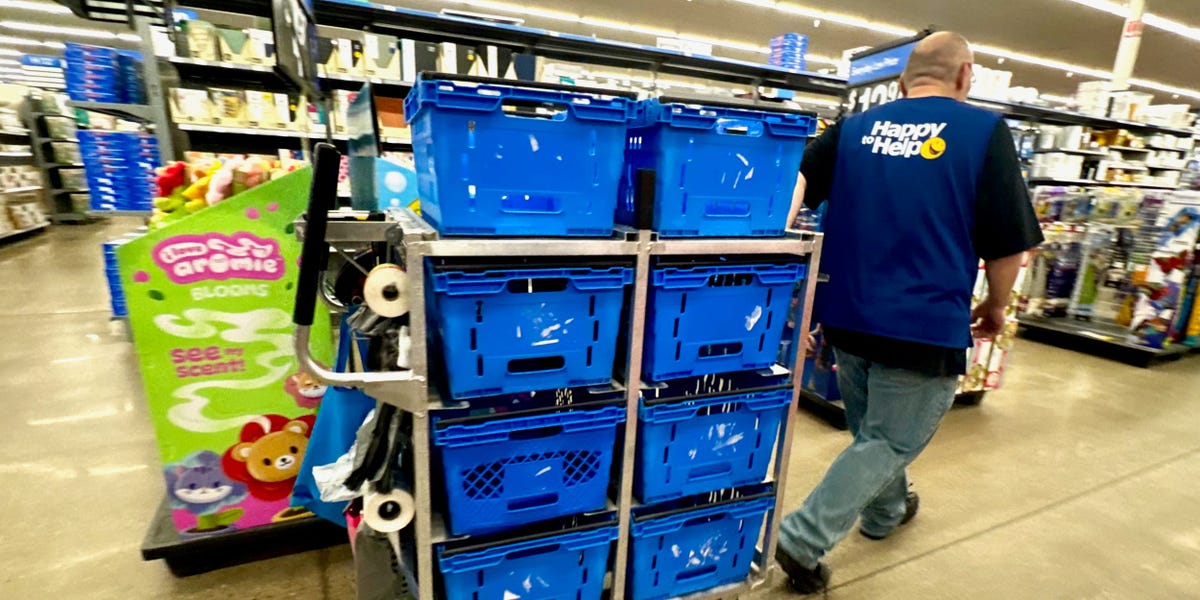
Walmart has partially reversed recent operational instructions regarding the carts used by store employees to fulfill online pickup orders. The shift prioritizes worker safety over the previous focus on maximizing order volume. This change comes after internal concerns regarding the physical demands and safety risks associated with the current cart configurations used in high-traffic aisles.
Operational Constraints and Fulfillment Efficiency
The previous directive pushed store associates to utilize larger, more cumbersome carts to increase the number of orders picked per trip. While this strategy aimed to improve fulfillment speed and reduce the time spent traversing store floors, it created significant bottlenecks and physical strain for employees. By reversing these instructions, management is effectively acknowledging that the marginal gains in picking efficiency were being offset by increased safety risks and potential equipment damage in crowded retail environments.
For retail operations, the trade-off between throughput and safety is a constant tension. When a company mandates a specific piece of equipment to drive volume, it often ignores the reality of store-level congestion. By reverting to smaller or more maneuverable cart configurations, Walmart is likely sacrificing some of its per-hour pick rate to ensure that employees can navigate aisles without impeding customers or risking injury. This is a classic example of a top-down efficiency mandate meeting the friction of physical retail reality.
Impact on Store-Level Productivity
Investors often view fulfillment speed as a primary metric for stock market analysis regarding retail efficiency. However, this reversal suggests that the company is recalibrating its expectations for store-level labor productivity. If the new cart rules lead to a measurable slowdown in order fulfillment, the company may need to increase headcount or adjust its labor scheduling to maintain the same service levels for online pickup customers.
This adjustment serves as a reminder that the shift toward omnichannel retail is not just a software or logistics challenge. It is a physical one. Every time a retailer attempts to optimize the "last 50 feet" of the supply chain, they encounter the physical constraints of the store footprint. When those constraints are ignored, the result is often a policy reversal like the one seen here. The decision to prioritize safety indicates that the company is willing to accept a lower theoretical throughput to avoid the tangible costs of workplace accidents and store-floor disruption.
The Next Decision Point
The immediate focus for observers is whether this change in cart policy leads to a sustained dip in fulfillment speed metrics. If the company reports higher labor costs or slower pickup times in the coming quarter, it will confirm that the previous efficiency targets were unsustainable under existing store configurations. Conversely, if the change improves employee retention or reduces injury-related downtime, the move may ultimately prove more cost-effective than the high-volume strategy it replaced. Watch for future internal communications or labor reports that detail how these new cart rules affect the overall cost-per-order for the digital segment.