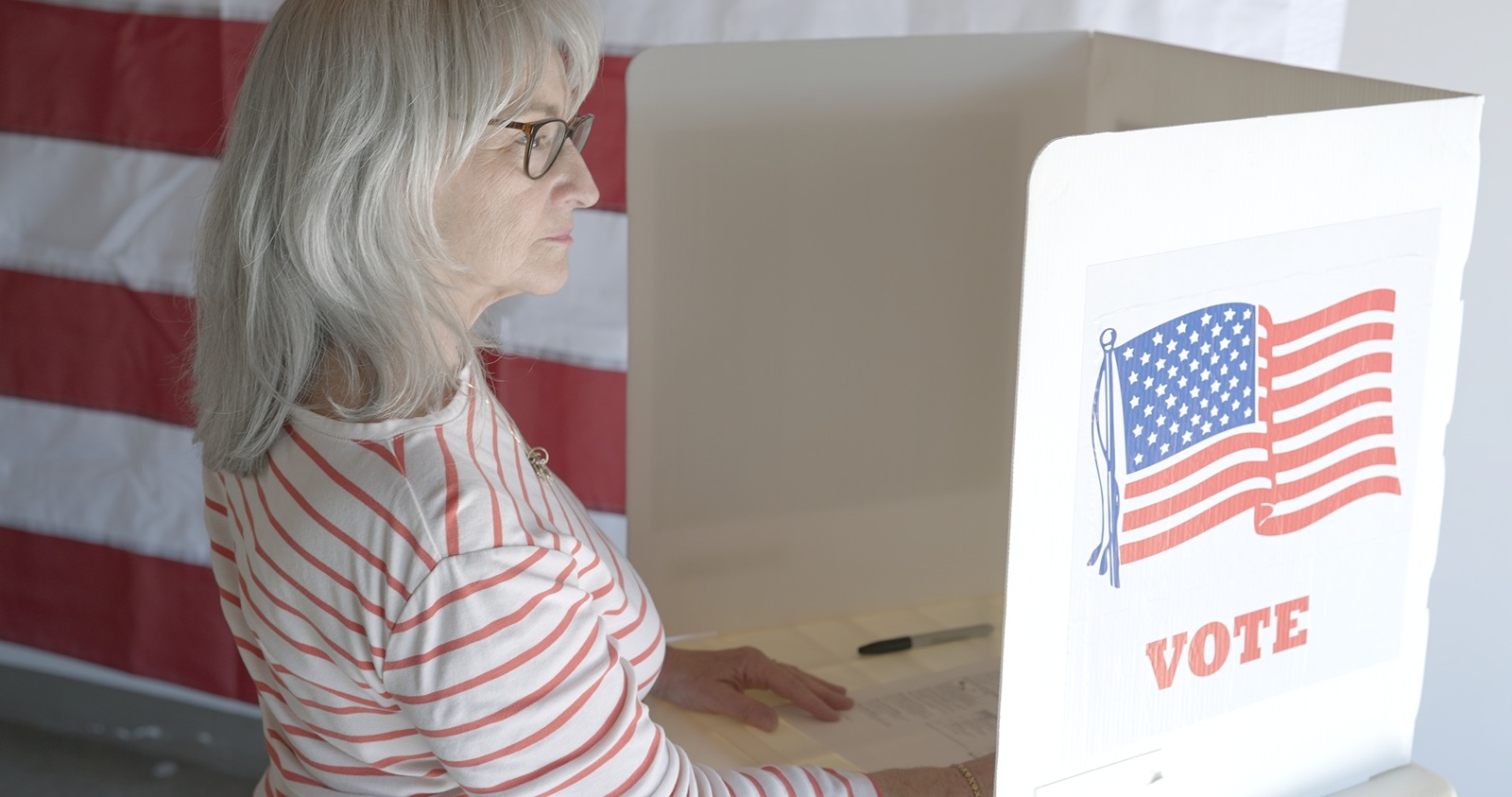
A 15-year study of 7,708 older adults found voters had 29-45% lower mortality risk. The link held after controlling for health, income, and education.
A study of 7,708 older adults found that those who voted in the 2008 presidential election were significantly less likely to have died over the next 15 years. The research, published in The Journals of Gerontology: Psychological Sciences and Social Sciences, used verified voting records from Catalist and death records from the National Death Index.
After accounting for income, education, health, smoking, and other factors, voters showed a 45% lower mortality risk after five years, 37% lower after ten years, and 29% lower after 15 years, compared with non-voters. The method of voting – mail-in or in-person – did not change the association, nor did political affiliation or whether the voter's preferred candidate won, the researchers said.
"We were surprised to find that people who voted either in person or remotely experienced these benefits," Femida Handy of the School of Social Policy & Practice, a co-author of the study, said in a news release. "This suggests that voting itself is more important than the method of voting or even who they voted for."
The association held even after adjusting for prior health and physical limitations. The link appeared strongest among participants who started out in poorer health. Fifteen years later, voting was more strongly tied to lower mortality in that group than among those already healthier at baseline, the study found.
Researchers also checked voting in the 2004 and 2012 elections. The pattern held for 2012 but was weaker for 2004, suggesting other social or historical factors may play a role. The Wisconsin Longitudinal Study sample is mostly White, non-Hispanic older adults from Wisconsin, so results may not generalize to more diverse populations.
A separate Finnish study reported similar findings: non-voters had a higher risk of death than voters, with a gap larger than the difference between people with lower and higher education levels.
The study did not test why voting is associated with lower mortality, but researchers pointed to possible mechanisms. Voting may reflect a sense of purpose and future orientation, which research ties to healthier aging. It may also strengthen feelings of agency and control. Kevin Lanning, a professor of psychology and data science at Florida Atlantic University, told the American Psychological Association that "voting can be thought of as an expression of the self-concept." Social connectedness from civic participation may also play a role; chronic social isolation carries health risks comparable to smoking roughly 15 cigarettes a day, previous research has found.
Voting may overlap with broader health-promoting behaviors. People who follow through on civic responsibilities may also be more likely to attend doctor visits and follow public health guidance. A 2023 international study linked stronger social norms around protective behaviors with higher compliance during the COVID-19 pandemic.
The findings add to evidence that civic engagement, including volunteering, is associated with lower rates of depression, cardiovascular disease, and mortality in older adults.
Drafted by a large language model from the source reporting linked above, then screened by automated publishing checks. It is not read by a journalist before publication. Some articles cite our Alpha Score. Verify prices and figures against the original source. Educational coverage, not personalized advice.