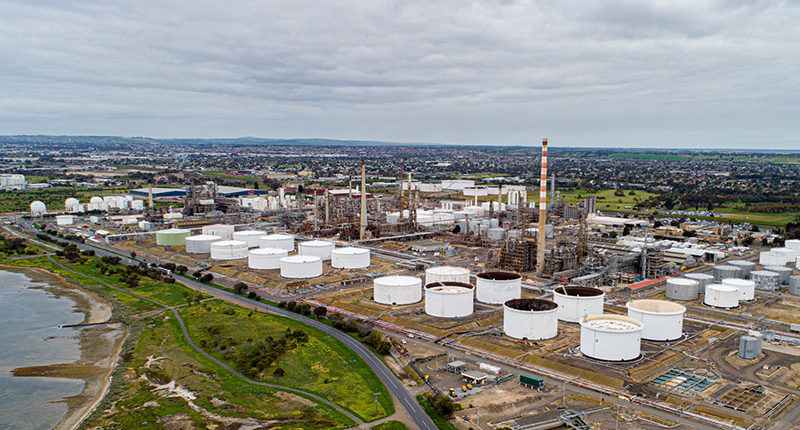
Viva Energy has confirmed plans to restore operations at its Corio refinery in Geelong to near-full capacity within the coming weeks. The facility, a critical component of Australia's domestic fuel supply chain, recently experienced a fire that forced a temporary shutdown of key processing units. The company is currently managing the fallout of this incident while evaluating the structural integrity of the affected infrastructure.
Impact on Domestic Fuel Inventory
The Corio refinery serves as a primary source of refined petroleum products for the Victorian market and broader regional distribution networks. A prolonged outage at this scale typically forces a shift toward increased reliance on imported fuel stocks to bridge the supply gap. Because the refinery accounts for a significant portion of domestic output, the speed of the restart is the primary variable determining whether regional inventory levels face a sustained drawdown or a manageable temporary dip. The company maintains that the damage is contained to specific areas, allowing for a phased return to operational status rather than a total facility overhaul.
Production Continuity and Operational Constraints
Returning to full production requires the successful integration of repaired processing units with the refinery's existing logistical framework. Viva Energy is prioritizing the restoration of units responsible for high-volume output to stabilize supply chains before addressing secondary maintenance tasks. The timeline for this recovery remains contingent on safety inspections and the successful testing of repaired systems under load. Any deviation from the current multi-week schedule would likely necessitate a more aggressive procurement strategy for imported refined products to maintain service levels at retail and commercial outlets.
AlphaScala data currently tracks various sectors for volatility, including consumer cyclical and technology firms. For context, AS stock page holds an Alpha Score of 47, while ASX stock page maintains a score of 70, reflecting different risk profiles in the current market environment. Investors monitoring the energy sector should also review our broader commodities analysis to understand how regional refinery disruptions interact with global price benchmarks.
Market participants are now looking toward the next operational update from the company, which will serve as the primary indicator of whether the repair schedule remains on track. The ability to meet the multi-week target will be confirmed by the resumption of standard throughput volumes and the normalization of regional supply logistics. Failure to meet these internal benchmarks would likely trigger a reassessment of domestic fuel availability and the associated costs of sourcing alternative supply.