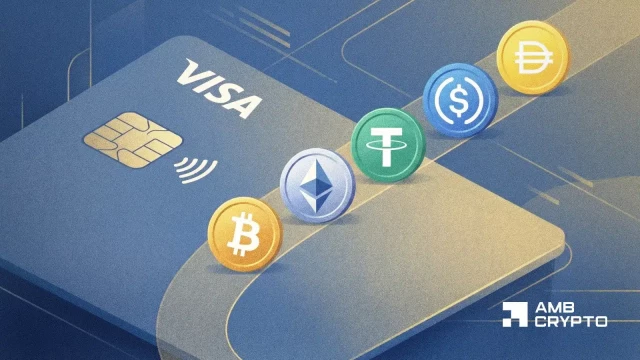
Visa Enters the Tempo Ecosystem
Visa has officially joined the Tempo blockchain network, assuming the role of an anchor validator. The move marks a shift in the payments giant’s infrastructure strategy, moving beyond simple card-issuance partnerships into the role of a network operator within a distributed ledger environment.
While the market often views such integrations as a validation of decentralized technology, traders should parse the specific utility here. Visa is acting as an anchor validator, a position that implies a commitment to network security and uptime. This is not a pilot program for a consumer product but rather a foundational commitment to the underlying blockchain architecture.
The Strategic Calculus
Visa’s involvement in Tempo is distinct from its prior forays into stablecoin settlement. By becoming a validator, the company is effectively putting its own operational reputation behind the chain’s consensus mechanism. This is a play for institutional control and visibility in a sector that continues to struggle with fragmentation.
For market participants, the question is whether this provides the liquidity necessary to justify the integration. The current crypto market analysis suggests that institutional heavyweights are moving away from speculative retail plays and toward infrastructure-level monopolies. By embedding itself as a validator, Visa captures transaction data and operational insights that are invisible to outside participants.
Market Implications for Digital Assets
- Validator Influence: As an anchor, Visa gains a seat at the table regarding network governance and protocol upgrades.
- Settlement Efficiency: The integration likely aims to reduce the latency associated with cross-border payments, potentially competing with existing Bitcoin (BTC) profile settlement layers.
- Data Moat: Visa’s ability to monitor flow on Tempo creates a proprietary data stream that could eventually inform credit scoring or risk assessment models.
Traders should watch the correlation between Visa’s operational announcements and the volatility of the underlying chain's native token. If Visa’s presence brings institutional volume, we expect a tightening of the spread between Tempo’s native asset and major liquid tokens like Ethereum (ETH) profile.
What to Watch
Look for the next performance report from the Tempo foundation regarding throughput and node decentralization. If Visa’s anchor status results in a concentration of power, expect pushback from the decentralization-maximalist crowd. The technical level to watch is the cost of gas on the network; if Visa’s integration leads to higher throughput without a corresponding spike in fees, the valuation of the network's token may diverge from broader market trends.
Ultimately, Visa is betting that the future of global payments will run on chains they help secure rather than chains they merely observe. This is an infrastructure play designed to institutionalize the payment rail, not just participate in it.