Stocks● Neutral
Vietnam's Tam Anh, UNSW to Develop RNA Cancer Vaccines
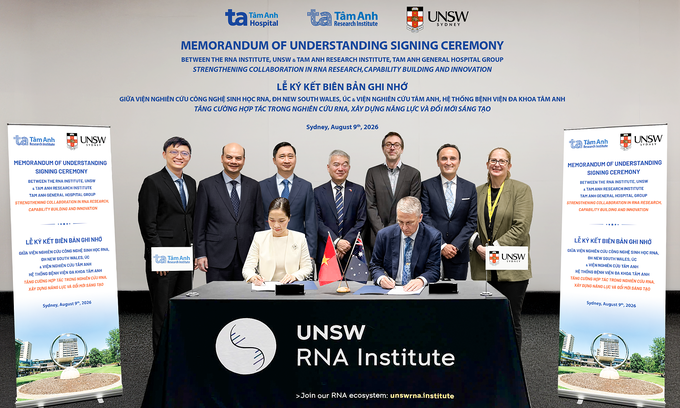
Tam Anh Research Institute and UNSW RNA Institute signed a deal to develop mRNA flu and personalized cancer vaccines, targeting lung and colorectal cancers in Vietnam and Asia-Pacific.
Continue with
The Tam Anh Research Institute and the University of New South Wales RNA Institute signed a cooperation agreement in Sydney on Aug. 9, during a state visit by Vietnam's Party General Secretary and State President To Lam. The deal targets two programs: an mRNA influenza vaccine and personalized cancer vaccines for lung and colorectal cancer, which are leading causes of death in Vietnam and the broader Asia-Pacific region, the institute said.
Tam Anh described the partnership as the first time a Vietnamese research body has teamed up with an RNA-specialist institute at a top Australian university on a model that includes joint investment, joint research and co-publication of products.
Professor Pall Thordarson, director of the UNSW RNA Institute, said the aim is to strengthen Tam Anh's capabilities across the entire RNA chain: design, synthesis, purification, quality control, packaging, preclinical work and clinical trials.
"The partnership's value extends beyond technology transfer," Thordarson said. "It is about jointly generating data and solutions suited to the disease characteristics of both Vietnamese and Southeast Asian populations."
He added that the number of patients and the biological features of diseases in Vietnam could fill gaps in international databases currently used to develop RNA therapies.
Under the agreement, the two sides plan training and expert exchanges, establish research protocols, and develop capacity in Good Manufacturing Practice standards. They will then investigate preclinical studies and clinical trials of RNA-based products in Vietnam.