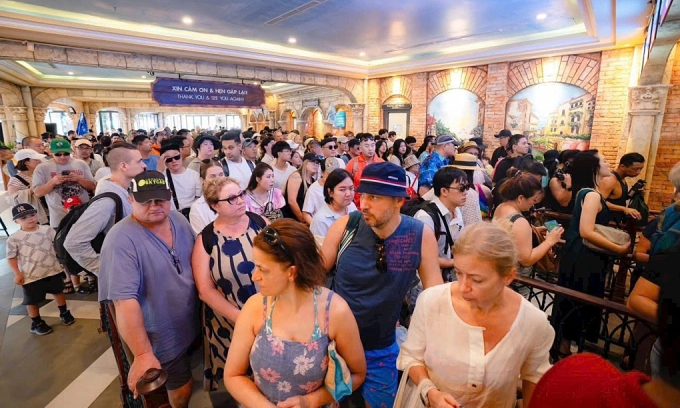
Deputy Minister of Public Security Lieutenant General Pham The Tung announced that Vietnam recorded more than 22.8 million foreign arrivals in 2025, the highest figure on record and an increase of about 18% from 2024. From the beginning of 2026, over 9 million foreign arrivals have already been logged, a year-on-year jump of 22.5%. The simple read is straightforward: a tourism boom supports domestic consumption, real estate, and transport-linked sectors. The better market read requires weighing the policy response.
The same conference in Ho Chi Minh City on May 15 carried a warning. The Ministry of Public Security said some foreigners have exploited more relaxed visa policies to engage in illegal activities. Authorities cited online fraud operations, immigration offences, public order disturbances, overstaying, and working without proper documentation. Commune and ward police have been instructed to take a larger role in managing foreigners, in line with Vietnam's push for decentralization.
The Oversight Shift and the Policy Signal
The tightening oversight is not a visa crackdown yet – Vietnam still offers e-visas to all countries and territories and has expanded visa exemption policies in recent years. The shift is toward enforcement at the local level. The simple read treats this as routine law enforcement. The better read sees a potential headwind for foreign direct investment (FDI) sentiment. Vietnam's growth story has relied heavily on openness to foreign capital and labor. A decentralized regulatory push raises compliance costs for foreign-invested enterprises and may deter short-term business travelers and skilled workers. Any perceived increase in regulatory risk could lift the risk premium on Vietnamese assets.
Transmission Through Domestic Demand and Rates
The transmission path runs through tourism receipts, which flow into Vietnam's current account and support the Vietnamese dong (VND) . If the oversight measures meaningfully slow arrival growth, services-linked revenue – hotels, retail, transportation – will feel the pressure. Slower services output reduces overall GDP momentum, potentially easing domestic price pressures. That would give the State Bank of Vietnam more room to keep policy rates accommodative. Conversely, if arrivals continue to boom despite the tighter framework, the added demand could feed into inflationary pressure, especially in real estate and consumer services, and build a case for rate normalization.
The next concrete decision point is the monthly arrivals data from the Vietnam National Administration of Tourism. That print will show whether the policy signal has already changed traveler behavior. Authorities have not specified new visa or entry rules beyond the focus on commune-level enforcement. The May 15 conference sets the direction for the second half of 2026. Markets will need to watch for follow-up circulars or police directives that codify the tighter oversight.