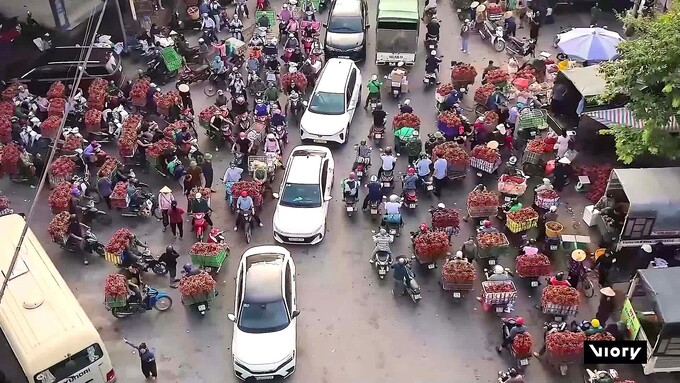
Vietnam's lychee output is roughly half of last year after poor weather. Prices are surging, squeezing buyers and threatening export volumes to China and the U.S.
Footage from Sunday shows motorbikes piled with freshly picked lychees moving along National Highway 31 in Luc Ngan, Vietnam's lychee heartland. Traders gather at roadside collection points to buy, sort and transport the fruit. The harvest this year is running at roughly half of last season's output after unfavorable weather during flowering and pollination, according to local estimates. That has pushed prices sharply higher, making procurement difficult for buyers.
"I have been buying lychees in Luc Ngan for 15 years now. Depending on customer demand, we buy from two to 10 tonnes per day. We buy lychees directly from orchards or from people who bring them to sell," said purchaser Giap Thi Thuy. She added that keeping the fruit fresh poses the biggest challenge. "During transportation, if exposed to intense sunlight, the fruit easily dries out due to its high sugar content, making it very difficult to keep them fresh for long periods."
Another buyer, Bui Huyen, noted the price jump directly affects her business. "This year, due to a poor lychee harvest, prices are very high, making procurement very difficult. Selecting good quality fruit is also challenging. While in previous years I could purchase them at home, this year we have to go directly to the collection points."
The reduced supply feeds into broader fresh-produce inflation across Vietnam and export markets. Luc Ngan normally ships thousands of tonnes domestically and to markets including China, the U.S. and Japan. A 50% output drop means less volume for export, higher retail prices, and tighter margins for distributors who must compete for limited fruit.
The industry supports farmers, traders and seasonal workers across the region. During peak harvest, the area also draws visitors. This year the smaller crop will squeeze incomes for growers even as spot prices rise. Traders like Thuy and Huyen face the opposite pressure: higher input costs with no guarantee they can pass the full increase to end buyers.
The next concrete marker is how quickly the remaining supply moves through the chain. If prices stay elevated through July, Vietnamese fresh-fruit exporters may lose share to competitors in Thailand and China, where lychee harvests faced different weather. Traders said the current dynamic mirrors past poor seasons where margins compressed for mid-chain buyers while orchard-gate prices spiked.
No official output figures have been released by the Vietnamese Ministry of Agriculture. The half-crop estimate comes from local trade sources. The situation will be clearer once weekly shipment data from Luc Ngan's main collection yards begins to flow.
Prepared with AlphaScala research tooling and grounded in primary market data: live prices, fundamentals, SEC filings, hedge-fund holdings, and insider activity. Each story is checked against AlphaScala publishing rules before release. Educational coverage, not personalized advice.