Venezuela's interim presidency faces a constitutional expiry as twin earthquakes kill over 3,000. A $200M reconstruction fund is small relative to damage, widening the risk premium on Venezuelan assets.
The political standoff in Venezuela intensified as Interim President Delcy Rodríguez accused opponents of trying to exploit damage from twin earthquakes to destabilize the government. The allegations came on the same day constitutional experts said her interim mandate had expired under the 180-day limit set by Article 233 of the Constitution.
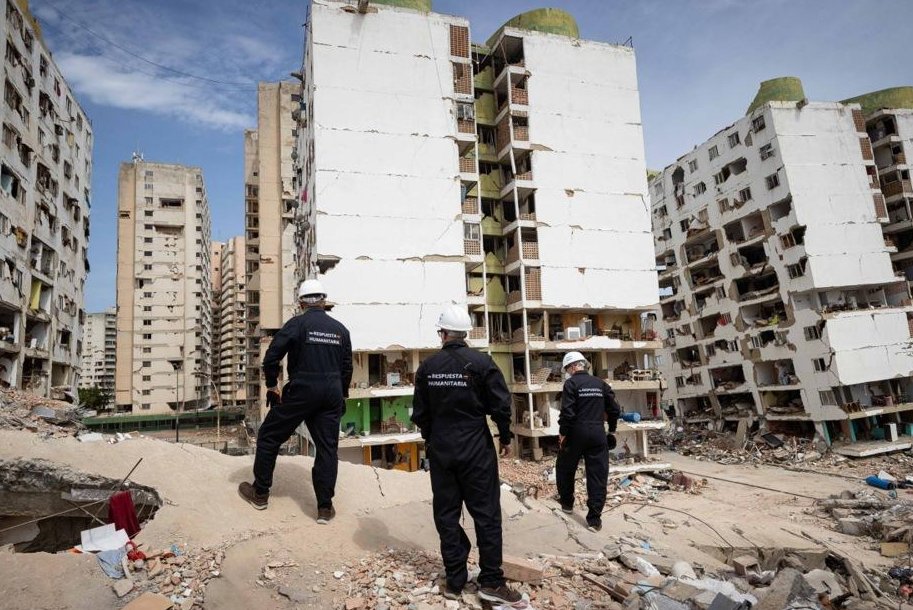
Rodríguez used Sunday's Independence Day ceremony to warn against what she called “any kind of conspiracy, either internal or external.” Her comments, broadcast on state television, drew a historical parallel to the 1812 earthquake that critics blamed on the government of the time. The current crisis began on June 24, when a magnitude 7.2 and a magnitude 7.5 earthquake struck the coast, killing at least 3,342 people, injuring 16,740 and leaving thousands homeless.
The recovery effort has faced protests in hard-hit areas like La Guaira over what residents described as delayed government response. Rodríguez defended the military deployment in disaster zones, calling it a strictly humanitarian operation. She blamed international outlets and “media laboratories” for politicizing the disaster.
The Constitutional Clock Expired
The legal dispute centers on whether Rodríguez’s interim presidency – which began Jan. 3 after Nicolás Maduro was captured in a U.S. military operation – exceeded the Constitution’s limit. The Constitutional Chamber of the Supreme Tribunal of Justice approved her ascent under the doctrine of “forced absence.” But critics, including former Supreme Tribunal Criminal Chamber President Blanca Rosa Mármol, argue the 180 days ran out on July 3. Extending the interim government without calling a universal election, they say, violates Article 233.
The disagreement creates a parallel authority question: who holds executive power for purposes of emergency spending, international negotiations and military command? That uncertainty, layered on top of a humanitarian crisis, complicates every relief decision. International rescue teams faced administrative delays entering the country, according to civil society groups.
The $200 Million Reconstruction Test
Rodríguez announced the Venezuela Reborn Fund, backed by $200 million drawn from recovered overseas assets and contributions from the International Monetary Fund. The money will fund direct assistance for displaced families, bank loans with guarantees up to 80%, and repairs to critical infrastructure including Maiquetía International Airport, which serves Caracas.
The sum is small relative to the damage. The earthquakes destroyed neighborhoods in La Guaira, Caracas and other areas. The fund cannot cover the full reconstruction bill, and the government’s access to additional external capital is constrained by the political dispute and existing sanctions. The IMF contribution, while a concrete step, does not signal broader engagement without a recognized government in place.
For investors watching Venezuelan sovereign bonds or PDVSA debt, the takeaway is a widening risk premium. A contested interim presidency reduces the odds of credible economic reforms or a debt restructuring timeline. The recovery effort itself will test whether the government can execute spending under political fire. Civil society has already accused it of moving too slowly. The military deployment, which Rodríguez frames as rescue, may feed opposition claims that the government is using the disaster to consolidate control.
The next concrete marker is whether the National Assembly or the Supreme Tribunal moves to formally challenge the interim government’s legality. No such vote has been scheduled. Rodríguez shows no sign of stepping down. The recovery continues with a $200 million fund that, by any measure, is not enough.
Prepared with AlphaScala research tooling and grounded in primary market data: live prices, fundamentals, SEC filings, hedge-fund holdings, and insider activity. Each story is checked against AlphaScala publishing rules before release. Educational coverage, not personalized advice.