A globally diversified equity portfolio covering roughly 10,000 stocks now costs seven basis points a year. Vanguard Europe listed the Vanguard FTSE Global All-Cap UCITS ETF, ticker VALL, on the London Stock Exchange and Borsa Italiana last week. The fund tracks the FTSE Global All-Cap Index, which includes large-, mid- and small-cap stocks across developed and emerging markets.
The total expense ratio of 0.07% puts VALL in direct competition with the State Street SPDR MSCI All Country World Investable Market UCITS ETF, known as IMID, which tracks the MSCI All Country World IMI Index and covers the same universe. State Street does not break out a separate fee for IMID in the blog post, though the broad market for comparable all-cap ETFs runs between 0.10% and 0.30%. Vanguard's seven-basis-point fee is roughly one-sixteenth of the 1.1% that LionGlobal Index products charged in Singapore two decades ago, the blog Investment Moats noted.
VALL is domiciled in Ireland, which offers a more favorable withholding-tax and estate-tax treatment for non-U.S. investors than a comparable U.S.-listed fund would. The UCITS structure also simplifies cross-border investing for European buyers.
The fund lists in multiple currencies. On the London Stock Exchange, it trades in both GBP and USD. A separate EUR-denominated line lists on the Italian exchange. Interactive Brokers users can find the USD share class under the ticker VALU or VALL. A distributing share class is also available for those who prefer recurring income.
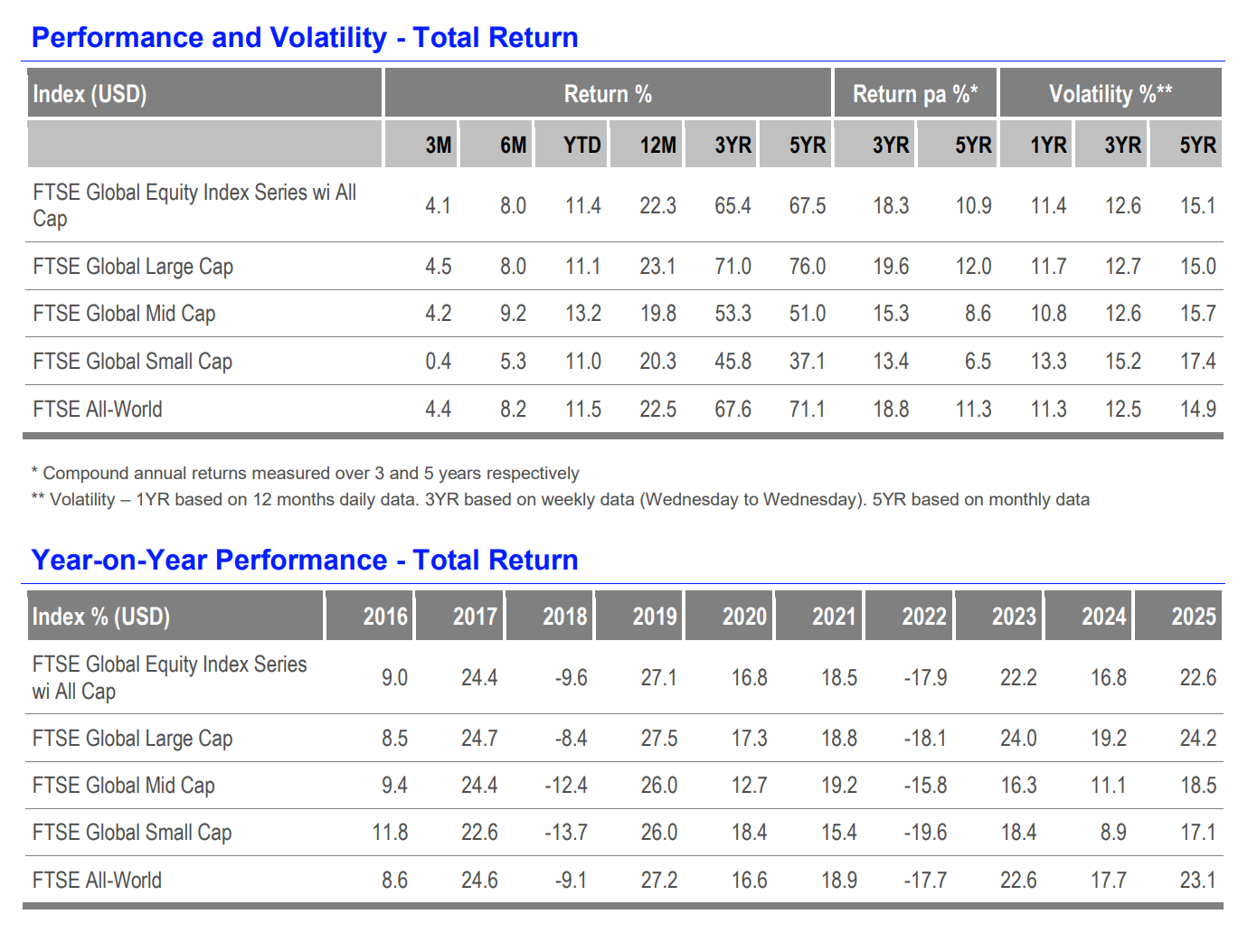
For investors already holding IMID, the blog argued there is little reason to switch. Both funds target essentially the same market. The Vanguard FTSE All-World UCITS ETF, ticker VWRA, is another incumbent that covers the same territory minus small caps. VALL includes the small-cap segment that VWRA leaves out. The return difference between the FTSE Global All-Cap Index and the FTSE All-World Index over the past 10 years has not been dramatic, the blog said. Still, an investor who wants maximum diversification and is willing to accept a slightly different index weighting may prefer VALL's 10,000-holding portfolio.
The fee compression in the global equity ETF segment continues. A 0.07% annual charge on a $100,000 portfolio works out to $70 per year, compared with $100 at 0.10% or $300 at 0.30%. Over 20 years, the compounding difference between seven basis points and 10 basis points on a $100,000 starting balance with a 7% annual return is roughly $1,600.
VALL is new, so performance and tracking error data are not yet available. The FTSE Global All-Cap Index fact sheet shows historical returns similar to other broad global indexes, with slightly higher volatility from the small-cap inclusion.
An investor who values simplicity and full market representation now has a cheaper option. Whether the seven-basis-point advantage justifies a switch from an existing holding depends on the tax implications of selling and the investor's weight on small-cap stocks.