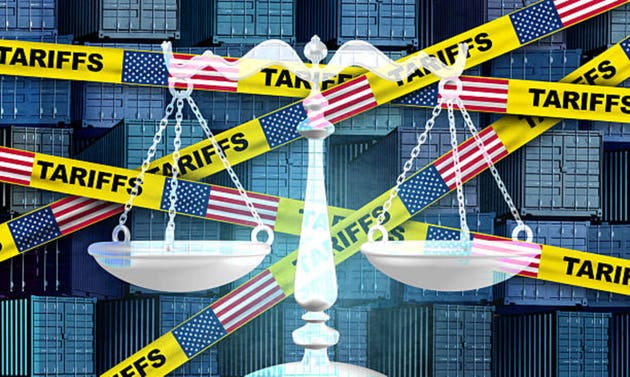
The U.S. government will begin accepting claims for tariff refunds on April 20, initiating a process to return billions of dollars collected under levies that the U.S. Supreme Court subsequently deemed unlawful. This move marks the conclusion of years of legal wrangling regarding the constitutionality of specific trade duties applied during the previous administration.
The Financial Scope of the Refunds
While the exact total remains subject to the volume of successful claims, the scope of the refund program involves a significant capital outflow from the Treasury. Companies that were forced to pay these duties now have a narrow window to recoup costs that were previously baked into their cost of goods sold. The return of these funds serves as a direct liquidity injection for the affected importers, many of whom have spent years litigating the collection process.
Market Implications for Trade-Sensitive Equities
For traders, the primary interest lies in the potential margin relief for companies that were disproportionately impacted by the initial tariff regime. Industries with heavy reliance on global supply chains, particularly those in the consumer electronics and automotive sectors, may see a modest improvement in year-over-year earnings comparisons as these refunds hit balance sheets.
- Liquidity impact: Expect a short-term boost to cash positions for firms aggressively pursuing these claims.
- Margin expansion: Companies that can successfully claw back these costs may report better-than-expected operating margins in upcoming quarterly filings.
- Sector rotation: Keep an eye on firms in the retail and industrial sectors that have historically cited tariff-related cost pressures in their disclosures.
Monitoring the Trade Environment
Traders should watch for how the market prices these refunds relative to current earnings guidance. If firms have already written off these costs, the incoming cash acts as a non-recurring tailwind. However, the market will likely differentiate between those companies that have already accounted for a potential win and those that treated the tariffs as a sunk cost.
As businesses prepare their filings, the broader impact on the trade deficit remains a point of interest for those monitoring market analysis. If these refunds correlate with a shift in import behaviors, we may observe changes in India Trade Deficit Narrows to $20.9B as Import Demand Cools reporting, as domestic firms adjust their procurement strategies based on the new legal environment. Investors should also note that this refund cycle is an isolated legal event rather than a policy reversal on protectionism. The underlying trade tensions that necessitate Middle East Military Build-up Adds Geopolitical Premium to Energy Markets remain firmly in place, and this refund process does not signal an end to broader tariff enforcement.