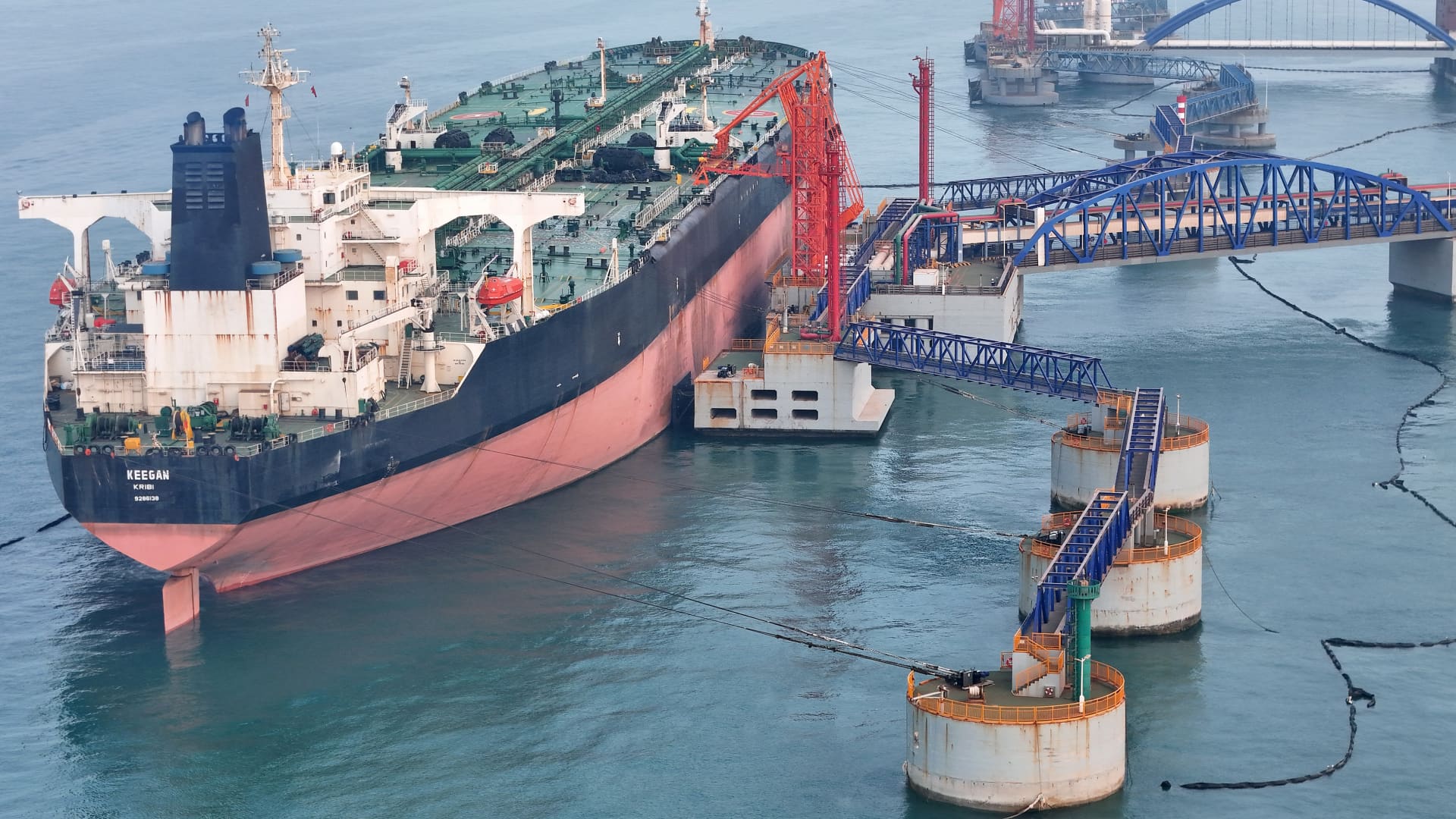
The United States government has issued a formal warning to financial institutions regarding the heightened sanctions risk associated with Chinese independent refineries, commonly referred to as teapots. These smaller, non-state-owned facilities have become the primary destination for Iranian crude oil, creating a complex web of financial transactions that now face increased scrutiny from federal regulators. Current data indicates that China absorbs approximately 90% of Iran's total oil exports, with the vast majority of these volumes processed by the teapot sector.
Concentration of Iranian Crude Flows
The reliance of Iranian export volumes on the Chinese teapot market creates a specific bottleneck for global energy trade. Unlike state-owned enterprises that maintain diversified supply chains and robust compliance departments, teapot refineries often operate with less transparency. This structural characteristic makes them the preferred counterparties for Iranian oil, which is frequently re-branded or blended to bypass existing international restrictions. The U.S. warning serves as a signal that the financial intermediaries facilitating these payments are now at risk of being cut off from the dollar-based banking system if they continue to process transactions linked to these specific entities.
Financial Intermediary Exposure
Banks that provide trade finance, letters of credit, or clearing services for these refineries are now facing a difficult choice between maintaining market share in the Chinese energy sector and adhering to U.S. enforcement priorities. The warning suggests that the U.S. Treasury is shifting its focus from the physical movement of oil to the financial plumbing that enables the trade. If banks begin to restrict access to capital for these refineries, the immediate impact would be a disruption in the flow of discounted crude into the Shandong province, where the highest concentration of these facilities is located.
- Teapot refineries process the majority of Iranian crude imports into China.
- Financial institutions face potential exclusion from the U.S. banking system for facilitating these trades.
- The concentration of 90% of Iranian exports in the Chinese market creates a single point of failure for Tehran's revenue stream.
Market Context and AlphaScala Data
While the primary focus remains on energy markets, the ripple effects of increased regulatory scrutiny often extend into the broader technology sector, where supply chain compliance is under similar pressure. For investors tracking the intersection of policy and corporate performance, the current landscape remains volatile. Within our proprietary coverage, U stock page currently holds an Alpha Score of 43/100, labeled as Mixed, while ON stock page maintains an Alpha Score of 46/100, also labeled as Mixed. These scores reflect the ongoing uncertainty in sectors sensitive to global trade flows and regulatory shifts.
For further analysis on how these geopolitical shifts impact broader resource trends, see our latest commodities analysis. The next concrete marker for this situation will be the issuance of any specific enforcement actions against individual financial institutions or the subsequent shift in crude import data from Shandong ports. Any measurable decline in tanker activity at these specific hubs will serve as the primary indicator that banking compliance departments have begun to tighten their internal policies in response to the U.S. alert.