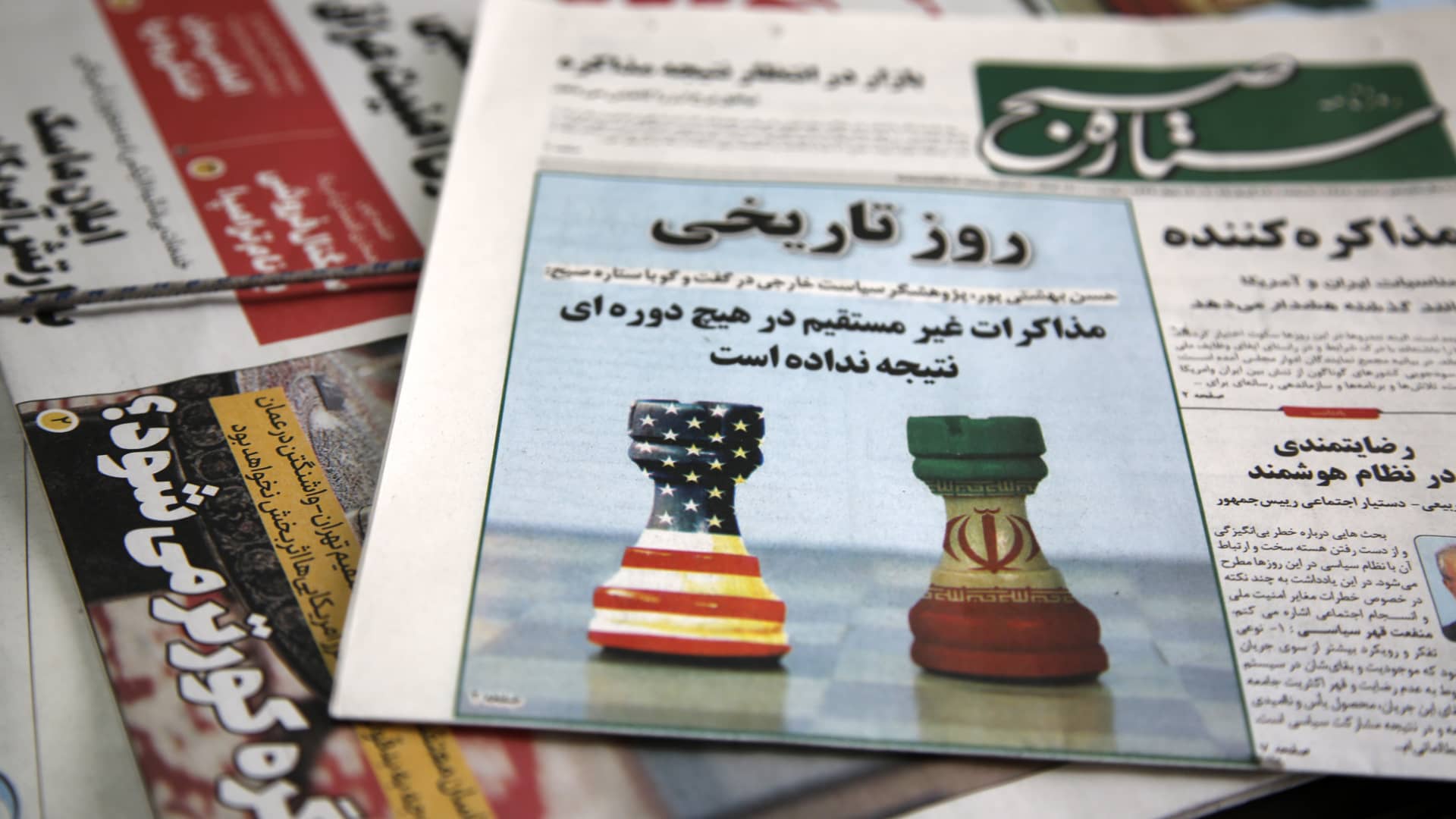
A day after Washington and Tehran signed a surprise interim accord, the process stumbled. Planned follow-up talks in Switzerland were scrapped Friday. Switzerland's foreign ministry said the U.S.-Iran discussions at Bürgenstock would not proceed as scheduled.
The White House confirmed that Vice President JD Vance canceled his travel to the country. The reason given was unresolved logistics around the negotiations.
"The plans for the upcoming technical talks have not been finalized, and the U.S. delegation has been prepared to depart at the first available opportunity," a White House spokesperson said.
The memorandum of understanding signed Thursday by President Donald Trump and Iranian President Masoud Pezeshkian was meant to open a path toward a permanent peace deal. Analysts said the document was only a starting point.
"This agreement marks the beginning rather than the end of the process to try to end the war and address Iran's nuclear capabilities," UBS said in a note.
Several unresolved issues remain. Israel's military campaign in Lebanon and Iran's nuclear ambitions are the main hurdles, said Adel Abdel Ghafar, a senior fellow at the Australian Strategic Policy Institute, speaking to CNBC. He warned that without progress on those fronts, the situation could revert to conflict, though both sides currently want to avoid that.
Despite the fragility, the agreement has already loosened shipping through the Strait of Hormuz. Iranian attacks and a U.S. Navy blockade had restricted traffic. Tanker rates and oil insurance premiums had spiked in prior weeks.
David Roche, a strategist at Quantum Strategy, told CNBC's "Squawk Box Asia" that the easing of shipping disruptions could help economies dependent on imported oil. Lower crude prices would contain inflation and reduce pressure on central banks to raise rates, he said.
Then he pivoted.
"Beyond that, this is a really bad deal," Roche said. He argued it strengthens Iran's position in the Gulf and limits external interference in its domestic affairs. "Iran is going to make the Middle East very unstable, that's bad in the long term." He said Israel would likely reject the accord and predicted Iran would never give up its nuclear ambitions.
Critics argued the U.S. conceded too much. Trump and Vance pushed back.
"The United States isn't giving up a cent of money to Iran," Vance said in defense of the approach.
Trump posted on Truth Social that critics were "either jealous, bad people, or stupid." He pointed to a record-high stock market and falling oil prices.
For now, the oil market has priced in lower supply disruption risk. Brent crude fell during the week on the deal news. The cancellation of Swiss technical talks introduces a wildcard: if the process stalls further, the risk premium could return quickly.
No new date for the follow-up talks has been set. The White House said Vance was prepared to travel when logistics allow.