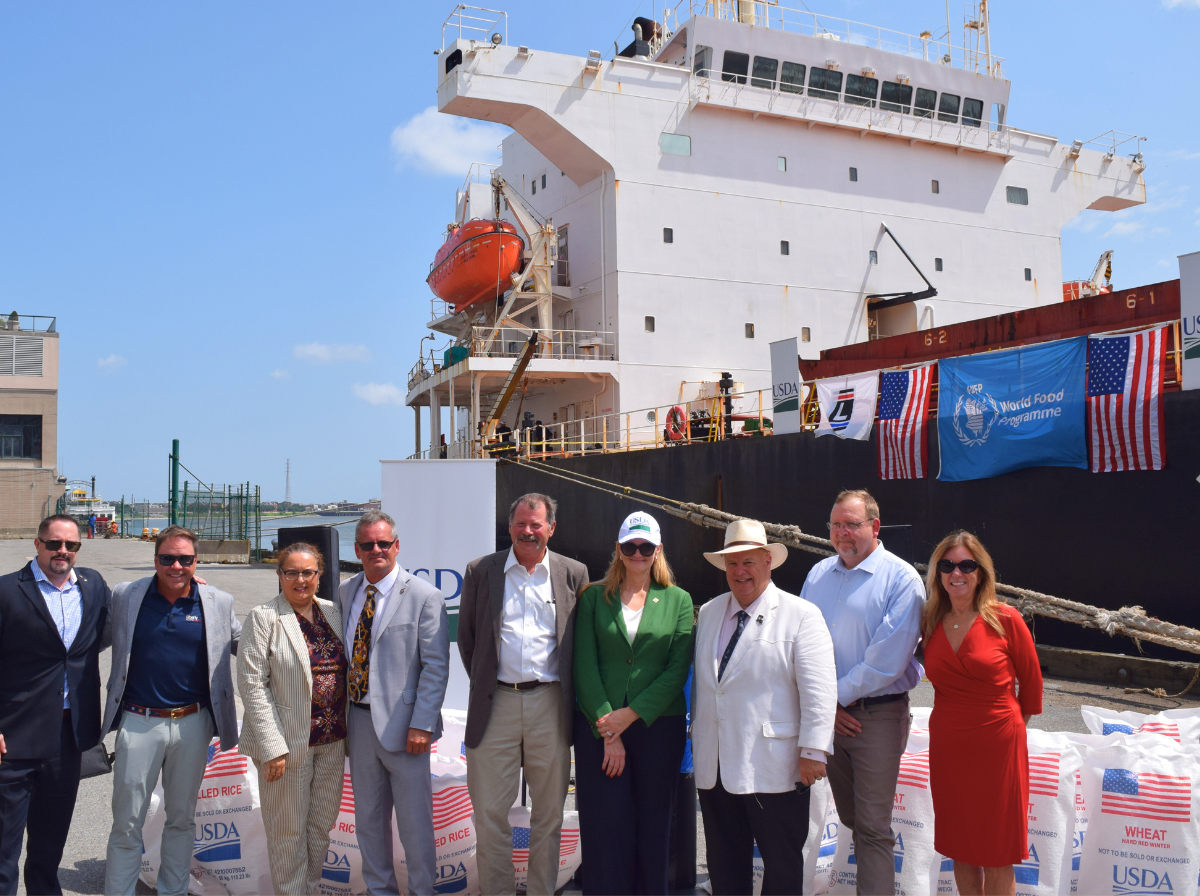
Over 28,000 metric tons of Louisiana rice and US wheat shipped to Kenya as USDA takes over Food for Peace, supporting American farmers and mariners.
The U.S.-flagged LIBERTY GRACE loaded 28,420 metric tons of Louisiana rice at the Port of New Orleans this week, bound for Kenya. The vessel will also take on American-grown wheat in Houston before crossing the Atlantic. Together, the cargo will feed more than 1 million people for a full year, the Transportation Institute said.
The shipment is the first major delivery under the restored Food for Peace program, now run by the U.S. Department of Agriculture after it assumed administration in 2025. Kenya is facing one of its worst food security crises in recent history. More than 3.3 million people are experiencing crisis-level or worse food insecurity, the World Food Programme says.
For U.S. rice farmers, the timing matters. "At a time when our rice markets are in dire need, this in-kind commodity donation is a shot in the arm for our industry," said John Owen, a Louisiana rice farmer and chairman of USA Rice. Prices for long-grain rice have been under pressure from global oversupply and weaker export demand. The Food for Peace purchase provides a direct off-take channel.
Wheat farmers also benefit. Gary Millershaski, chairman of U.S. Wheat Associates and a Kansas wheat farmer, said the program echoes "the lessons I was taught being raised on the farm: If a neighbor is in need, you lend a helping hand." The bulk vessel will carry U.S. wheat alongside the Louisiana rice.
The program supports more than just agriculture. From seed to ship, tens of thousands of American workers are involved, according to Sara Fuentes, president of the Transportation Institute. "Those voyages keep American mariners sailing, preserve the skills of our Merchant Marine, and ensure our nation has the maritime capacity," she said. The vessel is operated by Liberty Maritime Corporation, one of the largest U.S.-flag commercial fleets participating in government cargo preference programs.
USDA Deputy Under Secretary Michelle Bekkering noted the broader mission. "Through our suite of USDA food assistance programs, we're not just saving lives, we're changing them," she said. The agency inherited Food for Peace from USAID last year. The program has been a fixture of U.S. foreign aid for more than 70 years, connecting American agricultural abundance with humanitarian partners like the World Food Programme.
Over the past decade, nearly $5 billion in food has been purchased from U.S. farmers through Food for Peace and donated to WFP, according to Matthew Nims, director of the WFP Washington office. "The U.S. government through USDA, along with farmers, producers, shippers and port workers, are helping WFP save lives," Nims said.
The event drew attention to the farm bill debate. Congress is still negotiating a new five-year agricultural package. Owen urged lawmakers to make permanent the transfer of Food for Peace to USDA. "As Congress continues to debate the farm bill, we encourage them to make permanent the transfer of this program to USDA to ensure it can continue delivering American-grown commodities," he said.
The LIBERTY GRACE was loaded entirely by American longshoremen and will sail under a U.S. flag. The vessel is scheduled to depart Houston after taking on wheat.
Drafted by a large language model from the source reporting linked above, then screened by automated publishing checks. It is not read by a journalist before publication. Some articles cite our Alpha Score. Verify prices and figures against the original source. Educational coverage, not personalized advice.