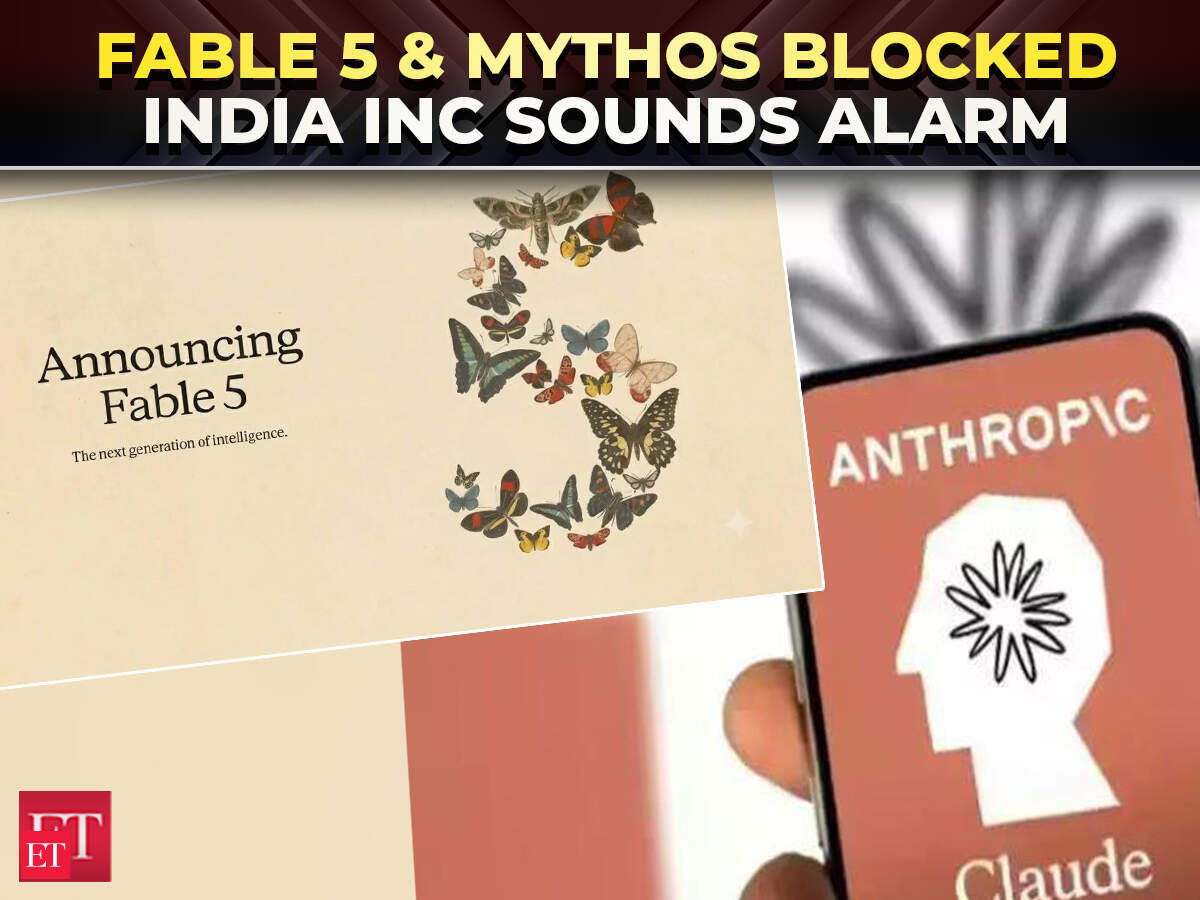
The US government ordered Anthropic to suspend foreign access to its Fable 5 and Mythos 5 AI models. The directive, issued by the Commerce Department, cited national security concerns. Anthropic said it disagrees with the move and is working to restore access. The company has not disclosed which countries are affected beyond a general restriction on foreign users.
Indian tech executives reacted quickly. Several called for sovereign AI, open-source models, and deeper investment in domestic AI infrastructure. The call is not new. The Anthropic order gives it a concrete trigger. If the US can cut off access to frontier models at any time, Indian companies that embed these models into products face sudden disruption.
The order blocks two of Anthropic's most capable large-language systems. The company, based in San Francisco, runs its models on cloud infrastructure from Amazon Web Services and Google Cloud. The Commerce Department did not explain the specific rationale beyond the national security label.
Indian technology leaders argued for a shift toward open-source models that cannot be unilaterally disabled by a foreign government, several industry observers said. Others pointed to the need for domestic data centers and chip manufacturing to reduce dependence on US infrastructure. The government's IndiaAI mission, which aims to build a national AI ecosystem, is expected to gain urgency.
The immediate market reaction was muted. No publicly traded Indian AI company saw a significant move. The sector read-through is structural. Companies with exposure to US frontier models now face regulatory risk that is real, not hypothetical. Infrastructure providers, cloud-service builders, and open-source model developers are the most direct beneficiaries. Companies that license US models for their core product face the most risk.
The order is not the first US export control on AI. Previous administrations limited Chinese access to advanced AI chips from Nvidia and AMD. This is the first time a US model itself has been blocked from foreign users. The precedent matters. If other US AI companies face similar orders, the global AI market will fragment along national lines. Nvidia, whose chips power most frontier-model training, is directly exposed to the evolving export-control regime. Investors tracking AI-regulation risk should watch the NVIDIA profile for chip-level restrictions.
Anthropic said it is working to restore access. It did not provide a timeline. Until then, Indian companies that rely on Fable 5 or Mythos 5 will need alternatives. Some will turn to open-source models like Llama or Mistral. Others will accelerate their own model development. The net effect is a more fragmented, more nationalized AI landscape.
The Indian government has not issued an official response. The IndiaAI mission, which includes plans for a national AI compute facility and a large language model trained on Indian languages, is expected to receive fresh attention. The next budget cycle could see increased allocation for AI infrastructure.
The order stands. Anthropic's models are blocked. Indian tech leaders are pushing for action. The question is whether the push translates into investment and policy changes.