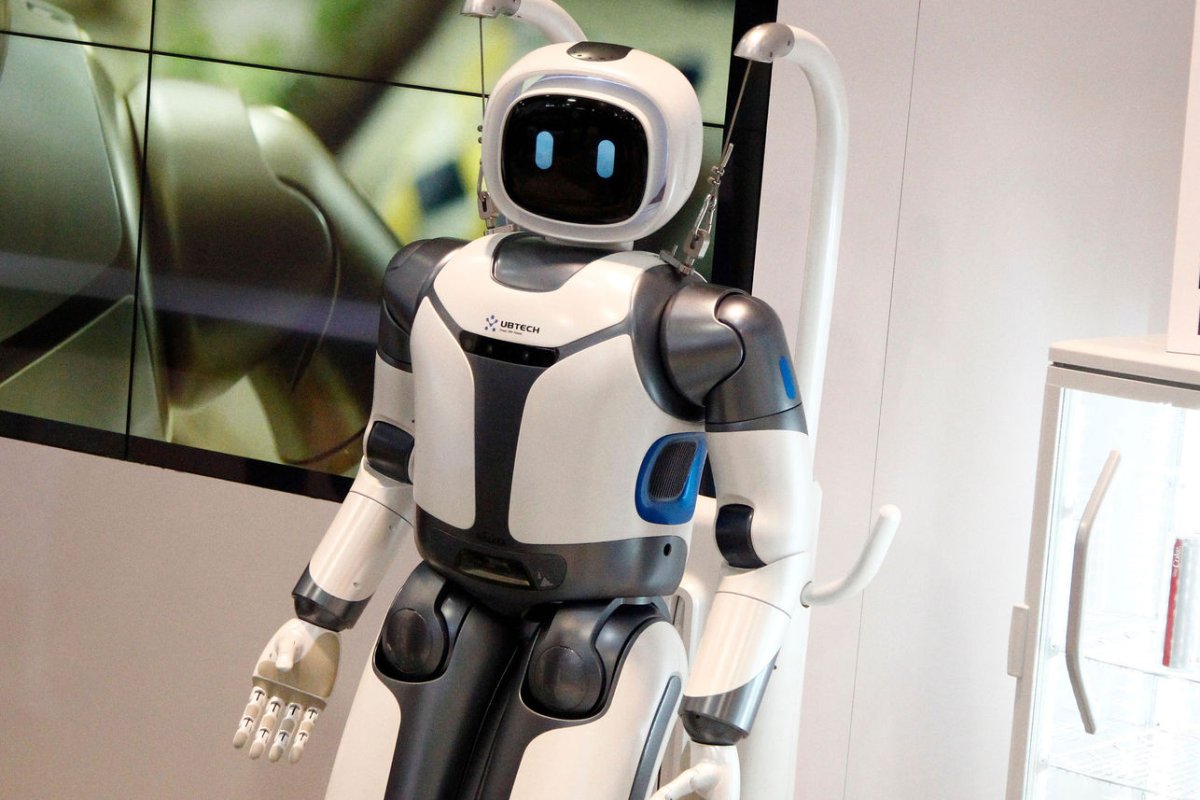
The FCC banned imports of Chinese humanoid robots and power inverters, citing national security risks. China pushed back, calling the move protectionism.
The United States banned imports of humanoid robots and power inverters from China and other countries, the Federal Communications Commission said Tuesday, citing risks to national security and the safety of Americans. The move adds both technologies to the FCC's Covered List under the 2020 Secure Networks Act.
The ban covers humanoid robots, including four-legged and bipedal models, as well as power inverters that convert direct current from solar panels and batteries into alternating current for the U.S. power grid. The FCC said the designations followed a National Security Determination from a group of government agencies convened by President Donald Trump.
"The networked capabilities of advanced robotic systems create extensive vulnerabilities and vectors for attacks that can manipulate the data and physical operation of the advanced robotic system," the group said in its determination. "Advanced robotic devices collect data that could be leveraged by malign actors to surveil Americans, enhance the capabilities of foreign intelligence services, or to remotely commandeer the robots."
The inverter ban addresses similar concerns. The FCC said increasingly networked inverters pose cybersecurity risks, including the possibility they could be switched off or used to harvest data, as well as "facilitating remote access and surveillance by foreign government actors." Any threat to electricity supply constituted a threat to the economy and national security, the agency added.
FCC Chairman Brendan Carr welcomed the measures. "I am pleased that the FCC has now added foreign produced advanced robotics and power inverters to the FCC's Covered List," Carr said. "Following President Trump's leadership, the FCC will continue to do our part to secure America's critical supply chains."
China criticized the decision. Foreign Ministry spokeswoman Mao Ning told a news conference in Beijing that the United States was "overstretching the concept of national security and going after Chinese companies." Protectionism does not make the U.S. more competitive, she said, and will hurt American businesses and consumers. A Commerce Ministry spokesperson called for the global community to reject the "politicizing" of trade issues and urged Washington to "abandon its hegemonic mindset."
China is the world's largest producer of humanoid robots, and the United States is its biggest market. The ban applies only to new models. Overseas manufacturers with existing conditional waivers from the FCC's Public Safety and Homeland Security Bureau or, for robots, the Defense Department, are exempt. The FCC said it encourages suppliers to apply for conditional approval.
The decision sets a precedent for how the U.S. treats foreign-made robotics and grid components. Companies relying on Chinese robots for manufacturing, logistics, or research may need to source alternatives. U.S. solar installers and battery storage operators could face higher costs or longer lead times for inverters, though the exemption for existing waivers provides a transition window.
"China will continue to do what is necessary to firmly defend the legitimate and lawful rights and interests of Chinese companies," Mao Ning added.
Drafted by a large language model from the source reporting linked above, then screened by automated publishing checks. It is not read by a journalist before publication. Some articles cite our Alpha Score. Verify prices and figures against the original source. Educational coverage, not personalized advice.