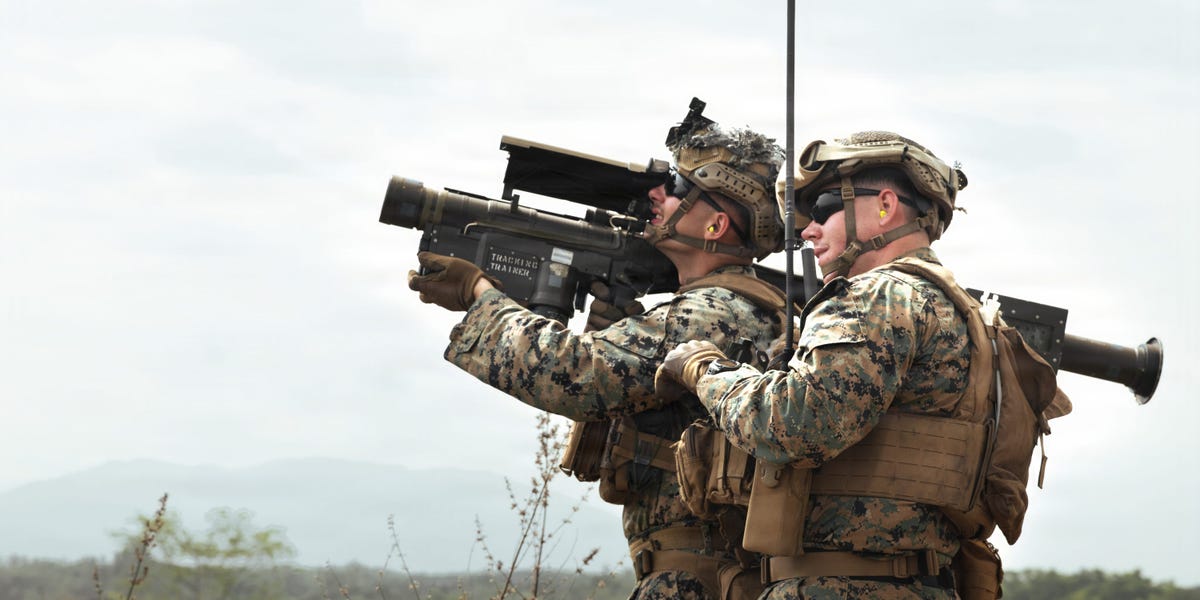
The US Army wants 11,000 next-generation missiles and 2,200 launchers to replace its aging Stinger short-range air defense system. The scale of the requirement – nearly triple the annual peacetime Stinger buy – reflects a shift in Pentagon thinking after two years of combat in Ukraine exposed the limits of the existing stockpile.
The Stinger entered service in the early 1980s. Many warheads in the current inventory are past their rated shelf life. The Army has run life-extension programs before. Those only buy a few more years. The new solicitation, described in a recent budget document, aims for production-ready hardware by the late 2020s.
Why the Stinger Production Line Can't Keep Up
The Stinger line at Raytheon (RTX) was effectively mothballed for years. The company made small batches for foreign military sales. The line ran at a fraction of its Cold War capacity. Then Ukraine burned through thousands of Stingers in the first six months of the invasion. The Pentagon rushed to backfill, ordering $624 million in new Stingers in 2022. The production ramp took time. Raytheon has since doubled its output. The Army now wants more than the line can feasibly deliver.
The mechanical reason for a new missile is clear. The Stinger's guidance section and seeker rely on components that are increasingly hard to source. The new Next-Generation Short-Range Interceptor will use a new seeker and an updated rocket motor. The Army wants compatibility with existing Stinger launchers, including vehicle-mounted M-SHORAD systems already fielded.
The Missile and Launcher Competition
Raytheon is the obvious incumbent. It builds the Stinger and has begun work on an upgraded seeker under a separate contract. The Army is running a competitive procurement. Lockheed Martin (LMT) and Northrop Grumman (NOC) each have short-range interceptor programs that could scale. Dynetics, a Leidos subsidiary, has built prototype launchers for the Army's Indirect Fire Protection Capability.
The 2,200 launcher requirement is the less-discussed piece. A new launcher opens the door to a different contractor winning the systems integration work. The Army wants a common launcher that can fire the new missile and still handle legacy Stingers during the transition. That creates a second competitive track. The award could split between a missile supplier and a launcher integrator.
Stockpile Math and the Ukraine Overhang
The war in Ukraine has consumed more than 10,000 Stingers, according to public estimates from the Center for Strategic and International Studies. The U.S. inventory before the invasion was around 35,000 missiles. Roughly half were in active service. The rest sat in deep storage. The Army has transferred at least 2,000 to Ukraine. It now wants to replace those and add more.
A timing risk exists. The new missile's first production units are not expected until 2027 or 2028. Until then, the Army must keep buying Stingers at higher per-unit cost. The sole-source line cannot absorb overhead across a larger volume. Raytheon has invested its own capital to expand the line. The company charges the government for those costs through contract modifications.
Decision Points and Contractor Implications
The first decision point is the request for proposals, expected in the second half of 2025. That document will settle the key trade-off: Does the Army want a clean-sheet missile with higher performance, or a modified version of an existing interceptor that can be fielded faster?
The second is the down-select to two contractors for the technology-development phase. The losing bidders will have to decide whether to invest their own R&D dollars to stay in the game or exit the market. For a broader look at how defense procurement cycles affect stock valuations, see our stock market analysis of sector spending trends.
The final piece is the production base. The Army wants 11,000 missiles. Building a new missile line takes three to four years. Even if the program stays on schedule, the peak production rate will not hit until the early 2030s. That is a long lead time for a stockpile that has already been drawn down.
Raytheon is the safest near-term play. The company will keep building Stingers through the transition. It is the frontrunner for the new missile. The competitive procurement creates an asymmetric opportunity for Lockheed Martin and Northrop Grumman. A win would open a new production line and a decade of revenue. The RFP release next year is the first real catalyst. Watch for pre-RFP contract awards for risk-reduction work. Those will signal which contractors the Army favors before the formal competition starts.