Unitree shares jumped 600% on debut as China's humanoid sector races toward commercial reality. But the gap between viral demos and real-world work remains vast.
HANGZHOU – Unitree Robotics shares surged more than 600% on their first day of trading Wednesday, the same day hundreds of companies gathered in Beijing for the World Robot Conference. The rally turned the Chinese humanoid maker into a market sensation overnight. The company itself warned in its prospectus that large-scale commercial deployment “still faces uncertainty, with a risk that progress will fall short of expectations.”
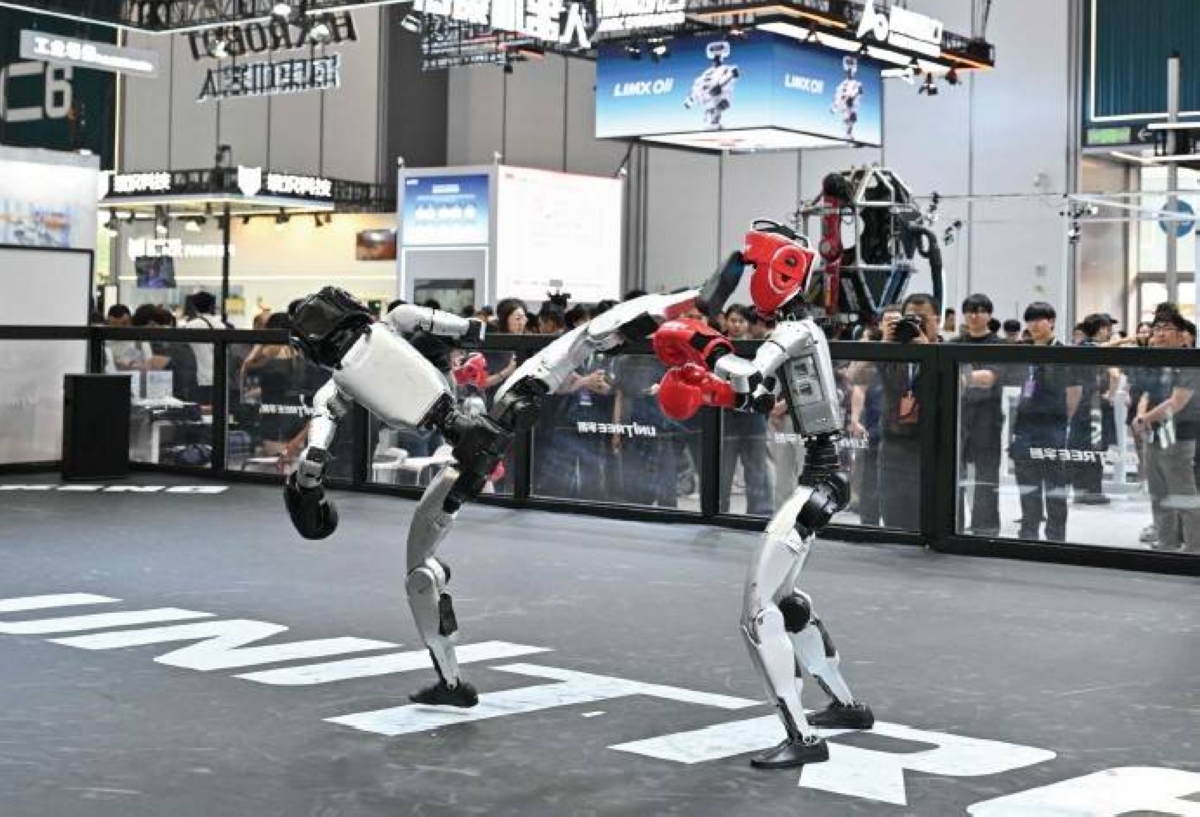
Unitree humanoids are among the world’s most recognizable. Videos of them performing martial arts dances and kickboxing have drawn millions of views. A customized Unitree model named Wuji now works as a tour guide at the Hangzhou Robot School, greeting visitors with an earnest female voice and calling itself an “intern.” The school, run by Zhejiang University with local government support, provides tailored courses and certification for specific robot jobs. Deputy director Zhao Han said the goal is to help companies “move toward real-world application.”
Yet the gap between demonstration and deployment remains wide. “Training the ‘brain’ is a very difficult task,” Zhu Tianle, an engineer at the robot school, told AFP. “Although we have built up a certain level of technical expertise, enabling robots to understand the world remains a global challenge.” Lian Jye Su, a research analyst at Omdia, put it more bluntly. “As a consumer you might think: my old folks can already talk to ChatGPT, so surely a robot will soon be able to take care of them. The reality is we are extremely far from that future.”
Beijing has pushed the sector in two consecutive five-year plans. The manufacturing supply chain overlaps heavily with electric vehicles, giving China a cost and scale advantage. Morningstar equity analyst Kangyuxiao Li said the next phase “is less about demonstrating that a robot can walk and more about demonstrating that it can perform economically useful tasks.” At one training company AFP visited, humans used PlayStation-style controllers to repeat single tasks – folding clothes, moving blocks, spraying a canister – while humanoid robots mirrored their actions. An employee said a usable model typically required tens of thousands of hours of data.
In July, Washington banned imports of foreign humanoids and quadruped robots on national security grounds, opening a new front in the tech war. Counterpoint Research’s Ethan Qi said China’s advantages lie in manufacturing scale and cost, while the U.S. is “much stronger” on software and cutting-edge research. AFP contacted Unitree, UBTECH and Agibot for reaction. None replied. Industry insiders and analysts played down the impact. “My sense is that companies are too busy chasing the next technical breakthrough and figuring out what actually scales commercially to spend much time on overseas markets,” said Rui Ma, founder of the Tech Buzz China newsletter. U.S. sales account for a fraction of most companies’ revenue, with China claiming more than 90% of the humanoid market, according to Counterpoint.
Omdia’s Su warned of a more existential risk. “The valuation that goes into all these companies is based on the fact that these robots will become general purpose, human-like at some point. Failing to deliver that will be a very massive blow.”
Drafted by a large language model from the source reporting linked above, then screened by automated publishing checks. It is not read by a journalist before publication. Some articles cite our Alpha Score. Verify prices and figures against the original source. Educational coverage, not personalized advice.