Stocks● Neutral
Unitree founder says humans are still more efficient than robots
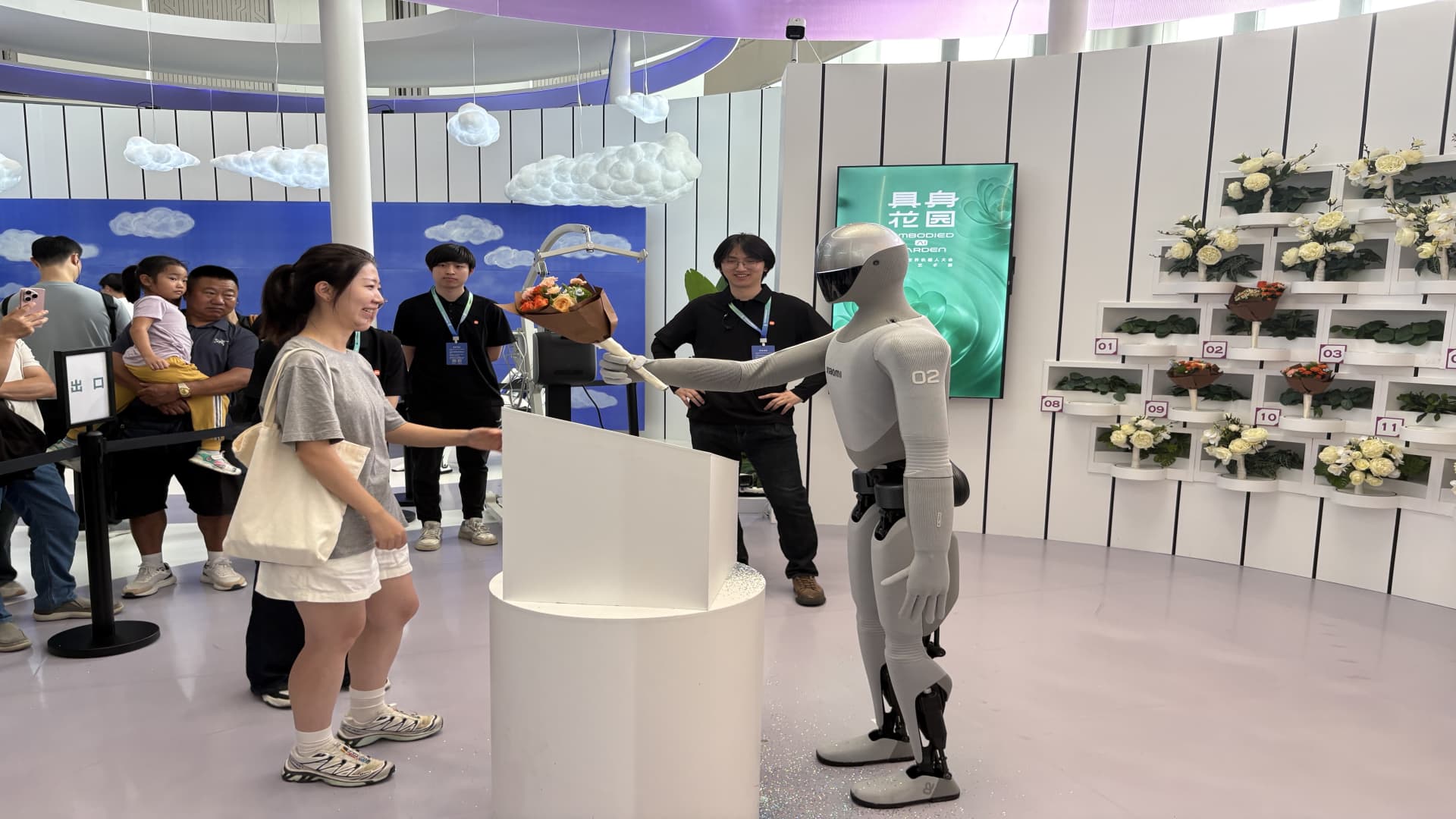
Unitree's founder said humans still outperform robots on most tasks. The comment came a day after his IPO surged 460%. A rival startup has shipped 100,000 units.
Continue with
BEIJING – The biggest problem facing humanoid robots is that humans remain better at most jobs, Unitree founder Wang Xingxing said this week at the World Robot Conference in Beijing.
Robots need time to learn new tasks and are not as efficient as people, Wang said, speaking the day after his company's stock more than quadrupled on its IPO. Unitree shares fell 18.7% on Thursday.
The U.S. Federal Communications Commission last month added foreign-made advanced robotic devices, including humanoids, to an import restriction list. The FCC did not name a specific country and said retailers could still import previously approved models.
That limitation doesn't matter much for humanoids right now because few are deployed in the U.S., Jeff Burnstein, president of the Association for Advancing Automation, told CNBC. "Where the impact might be in the U.S. is on autonomous mobile robots, which are used in factories much more than humanoids are," he said.