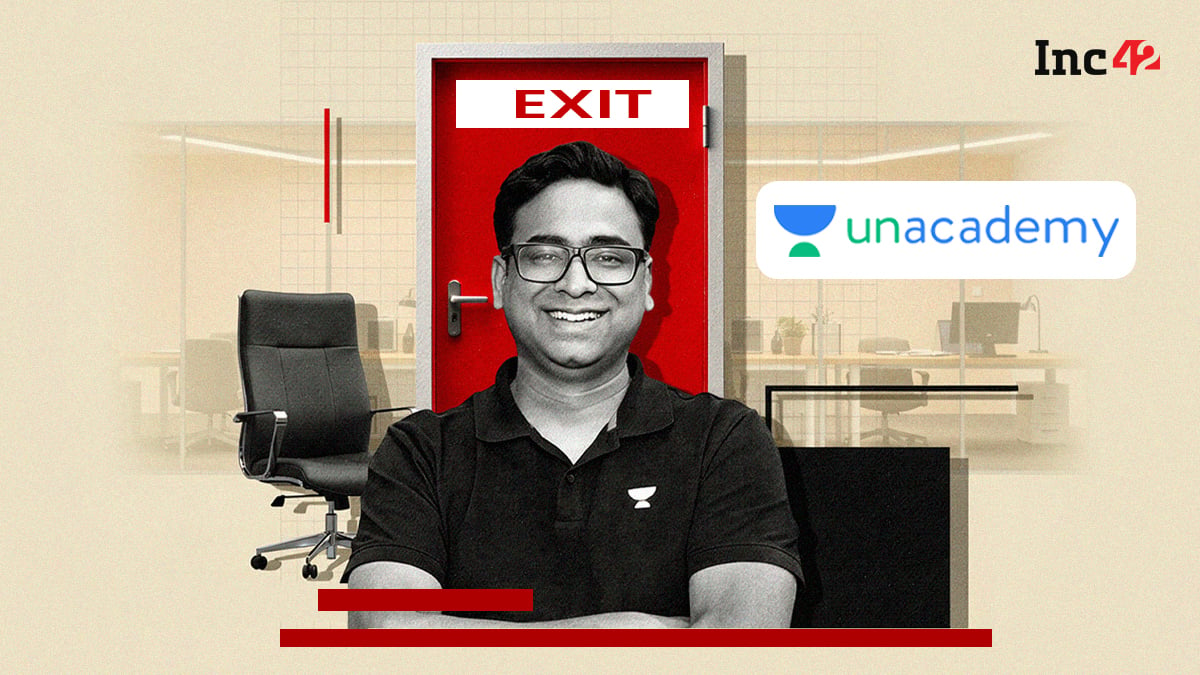
Unacademy cofounder and CEO Sumit Jain is leaving the edtech startup effective June 30. Gaurav Munjal, the other cofounder, will take direct control. Jain’s exit coincides with the planned acquisition of Unacademy by upGrad, an all-stock transaction that values the startup at ₹2,055 Cr ($218 Mn), a 90% discount from its $3.4 Bn peak in 2021. The deal requires approval from the Competition Commission of India (CCI). It represents the largest consolidation move in India’s edtech sector since the post-COVID downturn.
Jain Exit and the UpGrad Deal Mechanics
Jain joined Unacademy as a cofounder in 2020 and was elevated to CEO in 2025 as Munjal focused on the startup's language platform, Airlearn. According to internal communication shared with employees, Munjal will take the reins after Jain’s departure. Jain will remain an advisor. The timing is tied directly to the upGrad acquisition, structured as an all-stock exchange. Key transaction details from sources:
- Valuation: ₹2,055 Cr ($218 Mn), 90% below the 2021 peak of $3.4 Bn.
- Cash balance: Unacademy is expected to hold ₹900-950 Cr at close, likely in June or July 2026.
- Regulatory step: Both companies are seeking CCI approval for the merger.
- Financing: upGrad is in talks to raise an internal round of about ₹375 Cr from existing backers, including Temasek.
The Shareholder Math
Temasek is a common investor with a roughly 22% stake in upGrad and a 5% stake in Unacademy. The all-stock deal means existing Unacademy shareholders – SoftBank, Peak XV Partners (formerly Sequoia India), Blume Ventures, and Elevation Capital – will exchange their equity for shares in upGrad. That exchange happens at a valuation that reflects the 90% markdown on Unacademy. UpGrad itself was last valued at $1.9 Bn in its prior round. The effective dilution for existing Unacademy investors depends on upGrad’s next valuation, which could be reset by the ₹375 Cr internal round.
The 90% Valuation Drop: From $3.4 Bn to $218 Mn
Unacademy raised $830 Mn over its lifetime. UpGrad raised $330 Mn. The transaction values Unacademy at roughly one-quarter of upGrad’s last round valuation. The 90% discount from Unacademy’s 2021 peak reflects the wider edtech adjustment after the pandemic-driven boom collapsed.
| Company | Peak Valuation | Current Transaction | Discount from Peak |
|---|
| Unacademy | $3.4 Bn (2021) | $218 Mn | 90% |
| upGrad | $1.9 Bn (last round) | N/A (acquiring) | N/A |
The cash balance of ₹900-950 Cr – almost four times the deal valuation – suggests that Unacademy’s core business was burned through capital, leaving only cash reserves as a material asset. The all-stock structure lets upGrad avoid paying cash upfront, preserving its own liquidity for integration costs.
The BYJU’S Fallout
India’s edtech sector is still absorbing the collapse of BYJU’S, once valued at $22 Bn and now in insolvency proceedings. Demand for online learning softened significantly after schools reopened. Venture capital funding dried up. Unacademy’s down-round acquisition is part of a wave of consolidation as distressed startups seek exits. UpGrad’s cash-rich position – supported by its internal fundraising – positions it to absorb struggling peers.
Sector Read-Through: Edtech Consolidation After BYJU’S
The deal creates a direct read-through for other large Indian edtech firms that raised at inflated 2021 valuations and now face the same exit math. Companies in the test-prep, upskilling, and K-12 segments are likely to see increased M&A pressure from upGrad and a handful of other consolidators. The sector’s remaining private firms will find it difficult to raise equity at markups closer to their peak. Acquisition offers at significant discounts become the primary liquidity path for venture investors.
Confirmed Peer Exposure
The source does not name specific competitors beyond upGrad and Unacademy. The mechanism is clear: any edtech firm that raised at a 2021 peak and has not generated sustainable cash flow will face similar valuation haircuts in any exit transaction. Investors holding positions in such firms should treat this deal as a reference point for pricing risk. The CCI approval timeline – expected by mid-2026 – will be the next concrete catalyst for the sector.
Next Catalysts: CCI Clearance and UpGrad’s Internal Round
The deal’s completion rests on CCI clearance, which is pending. UpGrad’s ₹375 Cr internal round from existing backers, including Temasek, will provide the capital needed to integrate Unacademy and maintain cash reserves. If the CCI approves the merger without conditions and the internal round closes, the combined entity will have a stronger balance sheet. The dilution for SoftBank and Peak XV will crystallize at a sharp loss.
A weaker scenario: if CCI imposes conditions that delay the closing or require asset divestitures, the deal could be restructured or collapse. Unacademy would then seek alternative buyers or a down-round financing. The market read is that CCI approval is likely, given the fragmented nature of Indian edtech and the absence of dominant market share concentration between the two companies. The confirmation will come when the commission issues its order.
For investors monitoring Indian edtech, the primary variable is the CCI decision window. Any extension beyond six months signals regulatory friction that could repricing. The deal’s all-stock structure also means that upGrad’s own valuation – and the internal round price – will determine the final recovery rate for Unacademy’s early backers.