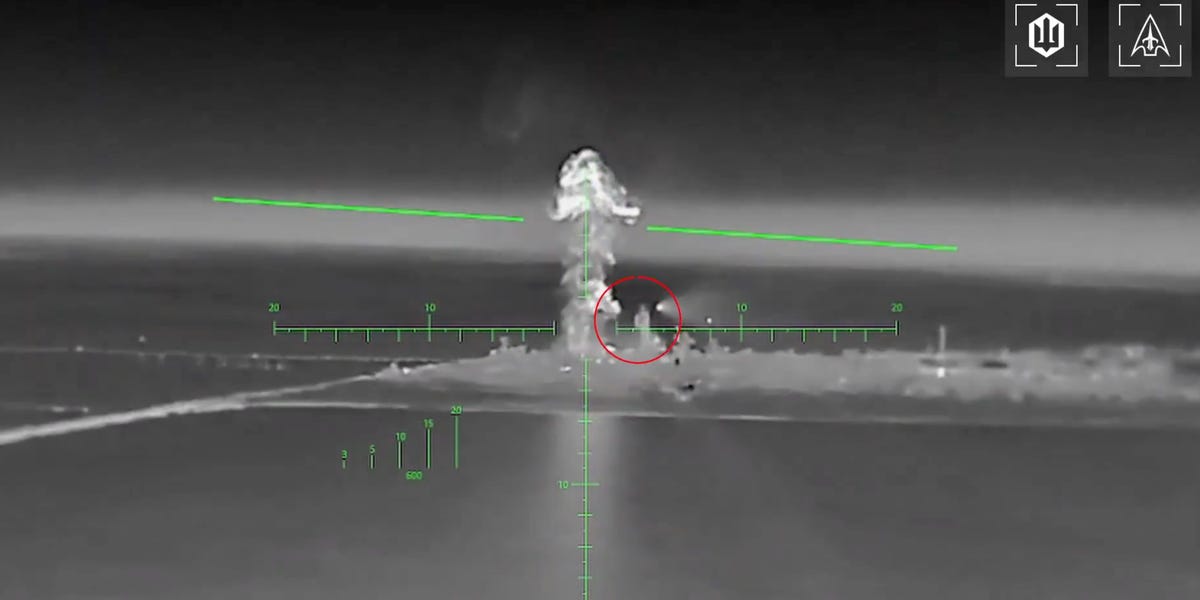
Ukraine is equipping long-range attack drones with cheap unguided rockets, enabling a single drone to strike multiple targets deep in the Russian rear. The rockets also provide cover for the drone itself, suppressing local air defenses during the strike run. The tactical change is already visible in recent operations against Russian logistics hubs and ammunition depots.
The Tactical Upgrade
The modification pairs loitering drones with salvos of unguided rockets, letting the drone disperse multiple warheads across a target area rather than delivering a single payload. The rockets are inexpensive and readily available, which lowers the cost-per-target for deep strikes. The drone acts as both a launcher and a decoy: the rocket exhaust creates a thermal signature that can draw fire away from the airframe, increasing survivability on missions that previously relied on one drone per target.
This approach solves a key operational problem. Ukrainian long-range drones have often been shot down by Russian electronic warfare or anti-aircraft systems before reaching strategic assets. By using rockets to engage multiple points in a single sortie, Ukraine raises the cost of defending every potential target and forces Russian forces to allocate more air-defense resources to the rear area.
Why It Matters for Defense Spending
The immediate implication for global defense markets is a validation of low-cost, high-volume drone tactics over expensive, precision-guided munitions. Western militaries have long debated whether to invest in cheap, reusable drones armed with simple munitions or to focus on high-end loitering weapons. Ukraine's field innovation tilts the argument toward the former, particularly for missions that do not require pinpoint accuracy against hardened bunkers.
Defense contractors that produce drone airframes, rocket systems, or electronic warfare countermeasures will face shifting demand signals. Companies with exposure to unmanned aerial systems and stand-off munitions could see accelerated procurement orders, while firms reliant on large, expensive cruise missiles may face budget reallocation risks. For a broader market perspective, see our Apple (AAPL) profile for the tech sector's exposure to defense supply chains and geopolitical risk pricing.
Read-Through for Artillery and Air Defense
The drone-rocket combination also pressures the artillery market. Traditional tube artillery requires forward observers and exposed supply lines; a drone carrying rockets can deliver similar volume of fire without the same logistical footprint. This could prompt NATO members to increase orders for drone-based fire-support systems at the expense of howitzer upgrades. Air defense manufacturers, meanwhile, will need to develop new countermeasures against salvos of cheap rockets launched from drone platforms, rather than single inbound cruise missiles.
The Market Decision Point
The next decision point for investors is whether Ukraine scales this capability beyond experimental units. If the tactic becomes standard across long-range drone squadrons, defense analysts will revise drone procurement forecasts upward for 2025 and 2026. The key confirming signal would be a formal procurement request from the Ukrainian Ministry of Defense for mass-produced drone-rocket launcher kits, or a Western ally announcing a development contract for a similar system.
A weakening signal would be a Russian electronic warfare adaptation that renders the rocket guidance ineffective, or a shift in Ukrainian strategy back toward single-payload kamikaze drones. Until then, the upgrade stands as a field-proven innovation that reduces the cost of striking the Russian rear and increases the operational pressure on Russian logistics. That dynamics will shape how defense budgets are written in the coming quarters, and which technology stacks get priority funding.