Stocks● Neutral
Ukraine's drone builders fret over lost momentum after Fedorov exit
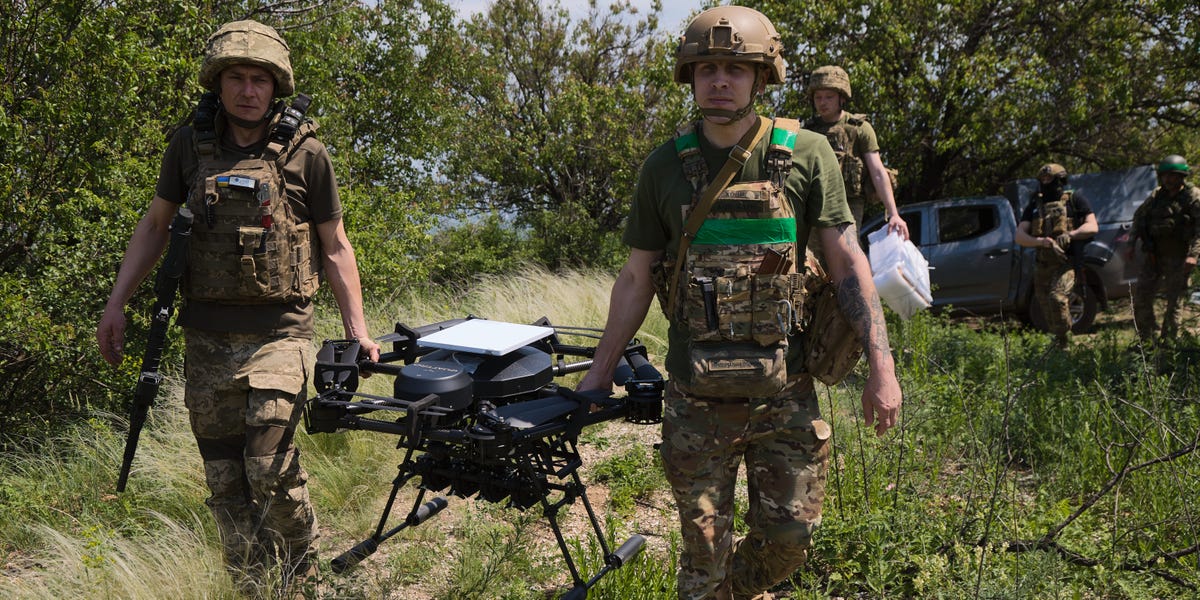
Fedorov's dismissal creates uncertainty for Ukraine's drone sector, where companies fear slower procurement and lost battlefield momentum at a critical moment in the war.
Continue with
Ukrainian defense manufacturers are bracing for a slowdown after President Volodymyr Zelenskyy dismissed reformist Defense Minister Mykhailo Fedorov last week, just six months into the job. Fedorov, who took over the ministry in January after running the digital transformation portfolio, had pushed a Silicon Valley-style overhaul of weapons development and battlefield tactics. His departure has rattled a sector that had come to rely on unusually fast, transparent procurement and a direct line to the top of the defense establishment.
"He was driving innovations, visionary goals, and very brave practical operations that gave President Zelenskyy his cards," said Anton, a representative of a Ukrainian defense tech company who asked to be identified only by his first name. "He was fulfilling today's needs and gaps while building tomorrow's relevance and superiority to ensure our victory."
Under Fedorov, the procurement process became far more open, Anton said. Collaboration with the ministry shifted to a "professional and very productive" dialogue, "something we never could imagine before." Manufacturers competed on quality, lowered their prices and saw that only equipment that actually worked reached the front, according to another Ukrainian manufacturer. That same source now worries about a backslide to "manual, top-down control."
Russia's invasion has turned Ukraine into a laboratory for drone and robotics innovation. Hundreds of companies build everything from FPV quadcopters to electronic warfare gear, and many have their eyes on post-war exports. Fedorov's push to emphasize drones and reshape the contracting system was central to the sector's growth. Since January, Ukrainian forces have sharply stepped up long-range drone strikes on Russian oil infrastructure and used mid-range systems to hammer rear logistics, slowing Moscow's momentum on the battlefield.