Ukraine's Defense Industry Shift Rewrites the Playbook for Western Military Contractors
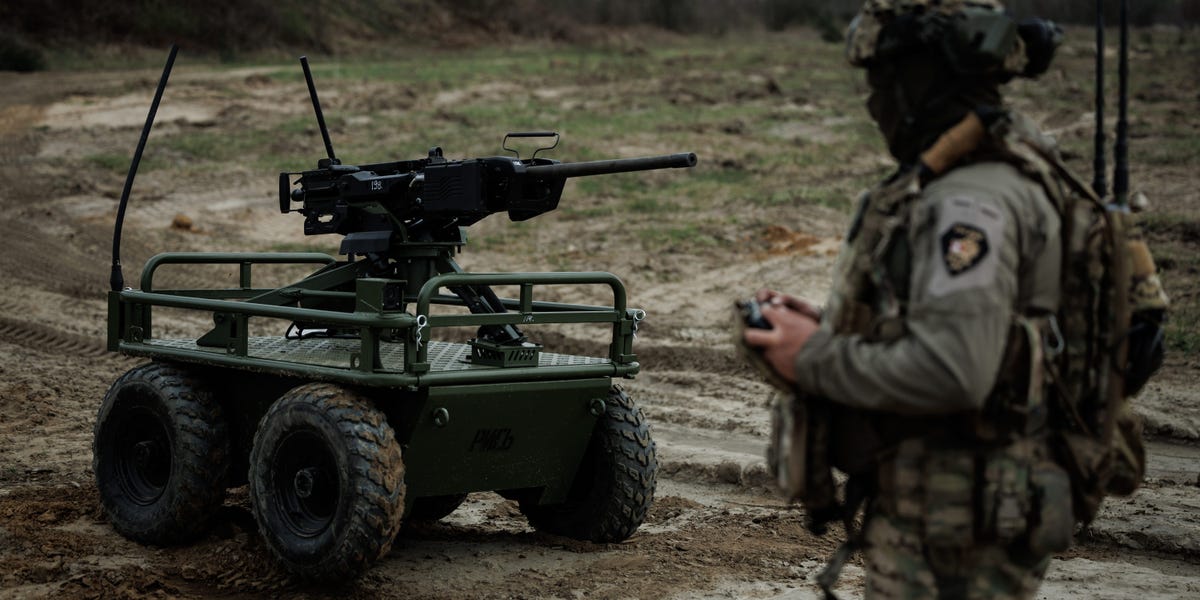
Ukraine evolved from accepting old weapons to driving military innovation. Western defense contractors are now partnering with Kyiv to learn rapid development and battlefield adaptation.
Ukraine no longer just takes what it can get. It builds its own weapons, tests them in combat, and sells the lessons to allies. That shift has quietly changed the relationship between Kyiv and the defense giants that supply NATO.
Three years ago, Ukraine accepted 1960s-era Gepard anti-aircraft guns and Soviet jets that had not flown in two decades. Now it produces ground robots in volume, operates fleets of attack drones, and is integrating AI into battlefield software. Western officials say the pace of adaptation in Ukraine – measured in weeks, not years – is something their own acquisition systems must learn to match.
Davyd Aloian, deputy secretary of Ukraine's National Security and Defense Council, told Business Insider that the country transformed from a beggar to a teacher. "This year has really showed us and our partners that we transformed from this country that asked for anything to the country that's not just capable but ready to give those lessons," he said.
That shift has direct implications for defense contractors. The old model – donate from stockpiles, then place orders for replacements – is giving way to joint production. Western companies are setting up operations in Ukraine, seeking access to battlefield feedback and production expertise. Tarja Jaakola, NATO's assistant secretary-general for defense industry innovation, said the alliance has moved from "donating from their stockpiles to working with Ukrainian industry."
Sir John Stringer, NATO's Deputy Supreme Allied Commander Europe, said the speed of technology adoption in Ukraine is a benchmark. "One of the things you're seeing in Ukraine is a sheer pace of adoption and adaptation in technology. It is measured in weeks," he told Business Insider.
For investors, the question is which contractors are positioned to benefit from this shift. Companies with existing joint ventures in Ukraine or that supply the drone warfare ecosystem – sensors, electronic warfare, autonomous platforms – may see faster revenue growth than those tied to legacy platforms. The UK's BAE Systems, Germany's Rheinmetall, and U.S. firms like General Dynamics have all signaled interest in Ukrainian partnerships.
Ukraine's own defense industry has scaled rapidly. In 2024 it dramatically expanded drone production. In 2025 it began fielding ground robots for supply and casualty evacuation. This year, Aloian said, the focus is on "the implementation of more complicated software solutions, with AI and so on."
NATO Secretary General Mark Rutte called Ukraine "a powerhouse when it comes to military innovation and anti-drone technology." That is not idle praise. NATO exercises now include small Ukrainian drone teams that have beaten allied units, offering a live demonstration of how experienced operators organize and fight.
Analysts previously told Business Insider that Ukraine's shortages drove much of this innovation. Without enough advanced Western weapons, Ukrainian forces had to develop domestic alternatives and find new uses for commercial technology. That experience, though born of necessity, has become a commodity the West wants to buy.
Olexandr Mischenko, Ukraine's deputy foreign affairs minister, said the country has "become a source of unique combat experiences, in the use of amphibious drones, maritime unmanned platforms, electronic warfare, and the integration of advanced technologies into modern warfare."
For investors, the read is not about a single company. It is about a structural shift in how defense procurement works. The linear, decade-long acquisition cycle is being challenged by a model built on combat feedback, rapid prototyping, and production at scale. Companies that can adapt to that cycle – or partner with those that already have – are likely to gain market share.
NATO is scheduled to hold a major exercise in June that will test new drone-countermeasures learned from Ukraine. The results will influence procurement budgets for years.
Evika Siliņa, then the prime minister of Latvia, said Western allies need to "connect and collect the best of their knowledge and adapt it directly to our land and sea." That process is already underway. The question is which defense firms will be the conduits.
Drafted by a large language model from the source reporting linked above, then screened by automated publishing checks. It is not read by a journalist before publication. Some articles cite our Alpha Score. Verify prices and figures against the original source. Educational coverage, not personalized advice.