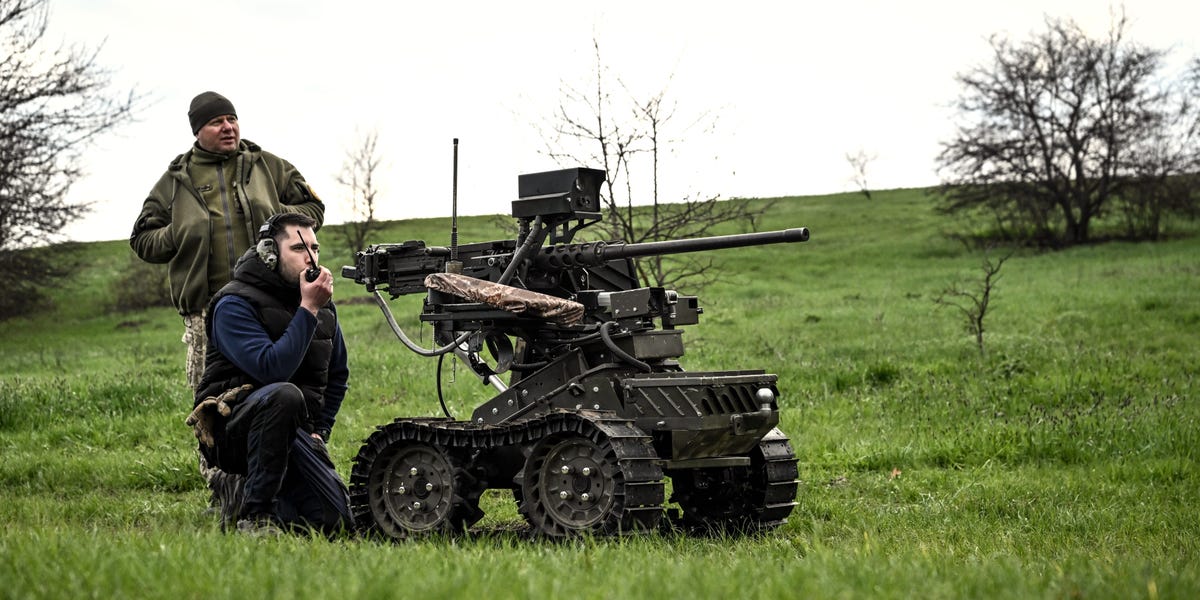
Ukraine's defense companies can test new products and changes to gear in days, a pace that Western defense contractors and militaries rarely match. The speed is possible because systems go straight to the front line for real battlefield feedback, skipping the layers of lab validation and bureaucratic approval that stretch Western procurement cycles to years.
A drone maker can fly a modified airframe in the morning, get hit by electronic warfare in the afternoon, and change the frequency the same night. Tank crews report ammunition feed issues on Tuesday; a redesigned component is welded and tested by Friday. That iteration loop – measure, fix, re-deploy inside a week – is the difference between a weapon that adapts to the adversary and one that is obsolete before it reaches troops.
The gap is not just about engineering culture. Western militaries require safety certifications, live-fire range bookings, contractor change orders, and contract modifications before a new part can be installed. Ukraine skips most of that. The operational risk is absorbed by the units using the gear, not by a compliance office.
Defense analysts point out that the advantage is asymmetric. Ukraine's industry can respond to Russian tactical shifts in real time. Western contractors, by contrast, are optimized for big-batch production of proven systems, not for rapid field modification. The same qualities that make Lockheed Martin efficient at building F-35s – long supply chains, fixed specifications, multi-year contracts – make it slow to integrate a counter-drone software patch.
The readthrough for Western defense firms is uncomfortable. As conflict in Ukraine demonstrates the value of fast iteration, procurement agencies in Washington, London, and Berlin are under pressure to shorten their cycles. Some have started buying commercial-off-the-shelf drones and electronic warfare kits directly, bypassing traditional prime contractors. Others are pushing for modular open-system architectures that allow field upgrades without full requalification.
The shift carries implications for defense spending. Money that once went into multi-year development programs may flow toward rapid prototyping and spiral upgrades. That favors smaller, agile suppliers and system integrators over traditional primes. It also raises the bar for incumbents: if a startup can field a working counter-drone system in six weeks, a $20 billion platform program that takes a decade to field looks harder to justify.
Western militaries are trying to catch up. The U.S. Army's Rapid Capabilities and Critical Technologies Office can approve a new system in months rather than years. Britain's Defence Science and Technology Laboratory runs battlefield experiments in Estonia and Oman. These efforts remain exceptions, not the rule. The default procurement cycle still measures time in fiscal years, not weeks.
Ukraine's edge is not permanent. As Russia adapts its own electronic warfare and drone tactics, the iteration race continues. The lesson for Western defense is already clear: the ability to test in days, not years, is a competitive advantage that no amount of budget can buy without process change.