Stocks● Neutral
Ukraine Smuggled Drones via Balloons, Trailers, Russia Says
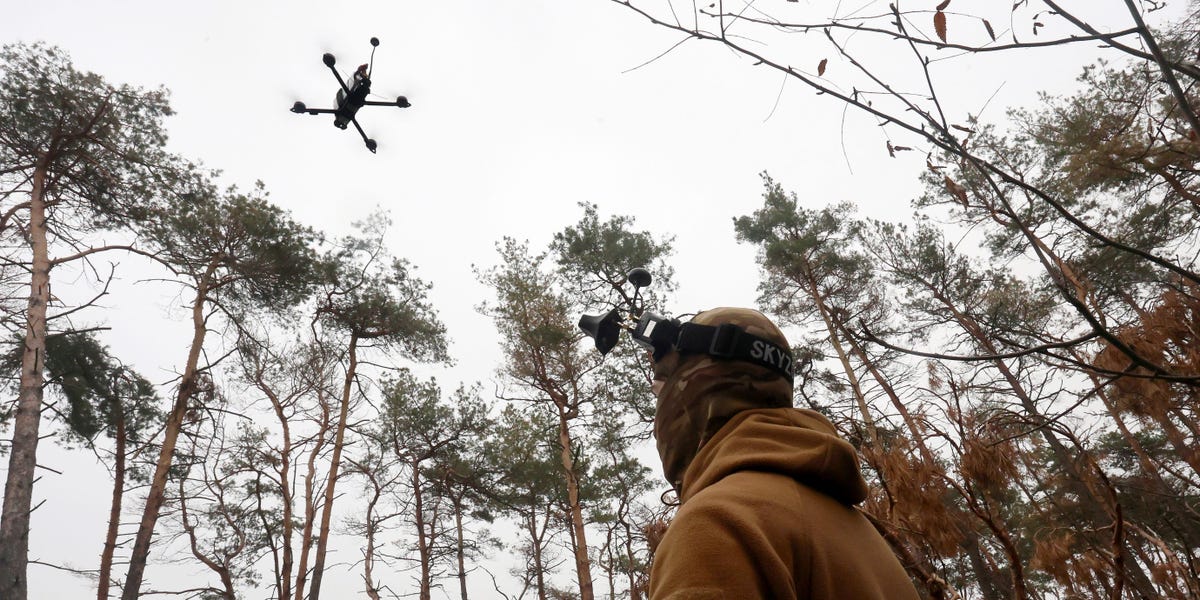
FSB seized 24 drones with AI modules, self-destruct devices, says plan was for 'swarm' attacks on far-eastern airfields.
Continue with
Russian intelligence said Monday it broke up a Ukrainian plot to strike two domestic airfields, describing a smuggling operation that used trailers, balloons, and fixed-wing drones to move first-person-view attack drones deep into the country. The Federal Security Service, or FSB, told state media outlet TASS that the targets were the Ukrainka airfield in the Amur region, near China, and the Shagol airfield in Chelyabinsk, in the Urals. Both lie hundreds of miles from Ukraine.
The operation started with fixed-wing drones and balloons dropping the smaller FPV drones into the Bryansk region, which borders Ukraine, the FSB said. The drones were then transported deeper into Russia inside car-towed trailers with false bottoms, packed with household appliances as cover. The FSB said it seized two ground control stations and 24 FPV drones equipped with Western-manufactured “neural control modules” – onboard AI that can identify targets and guide the drone to them even when jamming cuts the radio link. Each attack drone carried 1 kilogram of explosives. The ground control stations had self-destruct devices containing 250 grams of explosives each, the FSB added.
The drones also carried small fragmentation balls around their sides and a mix of incendiary, anti-armor, and high-explosive payloads, TASS reported. The FSB referred to the plot as part of a plan for “swarm drone attacks” and said it confiscated communications devices the suspects used to contact Ukrainian handlers.