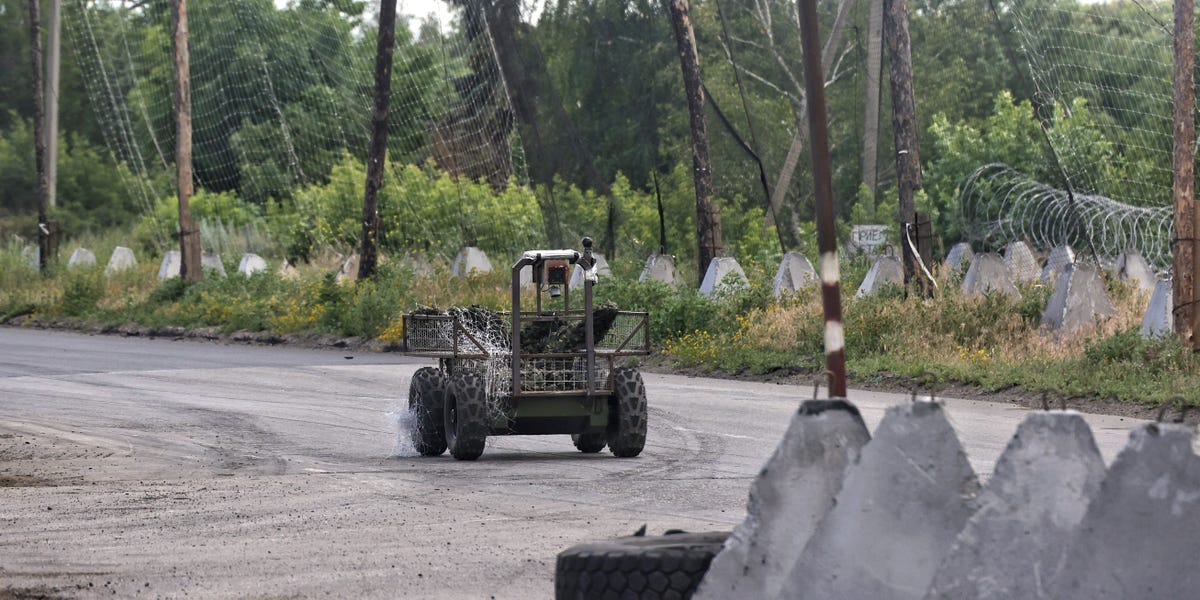
Ukraine’s forces ran more than 16,000 ground drone missions in June – more than double January’s tally – as Kyiv shifts logistics and evacuation into unmanned vehicles to keep soldiers out of drone-saturated “kill zones” behind the front line.
Defense Minister Mykhailo Fedorov posted the figures on X Thursday, saying unmanned ground vehicles, or UGVs, are “taking over the most dangerous tasks.” Ukrainian forces logged 7,511 missions in January, then 9,072 in March, 11,028 in April, 14,059 in May and 16,676 in June. The defense ministry noted the June total was up 18.6% from May and 122% from January.
The ministry said the first half of 2026 involved more than 66,300 UGV missions, covering logistics and medical evacuation. “Replacing military personnel in the most difficult areas of the front,” the ministry added.
Enemy drones now patrol areas up to 50 km into Ukrainian-held territory, creating “kill zones” where any human or armored vehicle risks immediate detection and attack. Ukraine’s answer has been to flood supply routes with wheeled or tracked ground drones carrying food, ammunition and water.
Kyiv’s forces have also begun converting aerial bomber, surveillance and attack drones to carry supplies over the last two months, the ministry said.
Ukraine plans to eventually shift “up to 100% of frontline logistics to robotic solutions,” according to the defense ministry. It has already contracted more than 22,000 new ground drones for delivery this year, and expects to procure additional systems for 2026.
The ramp-up in unmanned logistics highlights a structural shift in battlefield operations – one that defense contractors supplying UGV platforms, sensors and autonomous navigation systems are positioned to serve. U.S. and European firms already fielding ground drones or related components include General Dynamics, Textron, L3Harris Technologies and Britain’s BAE Systems, though none were named in the Ukrainian statement.