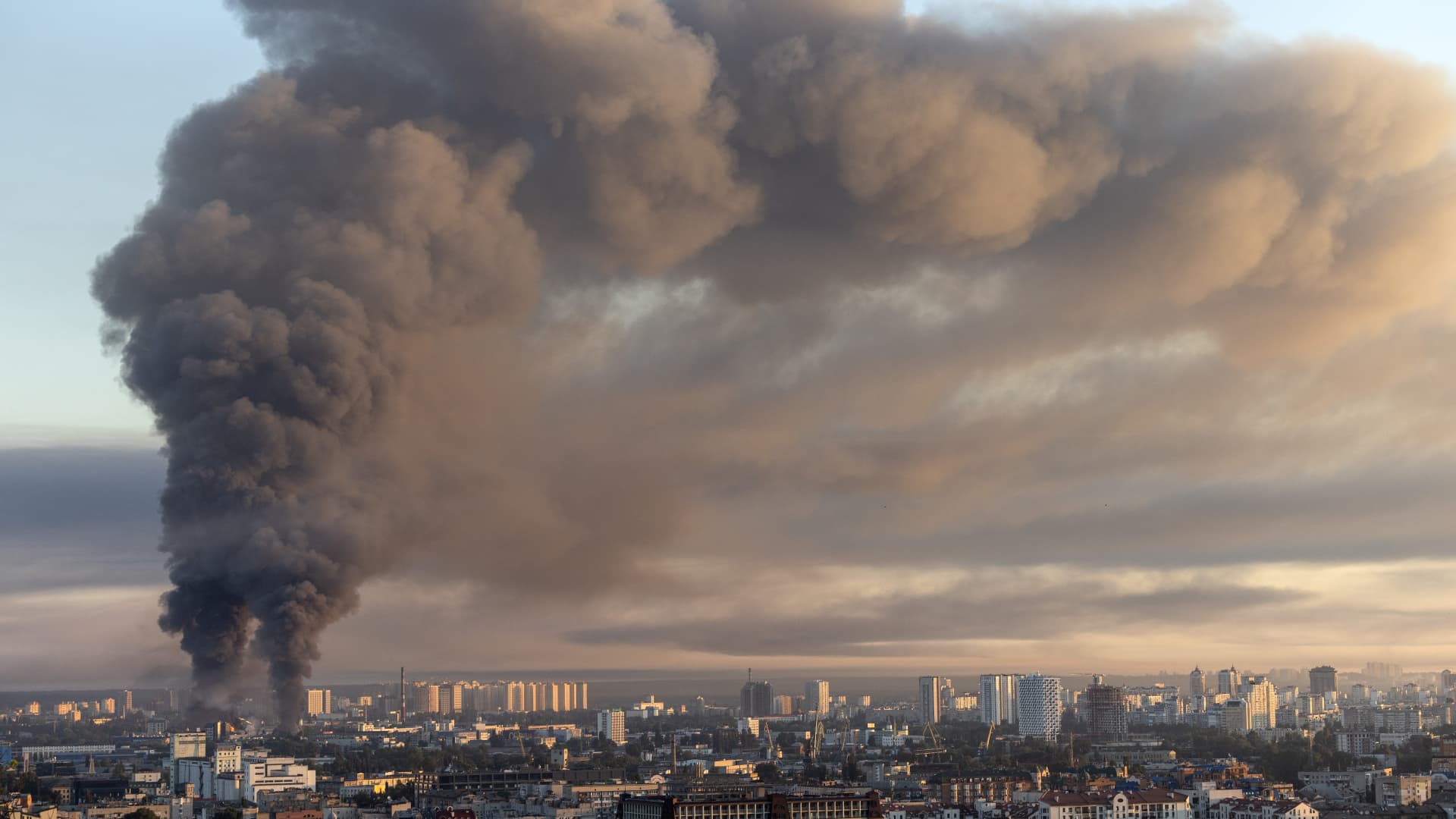
Ukrainian officials, drone executives and national security experts are bracing for another punishing winter, warning that a Russian assault on energy infrastructure could be the war's hardest test yet.
President Volodymyr Zelenskyy has stressed since April the need to ensure the country's energy and infrastructure facilities are fully operational for the next heating season. Last month he confirmed Sergii Koretskyi as prime minister, saying the former Naftogaz CEO would help protect lives "and ensure that we make it through the winter."
Russia has stepped up missile strikes on Ukrainian cities in recent weeks, analysts said, likely exploiting Kyiv's shortage of ballistic missile interceptors. Iryna Terekh, CEO of Ukrainian drone maker Fire Point, said the country needs to be realistic about the threat over the coming months.
"Winter is coming, obviously, and the last winter was very hard for Ukraine and for big cities in general. This one would be no easier – and probably even harder," Terekh told CNBC in a video call.
Ukraine still relies heavily on the American Patriot PAC-3 system to intercept Russian ballistic missiles, even as domestic companies like Fire Point scramble to develop their own antimissile technology. "We are trying to squeeze in the program that usually takes 20 to 30 years to develop in a few years, and this is not something that you can do within a matter of three months before the winter," Terekh said.
U.S. President Donald Trump cast fresh doubt on whether Washington would support one of Kyiv's most pressing demands. In a telephone interview with the Financial Times on July 30, Trump said he had not yet decided whether to allow Ukraine to produce Patriot surface-to-air interceptor missiles.
Zelenskyy, citing Russia's alleged use of a North Korean missile in a deadly strike on the village of Radushne, said air defense missiles remain a priority. "I hope that all of our partners – above all our American partners, as well as our friends in Europe – will feel that real human lives depend on whether they help us," Zelenskyy said in a social media post.
Ahead of winter, Ukraine is strengthening the defense of its energy infrastructure and building up reserves to ensure sufficient supplies of heat and electricity. It is also seeking additional funding from European partners, including the European Union's 90 billion euro ($103.7 billion) financial support package, and trying to establish a winter aid package.
Serhii Kuzan, chairman of the Kyiv-based Ukrainian Security and Cooperation Center think tank, said some personnel changes in Zelenskyy's latest government reshuffle appeared linked to the need to prepare for a harsh winter. "In effect, the government has been reformed and revitalised to reset institutional processes and improve coordination between different departments," Kuzan told CNBC by email. "Indeed, as President Zelenskyy argued, the main task of the revamped Cabinet is to ensure that the energy and security infrastructure is fully prepared for the cold weather," he added.
Kurt Volker, former U.S. Ambassador to NATO and an advisory council member of DTEK, Ukraine's largest private energy company, said Kyiv is in a better position to handle Russian ballistic missile attacks than it was last winter. "Putin is on a long-term path to defeat. He cannot keep up with the battlefield losses. Ukraine is knocking out oil refining and export capacity, which is drying up the Kremlin's budget," Volker told CNBC by email. "Putin will fight as long as he can without risking the Russian state, his ability to keep doing this is becoming limited. I think he will continue through the winter – believing this can advantage Russia – by the Spring, I think Putin will begin to face hard limits on his war of aggression and will need to accede to a ceasefire," he added.
Analysts have cited Ukraine's recent push to target key logistics hubs, such as Amazon-style retail giant Wildberries, as a strategy designed to raise the cost of the war for Russian businesses in the hope that Putin will be forced to the negotiating table.
Terekh said it remains clear that Ukraine still depends on the support of its Western allies to withstand another anticipated winter assault on its energy infrastructure. "We see that the world likes to help the winners and not out of the feeling of pity, because the feeling of pity lasts for a very short time and then somebody has to understand if the bet is worth it," Terekh said. "No matter how cynical this may sound, this is what I see as a Ukrainian. We definitely are not the victim any more in a psychological way still we need support and we cannot fight by ourselves," she added.