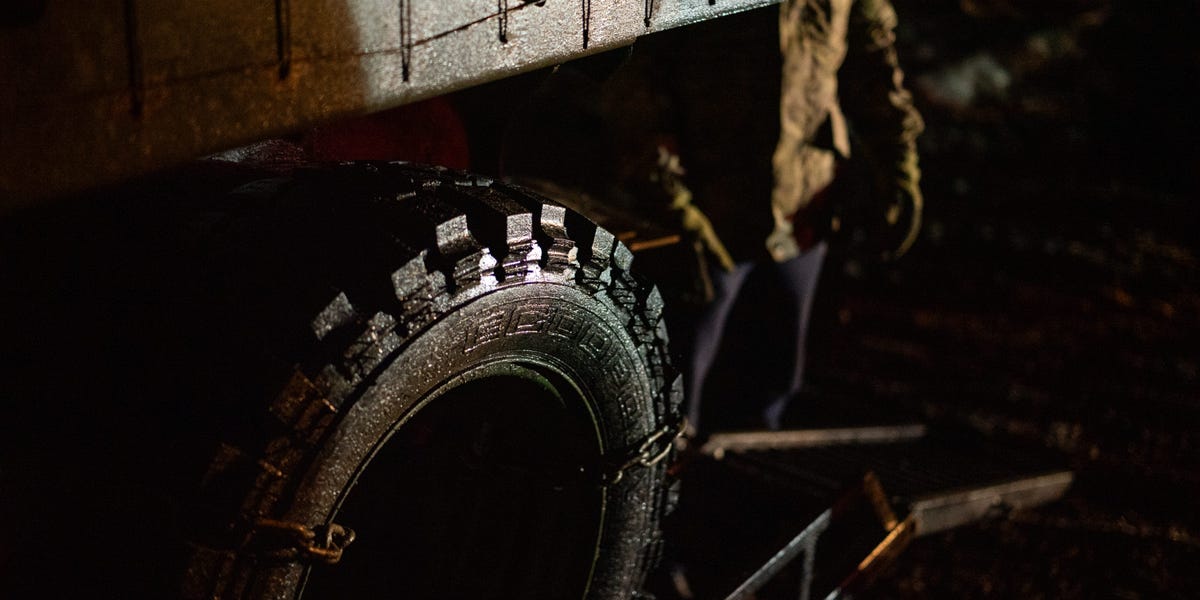
A ground drone operated by the Ukrainian company Kraken completed a 20-mile round trip to evacuate four elderly civilians from a combat zone near the front lines, its commander told Business Insider. The mission marks one of the first documented uses of uncrewed ground vehicles (UGVs) for humanitarian evacuation under direct fire, expanding the operational scope of what Ukrainian troops call "iron soldiers."
Why This Mission Shifts the Robotics Narrative
Most public discussion of military drones centers on aerial systems: loitering munitions, reconnaissance quadcopters, and FPV strike craft. Ground drones have typically been confined to logistics – hauling ammunition, evacuating wounded soldiers in armored boxes, or laying mines. The Kraken mission reframes the UGV as a direct rescue platform for non-combatants. That distinction matters because it introduces a new mission type that militaries and defense ministries may now fund separately.
For a private company like Kraken, this operational proof could accelerate procurement contracts. While Kraken is not publicly listed, the sector read-through applies to larger defense primes and robotics specialists that manufacture UGV frames, control systems, and remote-operations software. Any shift in doctrine that adds humanitarian rescue UGVs to standard unit equipment creates a new addressable market line.
Defense Contractors and the UGV Supply Chain
A dedicated rescue-UGV requirement would push demand toward platforms with higher payload capacity, longer battery endurance, and more robust communication links. That favors companies already producing medium-class ground drones – such as Milrem Robotics, Teledyne FLIR, and General Dynamics (GD) through its tracked robotic platforms. Components like L3Harris (LHX) datalinks, Anduril’s command software, and battery systems from Rheinmetall also stand to benefit if procurement scales.
The Ukrainian experience also collapses the typical feedback loop. Rather than waiting for formal military requests, commanders are adapting civilian-market drones and reporting results directly to contractors. This rapid iteration cycle compresses development time and reduces the window between prototype and field deployment.
The Next Catalyst Point
Watch for follow-on announcements from the Ukrainian Ministry of Defense or Kraken itself regarding a dedicated evacuation UGV program. Any formal requirement document or budget allocation for non-combatant rescue drones would validate the mission type and trigger competitive bidding among Western defense firms. Conversely, if no procurement follows, the mission remains an isolated tactical innovation without sector impact.
Investors tracking the defense robotics trend should also monitor contractor updates on UGV payload capacity and autonomy metrics. A shift from teleoperation to semi-autonomous navigation in GPS-denied environments would make rescue UGVs more viable and open a broader funding line.