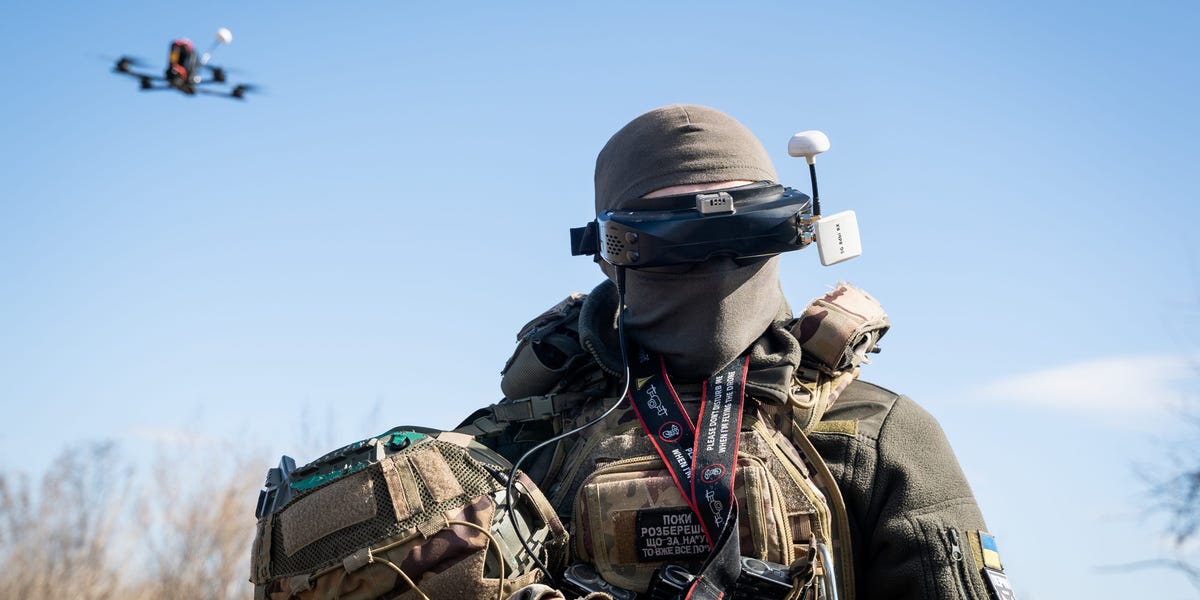
The Ukrainian Ministry of Defense has integrated the video game Grand Theft Auto V into its training curriculum for drone operators. While officials maintain that the software does not serve as a replacement for live flight instruction, the game provides a platform for pilots to practice maneuvers and spatial awareness when they are not operating physical first-person-view drones. This development marks a shift in how asymmetric warfare tactics leverage commercial off-the-shelf technology to accelerate pilot readiness.
Tactical Utility of Commercial Software
The use of Grand Theft Auto V centers on the game's open-world environment, which offers a complex urban landscape for simulated flight. By utilizing the game's physics and visual rendering, operators can refine their reaction times and navigation skills in a low-cost, accessible environment. This approach allows for high-frequency repetition of flight patterns that would otherwise require significant fuel, hardware maintenance, and physical space to replicate in a field setting.
This method of training highlights a broader trend in modern stock market analysis where defense contractors and military organizations increasingly look toward gaming engines for simulation. The ability to iterate on training modules without the need for bespoke, expensive software development provides a scalable advantage for forces operating under resource constraints. The integration of such tools suggests that future procurement cycles for defense technology may prioritize software compatibility with existing commercial gaming platforms.
Operational Scaling and Future Readiness
The reliance on commercial gaming software raises questions regarding the long-term standardization of military training protocols. As drone warfare continues to evolve, the ability to rapidly train new operators becomes a critical bottleneck. By lowering the barrier to entry through familiar interfaces, the Ukrainian military is attempting to broaden its pool of qualified pilots.
This strategy also underscores the increasing convergence between consumer technology and military application. As hardware costs for drones drop, the bottleneck shifts to human capital. The use of Grand Theft Auto V serves as a stopgap to maintain pilot proficiency during periods of downtime. The next concrete marker for this initiative will be the assessment of pilot performance in live combat scenarios compared to those trained solely through traditional flight simulators. Observers will be monitoring whether this unconventional training method results in measurable improvements in mission success rates or if it remains a supplementary tool for basic skill retention. Future reports from the defense ministry regarding pilot attrition and operational effectiveness will determine if this simulation model is adopted on a wider scale.