NIQ data shows UK supermarket sales up 3.1% in four weeks to Aug. 8, with soft drinks, ice cream and suncare driving 45% of FMCG growth as heatwave boosts convenience and online channels.
UK supermarket sales kept climbing through the summer heatwave, even as the post-World Cup slowdown trimmed the growth rate. Total Till sales at major grocers rose 3.1% in the four weeks to Aug. 8, NielsenIQ data released Tuesday showed, easing from 4.4% growth in the prior period. The best week came in the period ending July 18, when sales grew 3.6% before cooling as families headed off on holiday.
Shoppers bought more despite the slower pace. Unit sales rose 1% and shopping trips increased 2% from a year earlier, with average spend per visit holding at £19.61. The extra trips were largely impulse buys driven by the weather, NielsenIQ said. Promotions also kept pulling people in, with a quarter of all fast-moving consumer goods sold on deal. World Cup-linked offers ran into August, helping retailers hold engagement after the tournament ended.
The heatwave reshaped baskets. Soft drinks led the charge, with shoppers spending £1.18bn over the four weeks to stay hydrated. Mineral water value sales jumped 26%, flavoured non-carbonates rose 22% and ambient fruit juice gained 19%. Products carrying "hydration health" claims grew 24% in value. Ice cream brought in £268m and suncare £68m. Together, soft drinks, ice cream and suncare accounted for 45% of total FMCG value growth during the period.
Beer sales followed a similar pattern. World and discovery lagers, including international and less traditional brands, grew 13% in value over the six weeks to July 18, versus 1.8% for mainstream lager. Total beer and cider value rose 6.2% over the latest 12 weeks, slowing to 4.8% in the final four as the World Cup effect faded and hot weather took over as the driver.
The convenience channel posted its strongest performance in more than a year, with sales up 3.6% as shoppers hit local stores for immediate refreshments and snacks. Online grocery also outpaced the market, with e-commerce sales reaching £2.1bn, up 10% in value and 5% in units. Food delivery platforms kept gaining share, helped by demand for "picky bits" such as fresh dips, where sales rose 16%, and "dinner for tonight" options as more people ate outdoors. Health-conscious buying showed up too: products with 1 to 100 calories per 100g grew 6.3% in value, while those above 300 calories declined. Items labelled "high source of protein" rose 4.4%.
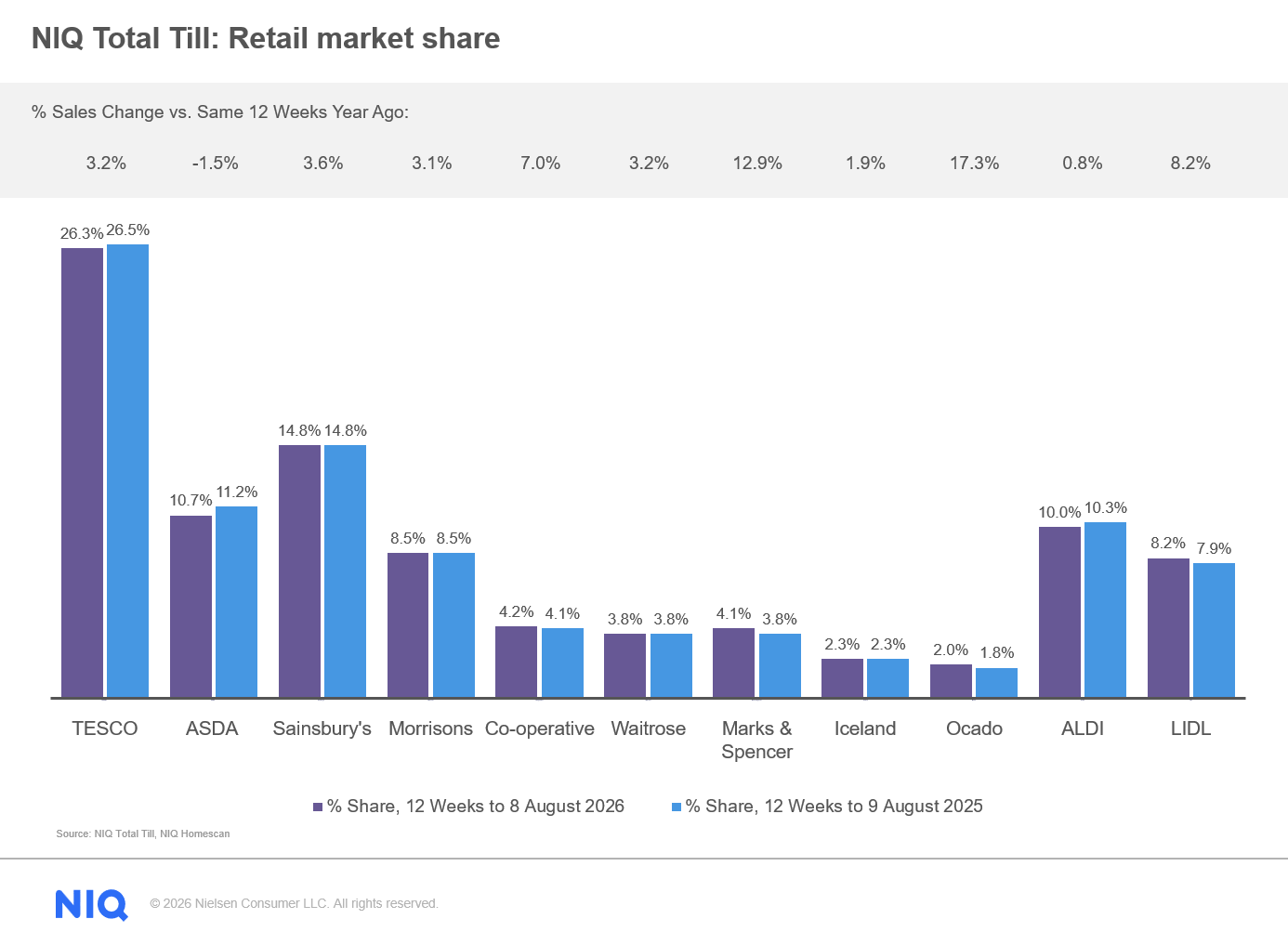
Among retailers, Ocado and M&S were the standout performers over the 12 weeks, growing 17.3% and 12.9% respectively and both gaining share. Lidl rose 8.2%, Co-op gained 7.0% on more visits, Sainsbury's was up 3.6%, Tesco 3.2% and Morrisons 3.1%. Asda trailed, with sales down 1.5%.
Consumer confidence remains fragile, with the GfK index at -17, though shoppers showed more willingness to treat themselves to affordable indulgences. Mike Watkins, head of retailer and business insight at NielsenIQ, said growth had slowed from the World Cup peaks and the holiday season had prompted shoppers to delay some non-essential spending. Lower inflation than a year ago was also holding back topline growth, he said, but shoppers were still buying more as heatwaves continued.
Watkins said shoppers were more willing to buy affordable treats in food and drink, particularly when the weather created an immediate occasion. Promotional activity will stay important over the next six weeks, he said, with the possibility of a short-term return of money-off vouchers as baskets reset when children return to school and the weather turns more seasonal.
Drafted by a large language model from the source reporting linked above, then screened by automated publishing checks. It is not read by a journalist before publication. Some articles cite our Alpha Score. Verify prices and figures against the original source. Educational coverage, not personalized advice.