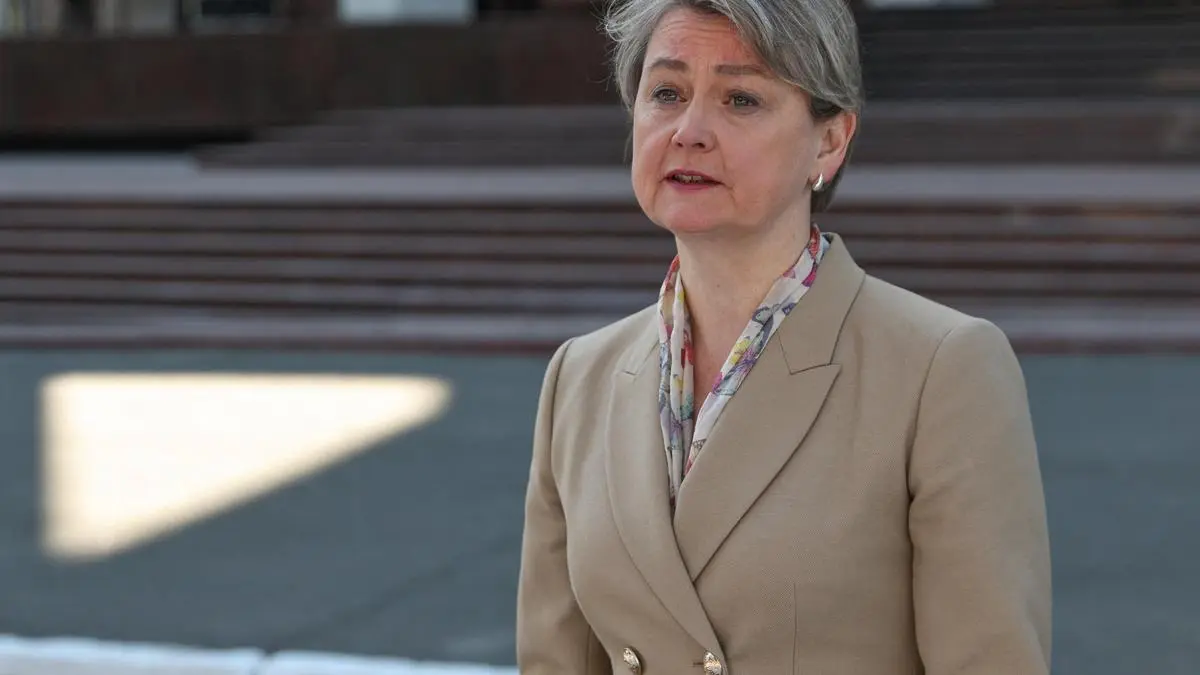
British Foreign Secretary Yvette Cooper will travel to China on Monday and to India later the same week, the government announced Sunday. The trip targets three issues with direct consequences for UK inflation, energy security, and export access: the Strait of Hormuz, the Russia-Ukraine war, and a steel-import dispute that threatens last year’s UK-India free trade agreement.
Cooper meets Chinese Foreign Minister Wang Yi and Vice President Han Zheng on June 2, then visits the technology hub Shenzhen on June 3. She will be in India on June 4 to meet External Affairs Minister S. Jaishankar, along with entrepreneurs and academics engaged in the UK-India Vision 2035 framework.
The visits follow Prime Minister Keir Starmer’s January trip to Beijing, the first by a British prime minister in eight years, which produced a pledge of greater cooperation on trade and investment. Starmer’s Labour government has made improving relations with China a priority while the prime minister faces some of the worst approval ratings of any UK leader.
Strait of Hormuz tops the agenda
Why the waterway matters for UK prices
The U.S.-Israeli war on Iran has pushed Brent crude above $90 per barrel and put the Strait of Hormuz – through which about 20% of global oil passes – at the center of risk pricing. Britain imports roughly 15% of its refined oil products via the Gulf. A disruption would feed directly into UK petrol prices and inflation expectations.
Cooper’s discussions with both China and India will address Hormuz security, the government said. China is Iran’s largest oil customer; India is its second-largest. Any diplomatic progress Cooper can secure – a joint statement on maritime security guarantees or alternative supply routes – would directly affect UK gilt yields and the Bank of England’s rate path.
Risk to watch: No statement on Hormuz from Cooper’s China or India meetings would leave the oil risk premium intact. A public rebuke from Beijing of UK positions would amplify the premium.
Russia-Ukraine and China’s dual role
China acts as both a diplomatic broker and an economic backstop for Russia. Cooper’s meetings with Wang and Han will test whether Beijing is willing to distance itself from Moscow’s war effort in exchange for the trade access it gained in January. The government said the Russia-Ukraine war is a focus of the engagements.
A public commitment from China to limit dual-use exports to Russia would be a hawkish signal for defence stocks such as BAE Systems PLC and QinetiQ Group PLC. That outcome is unlikely before the G7 summit later this month.
Steel curbs threaten UK-India FTA implementation
The January deal and its hurdle
The UK and India signed a free trade agreement last year aimed at boosting bilateral trade and improving market access across sectors. India’s Trade Secretary Rajesh Agrawal said last month that implementation had hit a hurdle over London’s new steel import curbs. Those curbs protect British mills – Tata Steel UK and British Steel – but they collide with India’s export ambitions.
Cooper’s meeting with Jaishankar on June 4 will test whether a side letter or phased implementation plan can break the logjam. A resolution would remove a near-term overhang for Indian steel exporters like Tata Steel Ltd and JSW Steel Ltd. A breakdown in talks would keep the cloud over bilateral trade volume forecasts.
Exposure for specific sectors
- Steel: India exported roughly £1.1 billion in steel to the UK in 2024. UK import quotas are the single largest friction point.
- Services: UK services exports to India stood at £6.4 billion in 2024, with visa liberalisation a persistent demand from London.
- Pharmaceuticals: India exports about £1.2 billion in drugs to the UK, with intellectual property protections a recurring negotiation point.
If Cooper secures a timetable adjustment on the steel curbs, FTSE 100 constituents with India exposure – Prudential PLC, AstraZeneca PLC, HSBC Holdings PLC – would see reduced trade-policy uncertainty. A stalemate would maintain the drag.
The Shenzhen science and technology signal
Cooperation continues despite export controls
Cooper’s Shenzhen programme on June 3 focuses on science and technology, the government said. The visit signals that the UK sees value in research collaboration even as the U.S. and EU tighten export controls on Chinese semiconductor and AI sectors.
Any joint statement on tariff relief or financial market access from the China leg would be a positive catalyst for FTSE 100 companies with large China revenue: Diageo PLC, InterContinental Hotels Group PLC. A statement reinforcing sanctions or export restrictions would pressure those names.
What would confirm or weaken the setup
Confirming signals:
- A joint statement from Cooper and Wang Yi on Strait of Hormuz security guarantees.
- A UK-India side letter addressing the steel import timetable.
- A drop in Brent crude below $88 per barrel within three trading sessions of the trip’s conclusion.
Weakening signals:
- Any public rebuke of UK positions from Beijing or New Delhi.
- An escalation of U.S.-Iran military activity during the travel window.
- A China state media editorial criticising the January reset.
AlphaScala proprietary note
Southern Company (SO) carries an Alpha Score of 43/100, rated Mixed, in the Utilities sector. The stock has no direct exposure to Cooper’s trip, the outcomes described here will feed into the macro currents utilities trade on. A strong diplomatic result that lowers oil prices would reduce fuel-cost pass-through risk for SO. A failure would keep cost pressure on regulated utility margins.
The immediate watchlist
- Brent crude: Watch for joint language on Hormuz after the June 2 Wang Yi meeting. A 2-3 dollar pullback is possible with a clear statement. No statement keeps the risk premium.
- GBP/USD: The pound has weakened 3.5% against the dollar in the last month on stagflation fears. A successful trip that secures China-India cooperation on trade and energy stability could slow that slide.
- Indian steel stocks: Tata Steel Ltd and JSW Steel Ltd are most exposed to the UK quota dispute. A resolution could lift them 4-6%.
The trip runs from June 2 through June 4. The market gets its first test on June 2 when Cooper meets Wang Yi. If the readout from that meeting contains no language on maritime security or trade facilitation, the runway for a positive outcome narrows considerably.