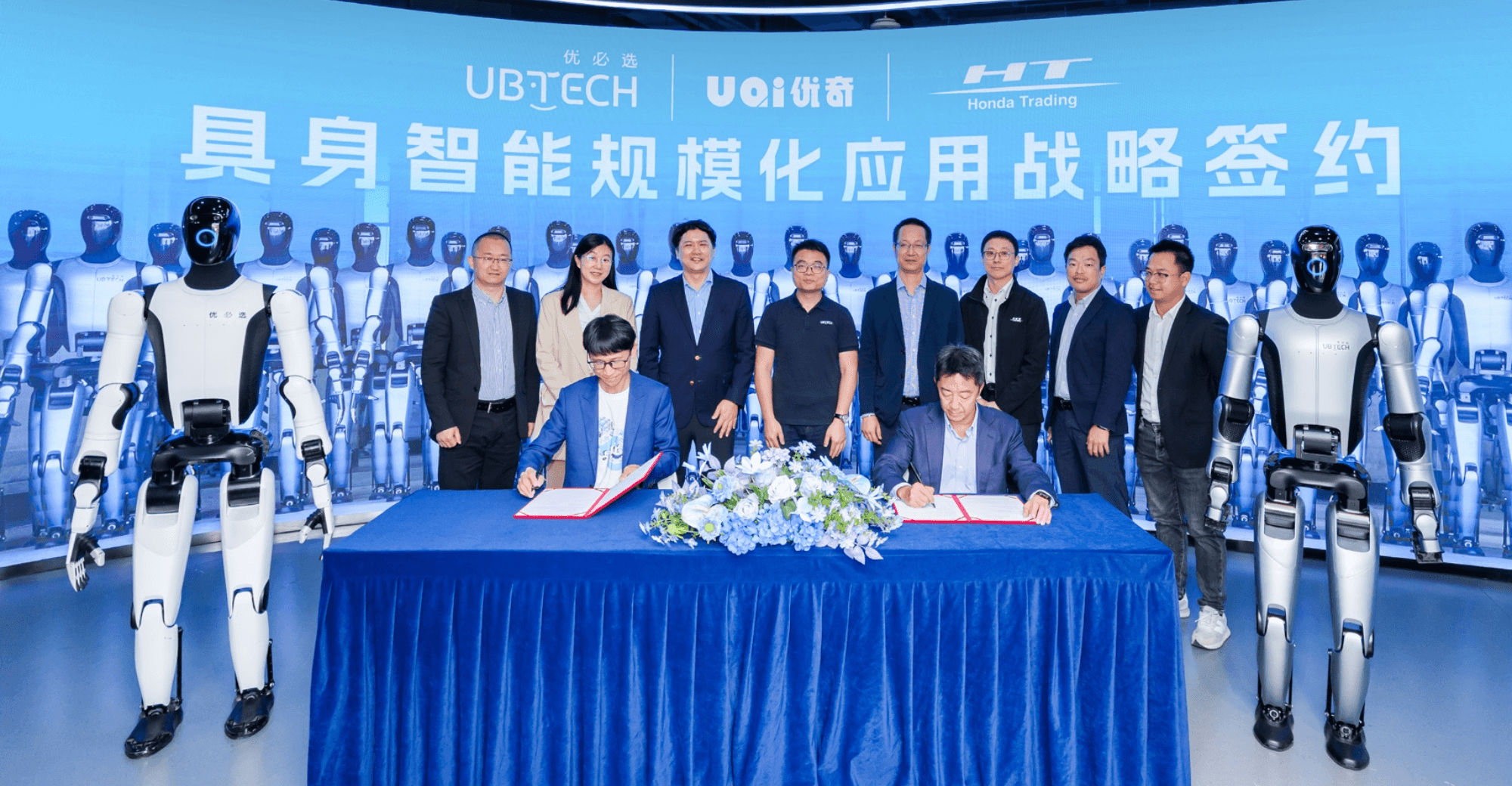
UBTECH and Honda Trading are scaling humanoid robotics to solve labor shortages. Watch for pilot program results to gauge the viability of RaaS integration.
In a move that signals a significant shift in the landscape of industrial automation, UBTECH Robotics has announced a strategic partnership with Honda Trading. This collaboration aims to accelerate the commercialization and deployment of humanoid robots and autonomous vehicle technologies across global supply chain networks. By integrating UBTECH’s advanced robotics capabilities with the extensive logistical infrastructure managed by Honda Trading, the partnership seeks to bridge the gap between laboratory-grade humanoid technology and real-world industrial application.
For years, humanoid robotics has been categorized as a high-potential but nascent industry, often confined to R&D labs or controlled demonstration environments. The partnership between UBTECH and Honda Trading represents a concerted effort to move past the prototype phase and into large-scale industrial integration.
UBTECH, a known entity in the robotics space, brings a sophisticated software and hardware stack designed for human-like interaction and dexterity. Honda Trading, acting as the supply chain backbone, provides the necessary operational environment to stress-test these machines in high-stakes, high-efficiency settings. The core objective is to deploy these robots to handle repetitive, dangerous, or highly complex tasks, thereby enhancing throughput and safety in complex manufacturing and logistics environments.
For institutional investors and market participants, this partnership is a bellwether for the 'Robotics-as-a-Service' (RaaS) model. The integration of autonomous vehicles and humanoid systems suggests a shift toward fully autonomous facility management.
Historically, industrial robotics focused on static, single-arm units bolted to factory floors. The move toward humanoids—which can navigate human-centric spaces without requiring a complete overhaul of existing infrastructure—represents a lower barrier to entry for factory operators. If this partnership successfully scales, it could set a new industry standard for how original equipment manufacturers (OEMs) approach facility modernization. The combined expertise of a robotics developer and a global trade titan creates a vertically integrated approach that could yield significant competitive advantages in manufacturing efficiency.
Traders and industry analysts are closely watching this development as a litmus test for the commercial viability of humanoid robotics in 2024 and beyond. The market for industrial robots is currently experiencing a transition from basic automation to AI-driven robotics. This alliance specifically targets the 'industrial supply chain,' a sector currently grappling with labor shortages and rising operational costs.
If the deployment proves successful, investors should monitor for follow-on announcements regarding regional expansion and specific pilot programs within Honda’s broader manufacturing network. Key metrics to watch include the reduction in cycle times, improvements in safety incident rates, and the overall cost-to-productivity ratio of the humanoid units compared to traditional automated guided vehicles (AGVs).
Looking ahead, the success of this collaboration will likely hinge on the scalability of the software stack. As UBTECH and Honda Trading continue to integrate their systems, the focus will shift from hardware capabilities to the AI’s ability to handle unstructured warehouse environments. This partnership serves as a critical indicator that the industry is moving from experimental robotics to essential, bottom-line-focused infrastructure.
Prepared with AlphaScala editorial tooling from the source reporting linked above. Indexable analysis may include a cited Alpha Score value. Publishing checks screen each story before release. Educational coverage, not personalized advice.