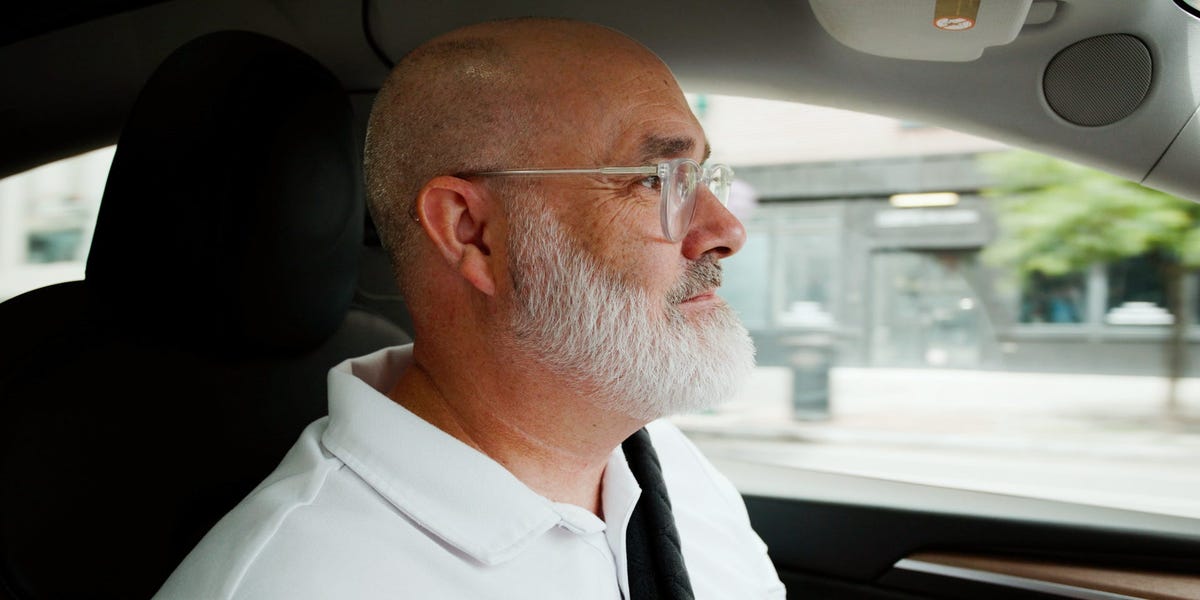
Levi Spires has completed more than 16,000 trips over six years driving around Syracuse, New York. He gives most passengers five stars. Three behaviors guarantee the lowest rating.
A rider who keeps him waiting without explanation or apology gets one star automatically, Spires said. Uber doesn't pay him for the first two minutes of waiting, then usually pays him $0.26 per minute after that. The rate varies by location and market. Five minutes of paid waiting earns him $1.30. The delay costs him time he could spend earning money from another ride.
"My overall feeling is that passengers have no idea that making us wait, even a few seconds, can be costly," Spires said. "If you make me wait a minute or two, you're talking like a 10%, 20% pay cut."
A Cornell study of Uber and Lyft drivers in Seattle found that, once logged on and actively seeking rides, the typical driver spent about 28% of their time waiting for a ride request.
The second trigger is messing up his car. Spires drives a Tesla and goes through the car wash once or twice a day. Strong odors undo that work quickly.
"Weed is really bad," Spires said. "People that smoke weed, it infests your car."
After some passengers get out, Spires said, he has to wipe down the seat, seat belt, and door handle. Strong pet odors can linger, too. Smells carry over to the next ride if he doesn't have time to clean between pickups, which can leave the next passenger wondering where it came from. Uber's policy says riders can be required to pay drivers up to $225 in cleaning fees for qualifying messes. Unpleasant smells alone aren't eligible for a cleaning fee.
The third trigger has little to do with money or Spires' car. Some passengers get in while they're on business calls, don't say hello, and behave "as if you're a robot," he said. Spires isn't asking them to chat the whole trip.
"Once we say hello and confirm, make eye contact, you can do whatever you want," he said.
A good interaction doesn't require a big tip. Spires recalled picking up a woman in her 60s from a grocery store, where she worked the register, and driving her a couple of miles home. She tipped him $1. The trip cost about $5.
"That's the best tip you get," Spires said.
Research suggests that a passenger's rating affects whether Uber drivers will accept their next ride. A 2019 study of 16 Uber drivers in the Netherlands found that some avoided low-rated passengers, viewing a poor rating as a warning that the rider may misbehave. Spires said he filters out riders rated below 4.9. The average Uber rider rating in Australia was 4.82 in 2025, with major metro areas averaging between 4.78 and 4.88 out of 5.
Spires still enjoys driving. He sees an Uber as a rare space where strangers who might otherwise never meet can connect, whether through a deeply personal conversation or a brief exchange. Passengers have talked with him about death, breakups, politics, love, and more. Others barely speak. Even the quiet rides have meaning and value, he said. Sometimes it's 2 a.m., jazz is playing, and the person in the back seat simply wants to get home safely.