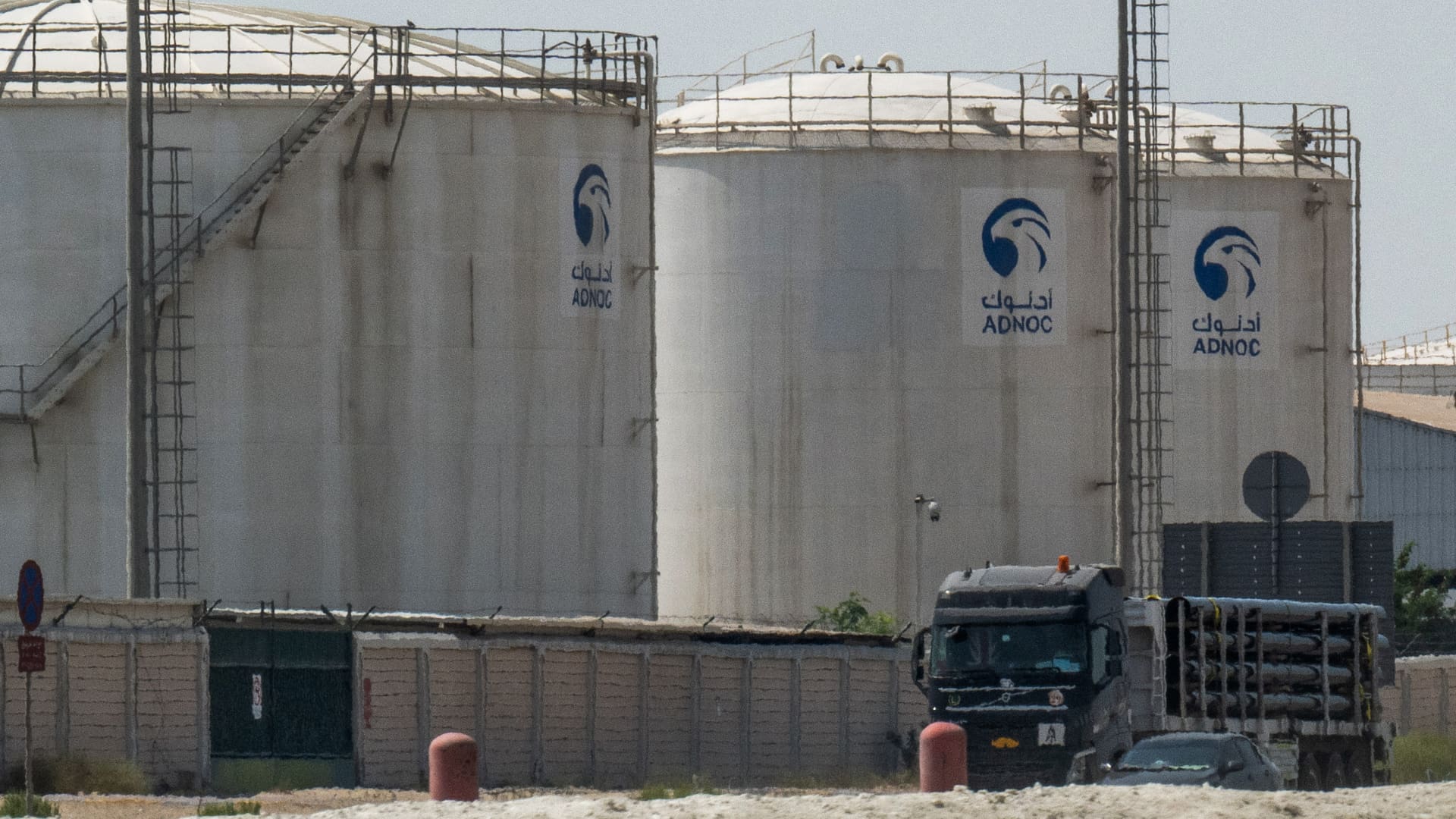
The United Arab Emirates exited OPEC for economic reasons, not political ones, the country's energy minister said Saturday. That official justification – a sovereign strategic choice based on long-term economic vision – is the public story. The market read is more direct: the UAE's departure concentrates the world's remaining spare capacity in fewer hands and changes the calculus for supply disruptions, pipeline bypass projects, and oil price risk.
The Emirates announced its exit from the producer group earlier this month after 56 years of membership. Suhail Mohamed Al Mazrouei posted on X that the decision followed a comprehensive assessment of national production policy and future capabilities. It was based solely on the national interest, he said, and not on any political considerations or divisions with OPEC partners.
The timing matters. The UAE was producing just over 3 million barrels a day before the war, broadly in line with OPEC+ targets. Abu Dhabi had targeted a capacity to produce 4.9 million BPD. Now, due to the war, production is stuck between 1.8 million and 2.1 million BPD. The gap between capacity and actual output – idle capacity of roughly 2.8 million to 3.1 million BPD – is the real issue.
Spare Capacity Concentration and Market Leverage
The most consequential effect of the UAE's departure is on spare capacity concentration. Jorge León, head of geopolitical analysis at Rystad Energy, noted that the UAE was one of the few OPEC members – along with Saudi Arabia – with meaningful spare capacity to influence prices and respond to supply shocks.
The Math Is Stark
Global spare capacity totals more than 4 million barrels per day. Saudi Arabia and the UAE together controlled a majority of that buffer. With the UAE no longer inside OPEC, the spare capacity that was implicitly available to the group for coordinated responses now sits outside the quota framework.
| Metric | Value |
|---|
| UAE pre-war output | ~3.0 million BPD |
| UAE capacity target | 4.9 million BPD |
| Current production (war-constrained) | 1.8-2.1 million BPD |
| Global spare capacity | >4 million BPD |
This does not mean the UAE will flood the market. ADNOC is a state-owned company with long-term contracts and a commercial discipline that does not favour price crashes. The exit removes one layer of coordination risk. If a supply crisis hits – a Strait of Hormuz blockage, further Iranian escalations, a Saudi outage – the UAE can respond faster without needing OPEC+ approval.
Production Constraints: Capacity vs. War Reality
The UAE's energy sector has evolved well beyond the simple quota-compliance model. ADNOC has been investing across the value chain: upstream expansion, downstream petrochemicals, and trading desks that give it more commercial flexibility than most OPEC members.
The Capacity Target Was Always a Sore Point
The UAE lobbied for a higher production baseline inside OPEC+ for years. It argued that its 4.9 million BPD capacity target justified a larger quota. The group's production agreements typically locked the UAE into a share that capped growth. Leaving OPEC removes that cap, at least formally. The UAE can now theoretically ramp toward capacity without waiting for monthly quota negotiations.
Current Production Tells a Different Story
Reality is more constrained. War-related disruptions – attacks on infrastructure, shipping curbs, insurance costs – have slashed actual output to roughly 1.8-2.1 million BPD. That is about 1 million BPD below even the reduced OPEC+ quota the UAE had been allocated. The exit does not automatically unlock production. It removes a bureaucratic hurdle, physical and operational constraints remain binding.
Oil Prices and the Iran Factor
Oil prices rose Friday on speculation that President Donald Trump is likely to return focus to the standoff with Iran after leaving a summit in China with President Xi Jinping. Brent crude futures for July gained more than 3% to close at $109.26 a barrel. WTI futures for June advanced more than 4% to settle at $105.42 per barrel.
Brent is 74% higher year-to-date yet still below the late-April high of $118 a barrel. The UAE exit adds a structural element to the risk premium:
- The Strait of Hormuz chokepoint remains under pressure. Flows through the strait are severely limited.
- Repeated attacks on energy infrastructure and shipping have curtailed the UAE's ability to restore normal output.
- Speculation about renewed U.S. sanctions on Iranian oil if negotiations fail would remove another supply source.
The combination – a producer with large idle capacity yet reduced ability to ship, outside the OPEC quota system, facing the same geopolitical tail risk as everyone else – creates a complex positioning problem for oil traders.
West-East Pipeline: Bypass Strategy and Execution Risk
On the same Friday that oil prices spiked on Iran speculation, Abu Dhabi announced it is accelerating construction of the new West-East pipeline to Fujairah. The project, expected online in 2027, will double ADNOC's export capacity and bypass the Strait of Hormuz entirely.
Why This Matters Now
The pipeline is not a short-term fix. It does nothing for the current production shortfall or the immediate risk premium on Iranian tensions. It signals that the UAE is betting on a multi-year shift in global oil logistics:
- The Fujairah terminal sits outside the Strait of Hormuz, reducing transit risk from Iranian or Houthi attacks.
- Doubling pipeline capacity gives ADNOC the option to export more crude without passing through the chokepoint.
- It increases the UAE's ability to maintain output if Hormuz is partially blocked, which would make its spare capacity more valuable during a crisis.
Execution risk is real. The 2027 timeline is aspirational. Construction, financing, and permitting challenges are standard for large infrastructure projects in the region. The direction is clear: the UAE is building independent export capacity that reduces its dependence on both OPEC quotas and a single transit corridor.
Confirming and Weakening Signals for the Thesis
Traders positioning for a structural oil supply shift need to track three factors.
Confirming Signals
- A sustained increase in UAE production above the current 2.1 million BPD ceiling. That would show the war-related constraints are easing and the exit is enabling real output growth.
- Further acceleration of the pipeline timeline. Faster construction would reduce the credibility gap between ADNOC's target and actual export capacity.
- Spare capacity outside OPEC remains available during a crisis. If a supply shock hits and the UAE fills the gap without coordinated cuts elsewhere, the market will reprice the spare capacity premium.
Weakening Signals
- Production continues to drift lower because of infrastructure damage, security issues, or OPEC+ retaliation via other coordination mechanisms. The UAE could find itself isolated commercially if Saudi Arabia adjusts its own output to offset UAE gains.
- Iran sanctions are resolved peacefully and Iranian oil returns to the market. That would add 1-1.5 million BPD of supply, reducing the need for UAE spare capacity.
- The pipeline project is delayed. A multi-year slip would keep the UAE dependent on the Strait of Hormuz and limit its ability to leverage its capacity advantage.
Near-Term Trigger to Watch
The next OPEC+ meeting will be the first without the UAE at the table. Saudi Arabia's reaction – whether it tries to informally coordinate with Abu Dhabi or treat the UAE as a competitive producer – will set the tone for spare capacity dynamics. If Saudi Arabia signals it will defend market share against a faster-ramping UAE, the oil market could see a repeat of the 2020 price war, on a smaller scale.
For now, the UAE's exit is a strategic rearrangement of the global spare capacity map. The economic justification is partly true: Abu Dhabi has different commercial priorities than the rest of OPEC. The mechanism that matters is idle barrels, pipeline bypass capacity, and the removal of quota constraints from a producer that controls a large share of the world's supply buffer. Traders should watch monthly UAE production data, not ministerial statements, to see whether the leverage shift materialises.
For a broader view of how OPEC dynamics affect commodity markets, see our commodities analysis page and the crude oil profile. The recent third straight weekly gain pushing the US oil rig count to 415 adds another supply-side data point to monitor alongside UAE production.