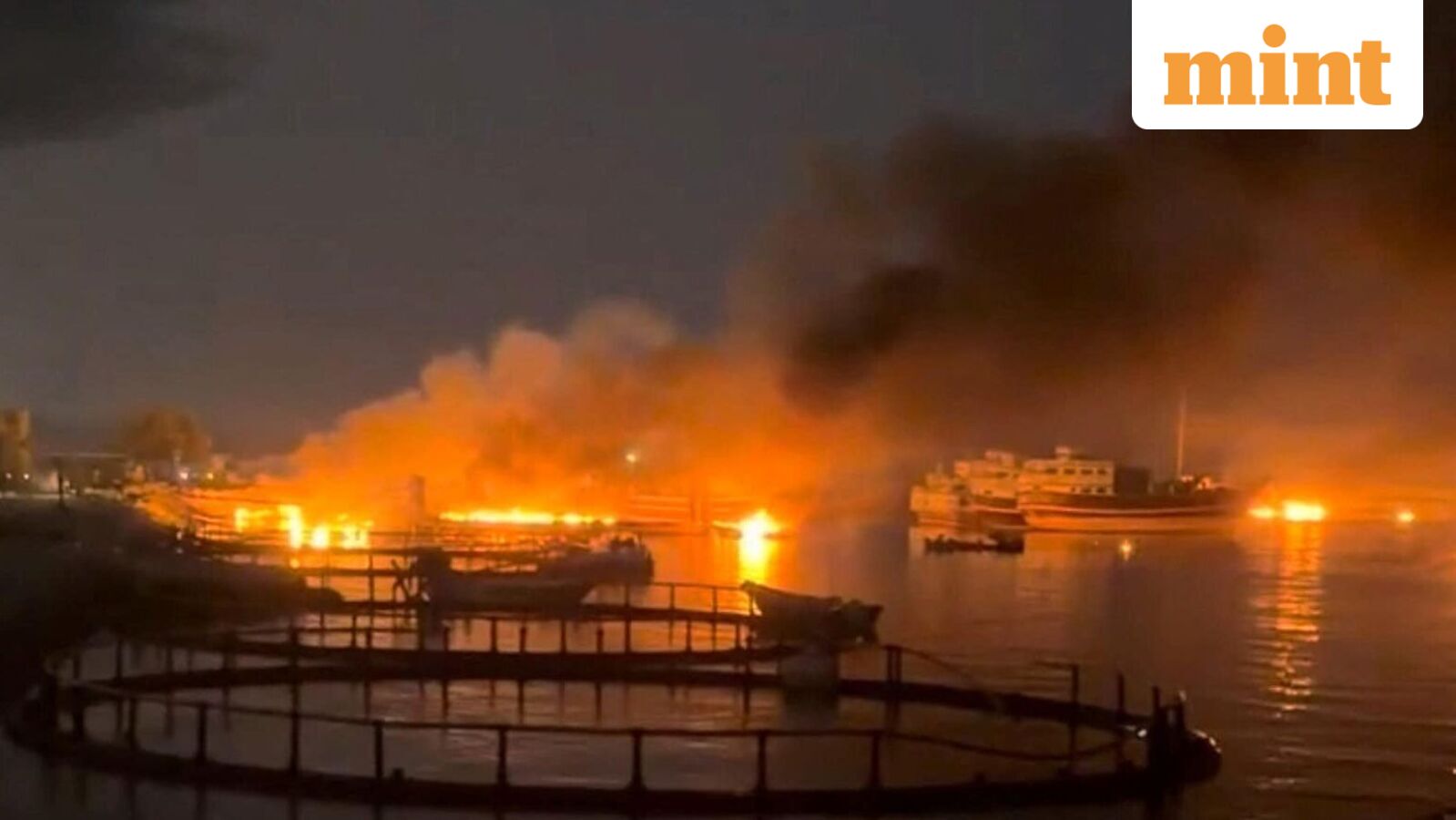
Iran's Islamic Revolutionary Guard Corps said Saturday that two oil tankers exploded after hitting mines in the Strait of Hormuz, the latest escalation in the US-Iran conflict that has already disrupted shipping through the waterway. The IRGC, in a statement carried by state news agency IRNA, said the tankers were attempting to transit what it called a minefield south of the strait. It also said it stopped four other ships trying to pass.
The Strait of Hormuz handled roughly a fifth of global oil and gas shipments before hostilities resumed. The waterway remains the single most important chokepoint for crude flows from the Middle East. Any sustained disruption there would force tankers onto longer routes around Africa, raising freight costs and tightening supply.
The United States has conducted strikes on Iran for seven consecutive nights. US Central Command said the operations are designed to continue degrading Iranian military capabilities. On Friday, CENTCOM confirmed it destroyed a surveillance tower at Iran's Shahid Kalantari Port in Chabahar, part of a maritime surveillance network the IRGC used to monitor commercial shipping in the Gulf of Oman.
Iran retaliated by launching strikes against US military assets across the Gulf region, including in Qatar, Kuwait, Jordan, Oman and Syria, according to statements from the Iranian army and the IRGC carried by state broadcaster IRIB. Tehran said the operations were in response to US attacks on Iranian territory and personnel.
The IRGC Navy claimed Friday that US naval units in the region are under its surveillance and warned of what it called a zero hour for possible operations. CENTCOM did not immediately comment on that claim.
For oil markets, the immediate risk is twofold: the physical threat to tankers transiting the strait, and the broader escalation that could draw in other regional players. Shipping insurance premiums for vessels in the Gulf have already risen sharply in recent days, according to industry sources. Crude futures have priced in a risk premium, though the magnitude depends on how long the strait remains contested.
The next scheduled data point for actual supply impact will be the weekly US Energy Information Administration inventory report, due Wednesday. Traders will also watch for any official closure of the strait by Iranian authorities, which would represent a step change in the conflict's economic consequences.
The IRGC statement did not name the tankers that exploded or their flag states. No casualty figures have been released.