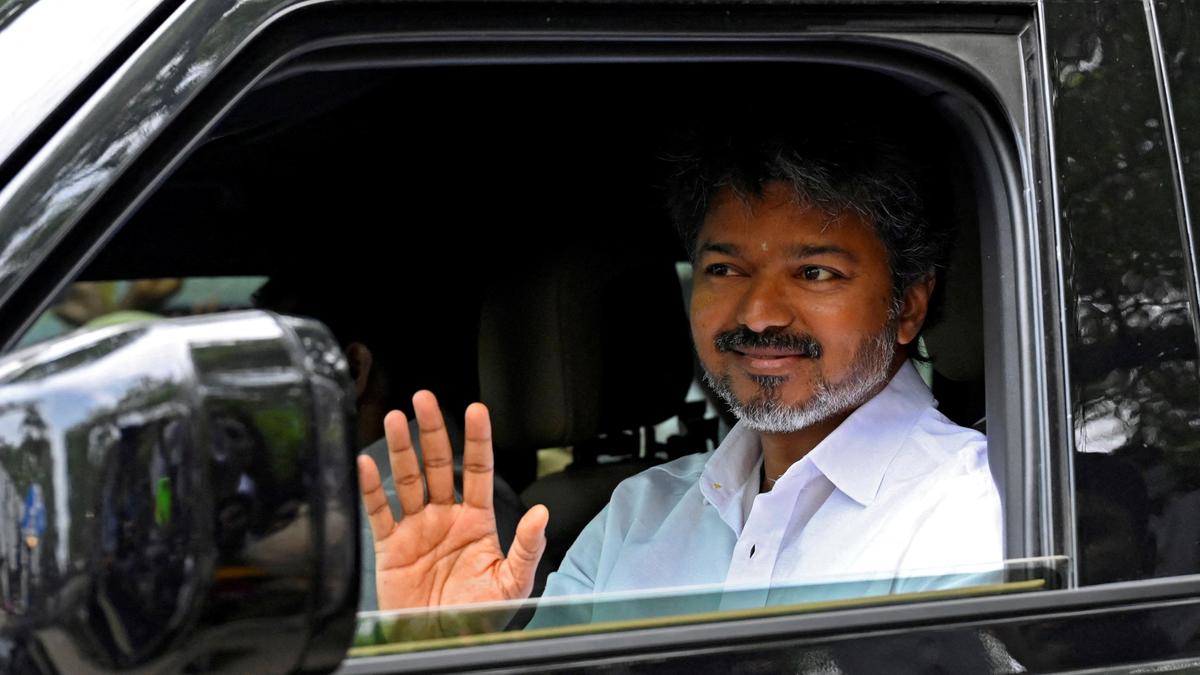
The political landscape in Tamil Nadu faced an unexpected disruption on Thursday as hundreds of supporters of the Tamilaga Vettri Kazhagam (TVK) party, led by actor-turned-politician Vijay, arrived at the Nehru Indoor Stadium only to find the venue gates locked. The gathering, which supporters believed to be a formal swearing-in ceremony for Vijay as chief minister, resulted in widespread confusion and public frustration. The absence of official communication from the party leadership left attendees, many of whom traveled from distant regions including Coimbatore and Arumbakkam, stranded without clarity regarding the status of the event.
This incident highlights a significant disconnect between grassroots expectations and the operational reality of the party's current political trajectory. While the supporters arrived under the impression that an imminent declaration was scheduled, the lack of coordination points to a breakdown in the communication chain between the party's central command and its base. For a political entity still in its formative stages, the inability to manage expectations for a high-profile event creates a reputational risk that could complicate future mobilization efforts.
The Mechanism of Grassroots Mobilization
The fervor displayed by the crowd at the stadium underscores the unique nature of Vijay’s political appeal, which relies heavily on personal brand loyalty rather than traditional party infrastructure. Supporters interviewed at the scene cited Vijay’s decision to self-fund party activities—including the costs associated with flags and staging—as a primary driver of their trust. This financial independence is perceived by the base as a rejection of the transactional politics common in the region. However, this reliance on a singular figurehead also creates a vulnerability; when the leader or the party apparatus fails to provide clear, timely guidance, the base is left to rely on unverified social media claims and informal news reports.
For the observer, the event serves as a case study in the volatility of personality-driven political movements. The emotional investment of the supporters, many of whom viewed the day as a definitive shift in the state's leadership, was met with a vacuum of information. The distress expressed by long-time political observers who have shifted their allegiance to the TVK suggests that while the movement has successfully captured a segment of the electorate, it lacks the institutional maturity required to manage large-scale public gatherings without incident.
Operational Risks and Future Credibility
The logistical failure at the Nehru Indoor Stadium raises questions about the party's internal organization. When supporters travel via public transport and wait for hours based on rumors, the resulting disappointment can quickly erode the very enthusiasm that sustains a new political movement. The party's ability to recover from this optics failure will depend on whether it can establish a more robust communication channel that bypasses the ambiguity of social media speculation.
Investors and analysts observing the broader regional political climate should note that the TVK’s current model is built on high-intensity, low-structure engagement. While this is effective for building a loyal following, it is inherently fragile. Future events will be the primary test of whether the party can transition from a fan-based movement to a disciplined political organization. If the party continues to struggle with basic event management, the perception of incompetence could outweigh the narrative of financial independence that currently attracts its base.
For those tracking the stability of the regional political environment, the key indicator will be the party's next public communication. A failure to address the confusion caused by the cancelled ceremony would likely signal deeper structural issues within the TVK leadership. Conversely, a transparent explanation regarding the scheduling error could help stabilize the narrative, though the immediate damage to the party's reputation among those who made the journey to the stadium remains a significant hurdle. The incident serves as a reminder that political capital, much like market sentiment, is highly sensitive to operational execution and the reliability of information flows.