Stocks● Neutral
TVK Election Math: Vijay Faces 12-Seat Gap for Majority
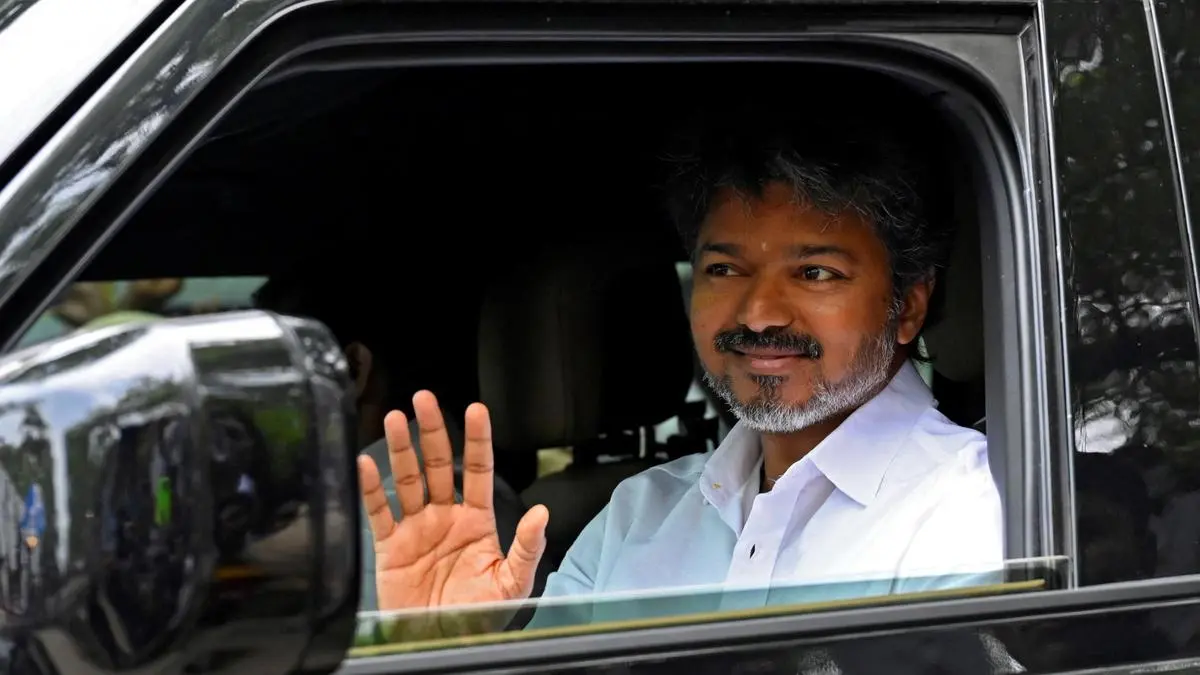
TVK needs 12 additional seats to secure a majority after winning 108 constituencies. Vijay must now navigate floor tests or coalition talks to avoid rule.
Continue with
The Tamil Nadu assembly election results have fundamentally altered the state's political landscape, with actor-turned-politician Vijay’s newly formed party, Tamilaga Vettri Kazhagam (TVK), ending six decades of dominance by the DMK and AIADMK. While the victory marks a historic debut, the party secured only 108 seats in the 234-constituency assembly. This leaves the TVK 10 seats short of the 118-seat threshold required for a simple majority. The path to governance is now defined by a complex arithmetic of seat resignations, legislative rules, and the necessity of securing external support.
The Mechanics of the Majority Gap
The immediate hurdle for the TVK involves internal seat management. Vijay won both the Perambur and Tiruchirappalli East constituencies. Under election commission rules, he must vacate one seat, which will reduce the party’s total tally to 107. Furthermore, the appointment of a party-affiliated Speaker of the Assembly removes one additional vote from the party's active floor strength during a confidence motion. Consequently, the TVK’s effective voting power drops to 106, necessitating the support of at least 12 additional members to reach the 118-seat requirement.
This gap creates a high-stakes environment for the upcoming meeting between Vijay and Governor Rajendra Vishwanath Arlekar, scheduled for May 6. The Governor is expected to present two primary options: a floor test to demonstrate majority support or the submission of letters of support from allied parties. If the TVK cannot secure these 12 additional votes, the Governor may invite the DMK, the party with the second-highest seat count, to attempt government formation. Should the DMK also fail to secure a majority, Tamil Nadu would face six months of governor's rule, followed by fresh legislative assembly elections.
Strategic Options for Minority Governance
Political analysts are divided on whether Vijay will pursue a minority government or seek a formal coalition. Sumanth Raman, a senior political analyst, suggests that the TVK may opt for a minority government with outside support, similar to the DMK’s strategy in 2006 when the late M. Karunanidhi formed a government with 92 seats. This approach would allow the TVK to govern without integrating other parties into the cabinet, though it would require Vijay to prove his majority on the floor of the assembly again after six months.