The Trump-Xi summit in early April produced a tariff truce that kept cumulative duties at roughly half their peak levels above 100%. Chinese executives in Suzhou last week told CNBC they are using the extended calm to restart U.S. expansion plans. The same conversations revealed a deeper friction that no summit can fix: data security fears, branding gaps, and the lingering possibility that the truce is temporary.
For traders tracking U.S.-China exposed equities, the simple read is that the worst of the tariff escalation is over. The better market read is that the structural trust deficit remains, and the companies best positioned to navigate it are not necessarily the ones with the most aggressive U.S. sales targets.
The Truce: What Changed, What Did Not
The tariff math
Cumulative duties at one point exceeded 100% on some Chinese goods. The extended truce suggests those levies could remain at about half those levels for longer. That is a meaningful reduction in headline risk. It is not a removal. Any future escalation would start from a lower base. The next round of hikes would be less shocking yet still damaging to margins.
What did not change
Zou Ping, co-founder of AI Speech, told CNBC that tariffs and market access remain his biggest concerns. He expects the relationship to stabilise for the next three to five years. That is a forecast, not a guarantee. The bigger challenge for winning U.S. customers, he said, is branding. AI Speech makes high-end microphones, speakers and digital note-taking tablets that use on-device AI. The products are already in U.S. meeting rooms and university classrooms. Zou is still explaining to potential buyers that his devices do not upload user data and that any AI features are served through international data centres.
"The worst is over." – Zou Ping, co-founder of AI Speech
That quote captures the simple read. The better read is that the trust deficit is a recurring cost that does not appear on a balance sheet. Every U.S. customer conversation starts with a data security question that a Chinese competitor based in Shenzhen does not have to answer.
Exposure: Which Companies Are Pushing Into the U.S.
The source names three Chinese companies actively pursuing U.S. expansion: AI Speech, Zeroth (a humanoid robot startup), and Shein (the fast-fashion retailer reportedly acquiring sustainable brand Everlane). Each faces a different risk profile.
AI Speech
- Product: High-end microphones, speakers, digital note-taking tablets with on-device AI.
- U.S. strategy: Exploring acquisitions and local hiring. Hinted at conversations with New York electronics retailer B&H.
- Risk: Branding and data security. The company must prove its devices are not surveillance tools.
Zeroth
- Product: Humanoid robots, starting with a toy-sized interactive model.
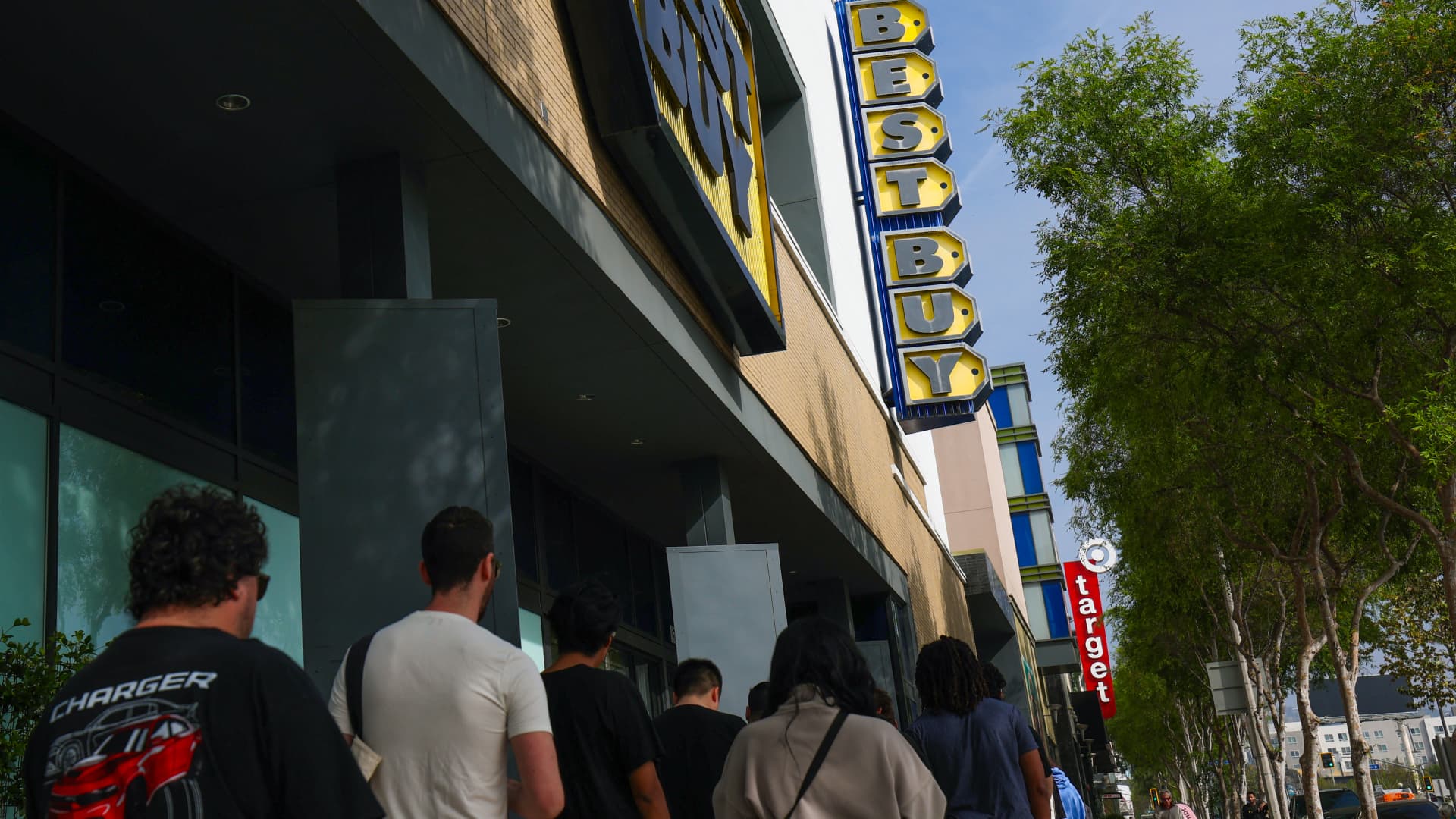
- U.S. strategy: Plans to start sales this fall in the U.S. and Europe. CEO Guo Renjie said the company received many orders at CES in January and is now talking with Best Buy.
- Risk: Tariff exposure. Guo is exploring U.S. manufacturing options, particularly in Texas, to reduce duties. That is a capital-intensive hedge that may not pay off if the truce holds.
Shein
- Product: Fast fashion, reportedly acquiring Everlane.
- U.S. strategy: Acquisitions to build brand credibility and bypass tariff risk on direct imports.
- Risk: Regulatory scrutiny on labour practices and data handling. Shein has faced multiple investigations in the U.S. and Europe.
Hua Hong Semiconductor
Daniel Wang, CFO of Shanghai Hua Hong Grace Semiconductor Manufacturing Corporation, told CNBC that the memory chip boom may last longer because of AI. Demand from AI, industrial and automotive clients is keeping its fabs at full capacity, with momentum expected into 2026. Hua Hong is China's second-largest chip foundry and has said it has "always been compliant" with U.S. export controls.
- Risk: Export control escalation. If the U.S. tightens restrictions on semiconductor equipment or advanced chips, Hua Hong's capacity utilisation could drop. For now, the company is running flat out.
Timeline: Key Dates and Catalysts
| Date | Event | Relevance |
|---|
| May 23–26 | Pakistani PM visits China | Geopolitical signal; may affect U.S.-China dynamics indirectly |
| May 26 | Chinese Foreign Minister attends UN Security Council meeting | Diplomatic tone check |
| May 27 | Nio launches flagship ES9 SUV | Consumer demand indicator for Chinese EV makers targeting overseas |
| May 28–30 | Chinese Foreign Minister visits Canada | Trade diversification signal |
| May 31 | China releases official manufacturing PMI for May | Economic health; if below 50, tariff truce may not be enough to boost demand |
| June 1 | RatingDog China general manufacturing PMI | Alternative data point; may diverge from official PMI |
These dates are not binary risk events. They form a sequence that will test the durability of the truce. A weak PMI reading would increase pressure on Beijing to stimulate, which could lead to currency depreciation and renewed trade friction.
Risk Reduction Factors
What would make the trust deficit shrink?
- Tangible U.S. investment by Chinese firms: Local hiring, manufacturing, and R&D centres reduce the perception of data risk. Zeroth's Texas plan is a step in that direction.
- Clear data governance frameworks: If the U.S. and China agree on mutual data security standards for commercial products, the branding hurdle for companies like AI Speech would drop.
- Sustained diplomatic engagement: The trade and investment boards announced by Scott Bessent are a start. If they produce concrete deals in non-sensitive sectors, the tone could shift from truce to normalisation.
Risk Amplifiers
What would make the trust deficit worse?
- A new export control rule targeting AI chips or robotics: That would directly hit Zeroth's supply chain and Hua Hong's capacity outlook.
- A data breach or espionage allegation involving a Chinese consumer product: Even if unproven, the reputational damage would cascade across all Chinese brands trying to sell in the U.S.
- A tariff re-escalation triggered by a dispute over Taiwan, the South China Sea, or technology transfer: The truce is fragile. Any one of these flashpoints could push duties back toward the 100% level.
Sector Read-Through: Tech, Robotics, Consumer Goods
Technology hardware
Companies like AI Speech and Hua Hong are directly exposed to U.S. policy shifts. The simple trade is to avoid Chinese tech hardware until the trust deficit narrows. The better trade is to watch for companies that localise production or data handling. Those will command a valuation premium when the cycle turns.
Robotics
Zeroth is a micro-cap with no public market exposure yet. The sector as a whole is a bellwether for U.S.-China tech competition. If Zeroth succeeds in selling through Best Buy, it will validate the thesis that Chinese robotics can overcome the branding hurdle. If it fails, the sector's U.S. expansion timeline gets pushed out.
Consumer goods
Shein is already a dominant player in fast fashion. Its acquisition of Everlane signals a shift toward brand-building. The risk is that regulatory scrutiny on labour and data practices intensifies, which would hurt the entire Chinese consumer goods category in U.S. retail.
Practical rule: A tariff truce does not equal a trust truce. Until data security and branding concerns are resolved, U.S. customer acquisition remains a higher-friction path for Chinese companies. The stocks that benefit most are not the exporters but the U.S.-based suppliers of localisation services – logistics, compliance, and manufacturing partners.
For a broader view of how trade tensions affect stock market analysis, see our coverage of sector rotation and tariff sensitivity. The NVIDIA (profile) supply chain is also a key indicator: if Hua Hong's fabs stay full, it suggests the AI chip boom is decoupling from trade policy – at least for now.
The Next Decision Point
The June 1 PMI data will be the first hard test of whether the tariff truce is translating into real economic activity. A reading above 50 would support the optimistic case that Chinese companies can grow through the trust deficit. A reading below 50 would amplify the risk that the truce is just a pause before the next escalation.
Traders should watch the May 31 official PMI and the June 1 RatingDog PMI as a pair. If they diverge, the market will price in more uncertainty. If they both point to expansion, the trust deficit becomes a second-order concern – at least until the next summit.