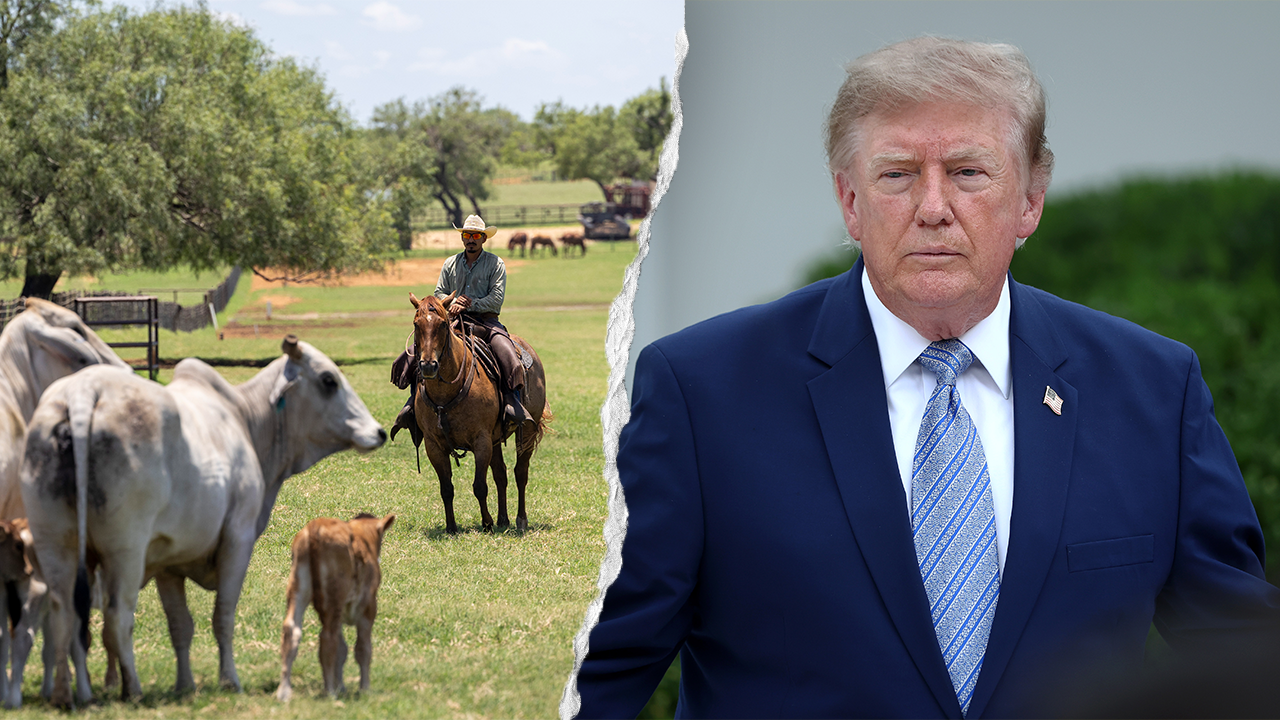
President Donald Trump's decision to allow 300,000 metric tons of ground beef into the United States tariff-free over the next 90 days has drawn sharp criticism from Republican lawmakers in cattle-producing states.
The move, announced Friday on Truth Social, aims to lower grocery prices while giving ranchers time to rebuild the U.S. herd, which has fallen to its smallest level in 75 years. Beef prices averaged $6.89 a pound last month, according to the Federal Reserve Bank of St. Louis. Affordability is a top issue for voters ahead of the November midterm elections.
Sen. Mike Rounds of South Dakota called the plan harmful to American cattle producers. "What our market really needs is a stable, America-First national policy that promotes American beef rather than continuing to import foreign beef as a quick fix," Rounds wrote on X. South Dakota holds roughly 5% of the nation's beef cows, a USDA report shows. Rounds argued that the lack of country-of-origin labeling prevents consumers from choosing American beef. "Our producers will compete all day long, only if there is a level playing field," he said.
Rep. Julie Fedorchak of North Dakota said lower grocery prices should not come "on the backs of North Dakota ranchers and producers." Importing foreign beef tariff-free and selling it below market price undercuts ranchers who are investing millions to rebuild their herds, she said in a statement. The timing is especially damaging because many producers are bringing feeder cattle to market, making the prices they receive critical, Fedorchak added. She also called for imported beef to meet the same inspection and safety standards as American-raised meat and said she had asked the USDA for details. "Short-term market intervention will not lower prices over the long term," Fedorchak said. "The lasting solution is to strengthen American cattle production and address the problems in the packing industry."
Rep. Kat Cammack of Florida said she shares Trump's commitment to lowering grocery costs. She warned that short-term relief "can't come at the expense of American ranchers, free markets and long-term solutions." Florida ranchers are already grappling with drought, rising input costs and an out-of-control regulatory system, she wrote on X.
Virginia Farm Bureau President Scott Sink said ranchers understand the need to ease grocery costs. Greater reliance on imports would not solve the supply pressures behind higher prices, he said. "Rebuilding the U.S. cattle herd takes time -- it cannot happen overnight," Sink said in a statement. He urged the administration to reduce costs for fuel, feed, equipment and financing, and to create conditions that allow ranchers to retain heifers and rebuild the herd. "A strong domestic food supply benefits everyone," Sink said.
The USDA estimates that four major companies buy about 85% of U.S. steers and heifers. The department's research suggests that market power, combined with limited processing capacity, may be driving down the prices ranchers receive for cattle. The White House did not respond to a request for comment from Fox Business.