Iran launched missiles at Israel on Sunday. President Donald Trump called Israeli Prime Minister Benjamin Netanyahu hours later. The president's directive: do not retaliate. The reason: a peace deal that Trump says is close enough to be signed within days.
Trump told Fox News that an agreement could be signed on Monday, Tuesday, or Wednesday of the coming week. "You've shot your missiles, that's enough," Trump said, referring to Iran's strikes. "Get back to the table and make a deal."
For traders, the event is not another diplomatic headline. It is a binary risk event with a defined three-day resolution window. A signed deal removes the geopolitical risk premium embedded in oil, resets defense stock expectations, and flattens the safe-haven demand curve. A breakdown triggered by Israeli retaliation or a new Iranian strike would reverse those moves. The next 72 hours will determine the direction.
The Call That Redefined the Escalation Path
Trump's Direct Intervention
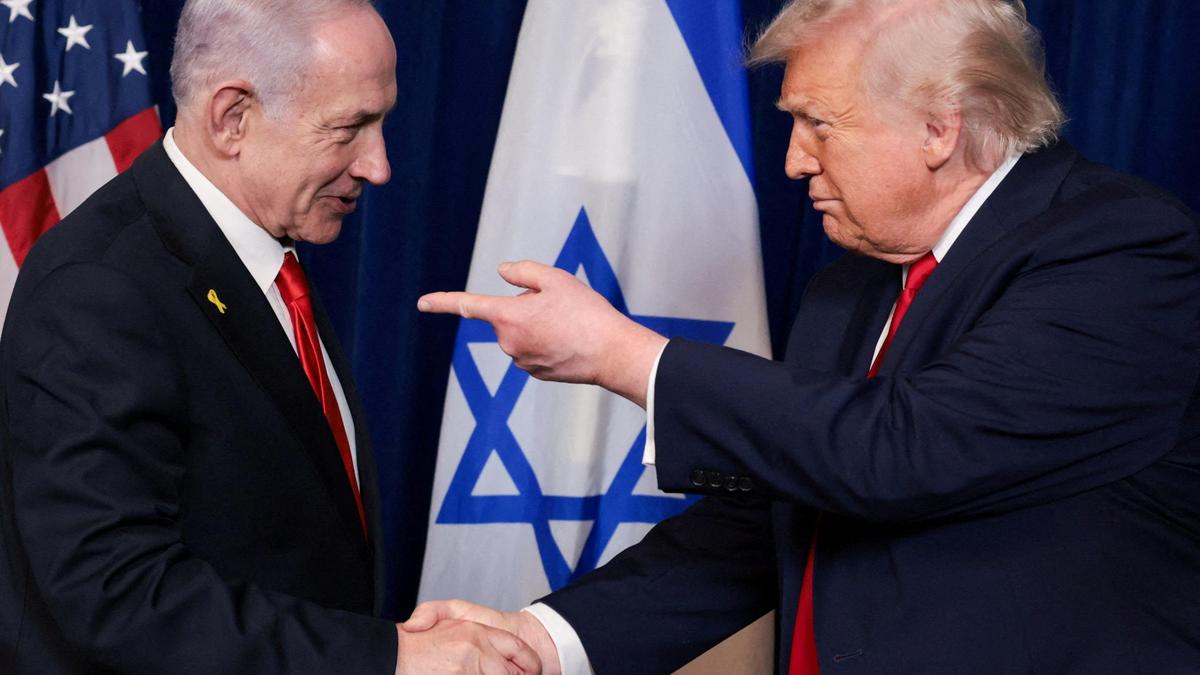
The call between Trump and Netanyahu was not a routine check-in. According to Axios, Trump urged Netanyahu to hold off because "we are close to doing something good in terms of a deal." The president also asked Iran to return to the negotiating table.
Trump's subsequent interviews made the stakes explicit. He told Axios: "The Iranian strikes didn't hurt anybody. Hopefully Israel is not going to retaliate. If Bibi strikes them back, it's just going to keep going like the last 47 years, or the last 3,000 years."
In a separate interview with the Financial Times, Trump said Netanyahu would likely have to accept whatever agreement the US ultimately reaches with Iran. "He won't have any choice," Trump said, asserting that he "calls the shots."
The language is unusually direct for a US president toward a close ally. It signals that Washington is prepared to impose a deal framework regardless of Israeli objections.
Netanyahu's "Pseudo Agreed" Stand-Down
A US official quoted by Axios described Netanyahu's response as a "pseudo agreed" stand-down. Netanyahu pushed back before ultimately yielding. The official noted that Sunday's call was calmer than last week's tense exchange, and Trump did not raise his voice.
The term "pseudo agreed" is the key qualifier. It suggests Netanyahu's compliance is conditional. If Iran launches another strike, or if Israel perceives a security threat that overrides US pressure, the stand-down could collapse. The three-day window before a potential deal signing is the highest-risk period for a spoiler event: a limited Israeli strike, an Iranian provocation, or a leak that derails talks.
Exposed Assets: Oil, Defense, and Safe Havens
Oil's Supply Disruption Premium
Crude oil has carried a geopolitical risk premium since the conflict began three months ago. The premium reflects the probability of supply disruptions from the Strait of Hormuz, Iranian production cuts, or regional spillover. A peace deal that ends the conflict would remove that premium. Traders should watch Brent crude and WTI for an unwind of that premium; the magnitude depends on how much of the current price is attributable to fear versus fundamentals.
The size of the risk premium can be proxied by comparing implied volatility on Brent options to historical norms. A sudden drop in implied volatility would confirm premium unwinding. If the deal fails, implied volatility spikes as the market reprices a longer conflict with higher disruption probability.
Defense Stocks and the Peace Deal Discount
Defense contractors such as Lockheed Martin (LMT) and Northrop Grumman (NOC) have benefited from elevated geopolitical tension. A peace deal would reduce the expected duration and intensity of the conflict, potentially leading to order book adjustments. The impact is not uniform. Companies with direct exposure to Israel's Iron Dome or US replenishment contracts may see a more pronounced re-rating than those with diversified backlogs.
The read-through for defense stocks is not uniform. Companies with large backlogs from long-term government contracts may see less impact than those relying on emergency supplemental spending. Investors should look at each company's order book composition and geographic revenue mix. Defense ETFs like XAR and ITA could face profit-taking if a deal is signed.
Safe Havens and the Risk-On Rotation
Gold and the US dollar have been primary safe havens during the conflict. Gold has rallied on each escalation event since the ceasefire broke. The metal's price now includes a risk premium that would likely be shed if a deal is signed. A peace deal would trigger a risk-on rotation. Gold would fall and the dollar would weaken against risk currencies. The yen and Swiss franc could also decline as geopolitical fear subsides. A breakdown would renew demand for these assets.
The Three-Day Peace Deal Window
What a Signed Deal Means for Positioning
Trump told Fox News the agreement could be signed on Monday, Tuesday, or Wednesday. If a deal is signed within that window, the market reaction will be front-loaded. Oil could gap down on the open. Defense ETFs would likely see profit-taking. The Israeli shekel and Saudi riyal forwards would strengthen. The S&P 500 (SPY) would rally on reduced tail risk, though the move may be tempered by other macro factors.
The window itself creates a gamma event. Options markets on oil, gold, and the S&P 500 will see elevated straddle prices through Wednesday. Traders should consider positioning for a sharp move in either direction by buying strangle structures.
What a Breakdown Triggers
If Netanyahu retaliates or Iran launches another strike, the peace deal collapses. The market would reprice for a prolonged conflict. Oil would spike on supply disruption fears. Defense stocks would rally. Gold would break above recent resistance. The VIX would rise, and risk assets would sell off. The key variable is whether the US can re-impose pressure or whether the escalation becomes self-sustaining.
How US Leverage Reshapes the Escalation Path
Breaking the Strike-and-Retaliate Cycle
Iran's Sunday missile launch was its first attack since a ceasefire took effect in April. The conflict has followed a pattern of strike-and-retaliate since then. Trump's intervention aims to break that cycle by imposing a diplomatic off-ramp. The mechanism is US leverage: military aid to Israel, economic pressure on Iran, and the promise of a comprehensive deal. If successful, it transforms the risk landscape from a binary escalation path to a negotiated settlement.
Trump's ability to constrain Netanyahu rests on three levers: military aid dependency, diplomatic cover at the UN and in international forums, and public support for Israel's security. By criticizing Israeli strikes on Beirut, Trump signaled that he is willing to use the third lever publicly. That pressure increases Netanyahu's cost of noncompliance.
Netanyahu's Limited Options
Trump's assertion that he "calls the shots" reflects the asymmetric power dynamic. Israel relies on US diplomatic cover and military resupply. A president willing to withhold support, or publicly criticize Israeli strikes, can constrain Netanyahu's options. Trump criticized Israel's strikes on Beirut on Sunday, saying he was "not happy about it." That public criticism reinforces the message.
The risk is that Netanyahu tests that leverage, either by a limited strike that he frames as defensive, or by slow-walking the stand-down. A direct confrontation with the White House would risk public splits that could weaken Israel's bargaining position in any eventual deal. Netanyahu may calculate that compliance now preserves leverage for later negotiations.
Confirmation and Breakdown Signals
What Confirms the Peace Deal Path
- No Israeli retaliation within 48 hours of the call.
- Iran returns to negotiations as Trump requested.
- US officials announce a deal framework by Wednesday.
- Oil volatility declines and Brent futures flatten.
- Defense stocks underperform the broader market.
- Gold retreats from recent highs.
What Breaks the Setup
- Israeli airstrike on Iranian assets or proxies.
- Iran launches another missile barrage.
- Netanyahu publicly rejects US deal terms.
- Oil spikes above recent highs on supply disruption fears.
- Gold breaks above key resistance.
The next 72 hours will determine whether the peace deal is real or another false start. Traders should position for the binary outcome, not the headline. The market will price the probability of a deal versus renewed conflict, and the move will be sharp in either direction. The safest approach is to reduce exposure to assets that are directly sensitive to the conflict: oil, defense, and Israeli equities. That cautious approach holds until the timeline resolves.
Trump's ultimatum has created a clear catalyst window. The question is whether Netanyahu will stay in his lane or force a confrontation that the US cannot control.