President Donald Trump's pattern of praising specific companies and his personal stock holdings in those same firms have ethics lawyers warning about government favoritism that could distort competition.
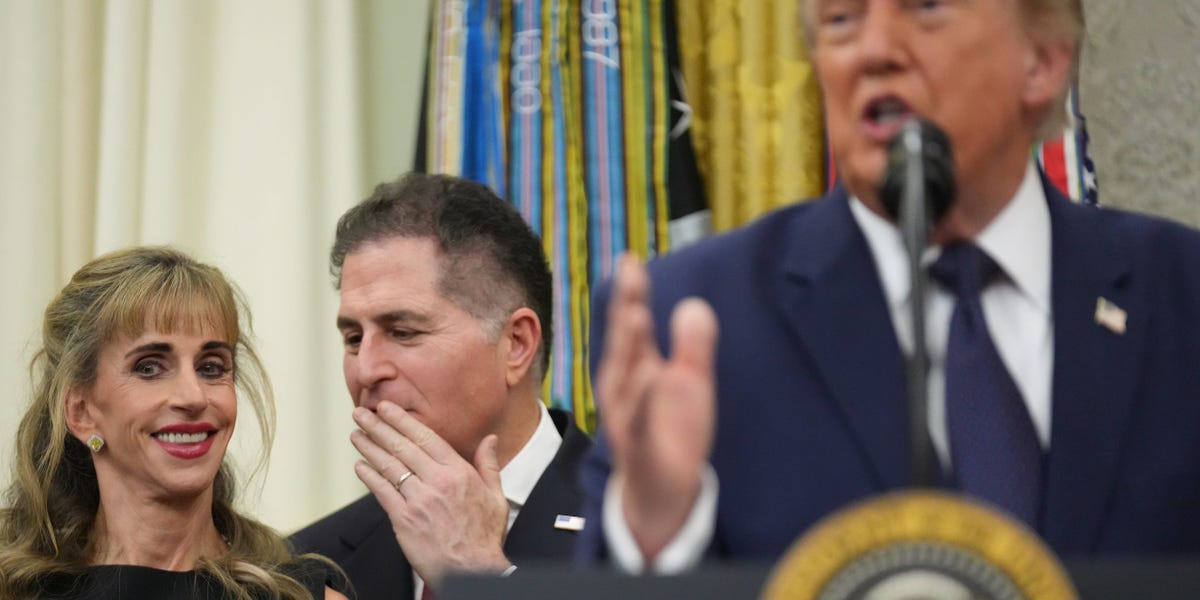
Trump this month urged Americans to “go out and buy a Dell computer” during an Oval Office event celebrating the Dells' contribution to Trump Accounts. He also has taken credit for Walmart lowering prices. The president owns shares in both Dell and Walmart, with his latest financial disclosure showing he bought between $1 million and $5 million of Dell stock in February and sold between $50,000 and $100,000 of it in April.
“It's a clear violation of misusing public office for private gain, and also sort of implying that there is some sort of government-wide endorsement of Dell products over competitors,” said Don Fox, former general counsel and acting director of the U.S. Office of Government Ethics.
Richard Painter, who served as chief ethics lawyer in the White House Counsel's Office under President George W. Bush, said the administration he worked in was so cautious about perceived favoritism that it rarely allowed high-ranking officials to appear at company-specific events. When they did, Painter said officials “bent over backwards” to avoid lending the presidential imprimatur. “This is not free enterprise when the government says this company's good, that company's bad,” Painter said. “The whole point of free enterprise is to get the government out of the business, picking winners and losers in the economy.”
Trump's remarks this month were the third time in five months he urged people to buy Dell's computers. Jordan Libowitz, a vice president at the watchdog group Citizens for Responsibility and Ethics in Washington, said the comments give the impression the presidency “is for sale.” If you are a financial backer of the president, Libowitz said, you might see the president using the power of the presidency to benefit your business.
A White House spokesperson said Trump was right to praise the Dells, calling them “patriots” contributing to children's accounts.
Enforcement challenges limit the practical impact of ethics complaints. The executive branch ethics rules don't cover the president or vice president, according to CREW and the Campaign Legal Center. Painter noted the Supreme Court's Trump v. United States ruling granted presidents immunity for official acts, making it harder to investigate motives. “If he says my statement about Dell Computer was an official statement of the president of the United States, you can't investigate his motives for that statement,” Painter said.
Not all legal observers see a problem. Seth Barrett Tillman, a law professor at Maynooth University, said the president has free speech rights under the First Amendment to single out companies for praise. Tillman said Dell's manufacturing rivals may not be bothered.
For investors, the pattern raises questions about how government endorsement could affect competition and stock prices. If the perception grows that presidential favor follows personal investment, it could create an uneven playing field for companies that lack such ties and increase regulatory risk for those that have them. The debate also highlights the structural gap between past administrations that placed holdings in blind trusts and the current one where the president actively trades individual stocks.