Stocks● Neutral
Trump's 50% Canada Tariffs Hit Housing, Autos, Dog Coats
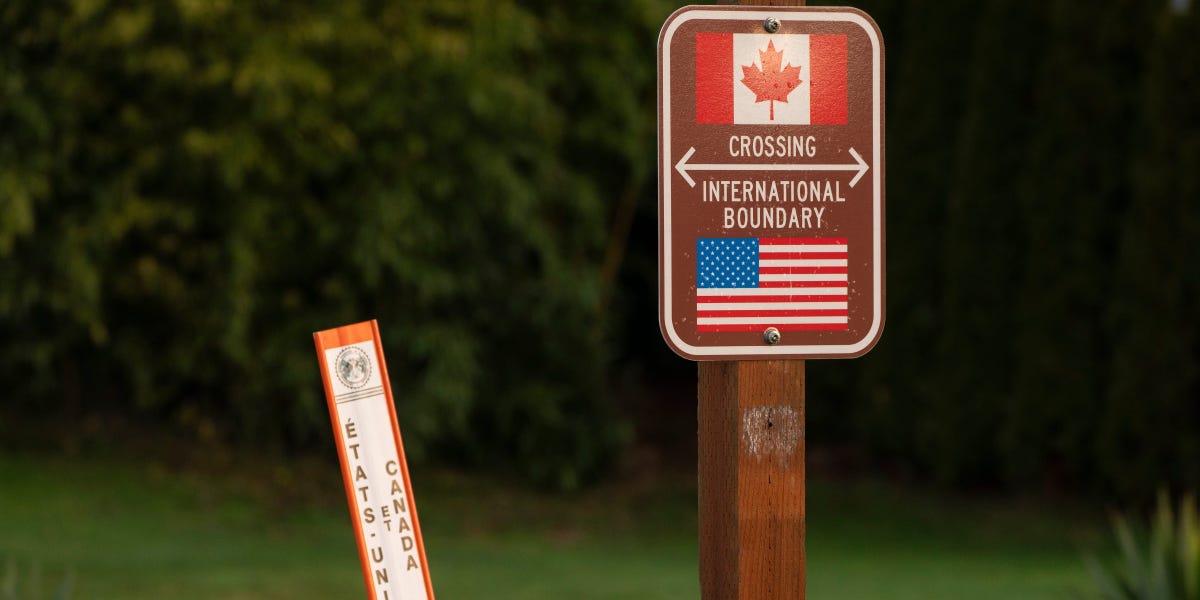
From homebuilding lumber to imported whisky, the new US-Canada trade war targets specific sectors. Border businesses brace for costs, and the Fed may hike rates again.
Continue with
Trade talks between the US and Canada collapsed Saturday. The Trump administration immediately imposed 50% tariffs on a range of Canadian imports: alcohol, hockey equipment, milk, plywood, and paper products. Canadian Prime Minister Mark Carney announced dollar-for-dollar counter-tariffs the same day.
The escalation targets specific sectors unevenly. Paper and paper products alone accounted for $3.3 billion of the roughly $382 billion in goods the US imported from Canada last year, according to Census Bureau data. President Donald Trump wrote on Truth Social Monday that tariffs on cars, trucks, automotive parts, and steel from Canada would rise to 50% in January 2027. Passenger cars represented about $25 billion of imports last year.
Debbie Safran owns Houndstooth Pet Boutique in Burlington, Vermont, about 45 miles from the Canadian border. She worries about a shipment of winter coats for dogs. "We've spent years building up and getting a client base for it because we love it so much. They're made by a woman-owned business in Canada," Safran said. "I've already placed my order for this season, and they haven't arrived yet. So when they arrive, I'm going to get stuck with a massive tax bill, and I'm not happy."
The tariffs fall hardest on the named sectors and on border states such as Michigan that depend on cross-border trade. Broader US employment is unlikely to take a significant hit given the limited scope, Erica York, a senior economist at the Tax Foundation, told reporters. "While it won't be a big macro employment impact, it will have big, big impacts in these sectors that are hit particularly hard," York said.
Inflation is already sticky. The consumer price index cooled to 3.4% in July, still above the Federal Reserve's 2% target. The central bank's most recent economic projections point to at least one rate hike in 2026. Kevin Warsh, the Fed's new chair, carries a hawkish reputation on inflation. Higher rates would push mortgage costs up, making it more expensive to buy or rent a home.